Indonesia · Maluku
Banda Neira and Banda Besar: Travel with Time to Spare
An archipelago of nutmeg, fortresses and open sea, where the best plan leaves room for transport changes and listens to the whole story.
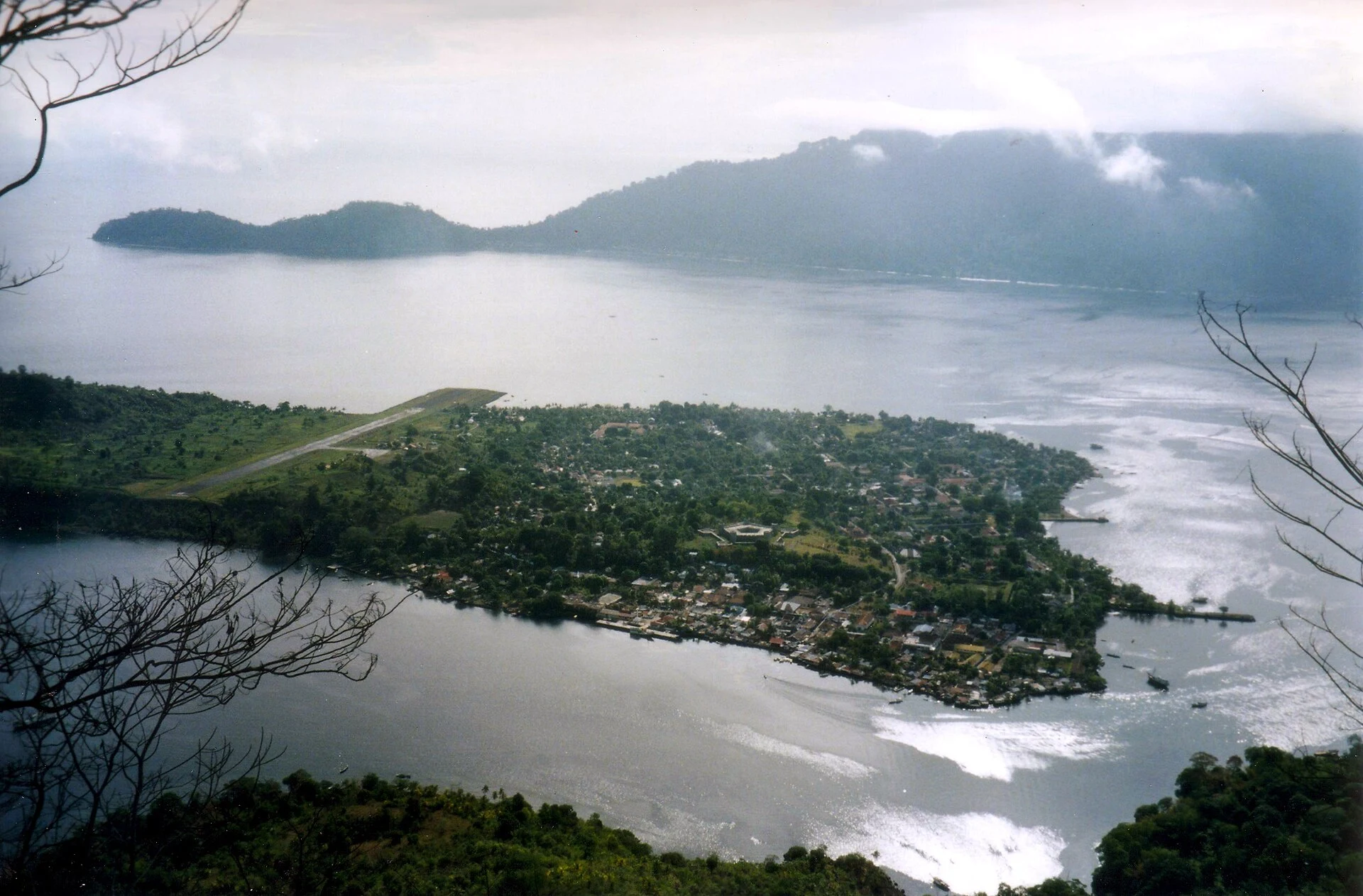
Banda Neira and Banda Besar reward travellers who arrive with time to spare and historical curiosity. These are not islands for stringing together tight connections: the sea determines how people move, while forts, former nutmeg perken estates and local communities reveal a history of trade, colonial control and everyday continuity. The key is to understand the visit as a journey through a cultural and marine landscape, not as a succession of beaches and viewpoints.
Your arrival sets the pace for the entire trip
The usual route runs through Ambon and continues by sea or on regional air services. Schedules and availability change according to the operator, sea conditions and operational circumstances, so it is wise to leave buffer nights both before and after Banda rather than connecting an arrival to an international flight on the same day.
The practical choice is simple: if your itinerary cannot absorb delays, this is not the leg on which to cut things fine. Check the current schedules directly with PELNI and the airline operating your route, and confirm the departure port or airfield, baggage allowance and any announced changes. Check everything again a few days before departure and once you arrive in Ambon.
Use Neira as your base and cross to Banda Besar without rushing
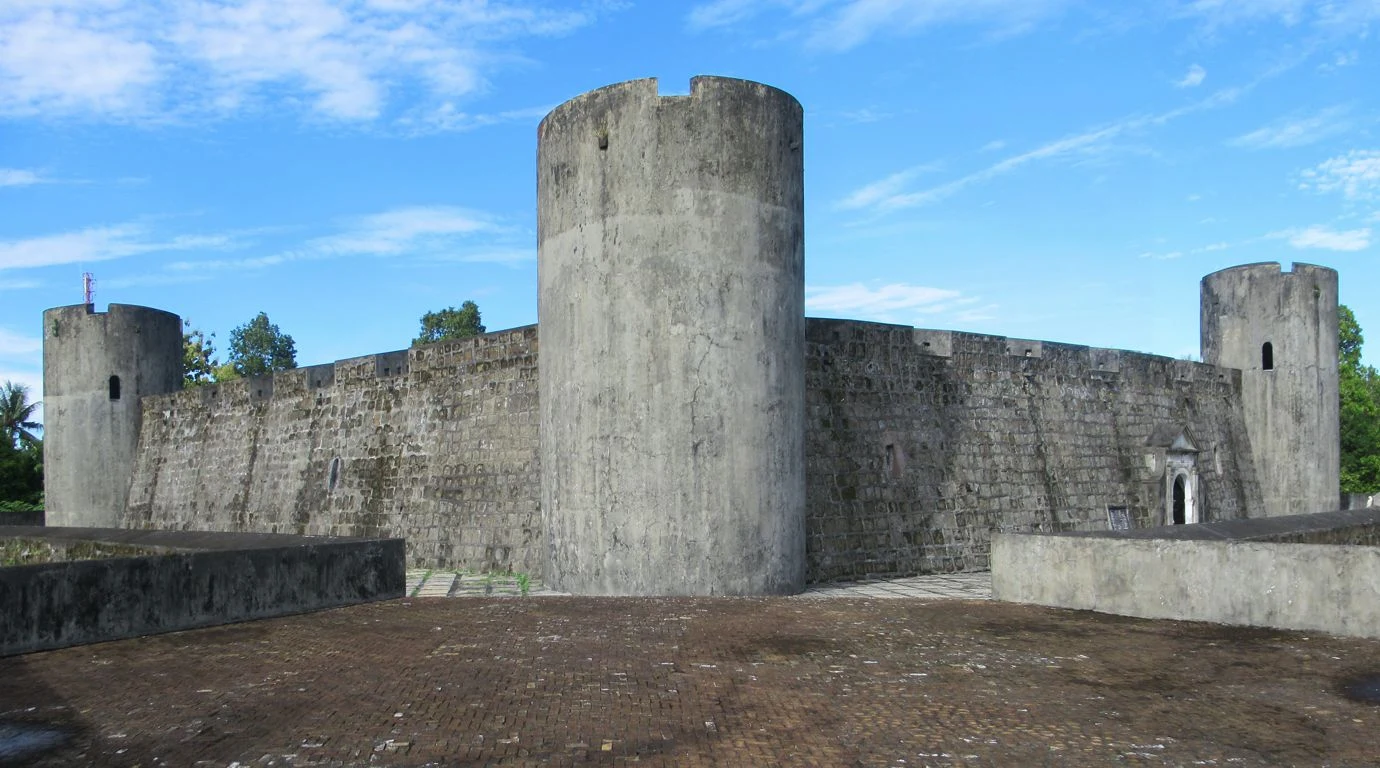
Banda Neira works well as a walkable base for exploring the area around the port, getting a sense of the settlement’s modest scale and visiting Fort Belgica, recognised as a cultural property of national importance. Do not see it only as photogenic architecture: its elevated position helps explain why control of the nutmeg trade became control of the territory.
Across the strait, Banda Besar—also known as Lontor—helps place the former cultivation landscapes and other defensive traces in context. The local boat crossing should not be treated as a fixed detail in the itinerary: arrange the departure in advance, ask about the return and accept that the sea sets the day’s rhythm. It is better to give a full day to one neighbouring island than to hurry through several stops.
Nutmeg calls for the full historical picture
Nutmeg and mace made Banda a decisive hub in trading networks long before the arrival of Europeans. Later, the pursuit of a monopoly reshaped the islands through forts, plantations and colonial violence whose consequences remain inseparable from the place. The perken landscape should not be romanticised: the trees, storehouses and walls also speak of dispossession and forced labour.
For a more attentive visit, ask about local interpreters, cultural initiatives or conversations that place the Bandanese communities in the present. Buy nutmeg or other products with an interest in their origin and production, rather than as anonymous souvenirs. And respect cultivated areas: a plantation is not a backdrop. Ask permission before entering, taking photographs or handling fruit.
The sea is part of the destination—and a regulated space
Banda’s waters form part of a marine conservation area managed by Indonesian authorities. Diving, snorkelling and boating may depend on the weather, the vessel available and local or zoning rules that can be updated.
Choose operators that clearly explain where they will enter the water, what practices they follow around the reef and how they manage waste on board. Keep your distance from corals and wildlife, do not collect organisms or shells and avoid feeding animals. Current rules must be confirmed with the conservation authority or an authorised operator before booking an outing.
Four nights make for a more realistic visit
A stay of four nights or more allows you to absorb an uncertain arrival, walk around Banda Neira, cross to Banda Besar and keep at least one flexible day for the sea. This is an editorial recommendation, not a promise that departures operate every day.
A sensible outline reserves the first afternoon for getting oriented and confirming transport; sets aside one day for Neira and Fort Belgica; another for Banda Besar; and protects the last for a maritime activity or for returning according to the connection available. Travelling more slowly here is not a luxury: it is how you avoid turning a logistical disruption into the loss of the entire trip.
Sources and checks before you go
- Indonesia Travel, Banda Neira profile: context on access from Ambon and a warning that maritime and air services may change.
- PT PELNI, October 2025 communication about the vessels serving Banda Neira: check the effective timetable, ports and any changes there before buying tickets.
- UNESCO World Heritage Centre, Indonesia’s Tentative List dossier: context on the islands’ historic and marine landscape. Inclusion on this list does not mean inscription as World Heritage.
- Indonesia’s national cultural heritage register, Benteng Belgica entry: the fort’s heritage status.
- Indonesia’s Ministry of Maritime Affairs and Fisheries, regulations and management plan for the Banda marine conservation area: consult the conditions and rules currently in force for activities on the water.
- BRIN and Indonesian academic publications, research on the archaeological landscape, the spice trade and colonial rule in Banda.
References consulted during editorial review. Times, requirements and advisories may change: always confirm with the official source.
- https://www.indonesia.travel/id-en/explore-indonesia/maluku-papua/maluku/banda-neira www.indonesia.travel
- https://whc.unesco.org/en/tentativelists/6065 whc.unesco.org
- https://www.indonesia.travel/id/id/destination/maluku-papua/maluku/banda-neira www.indonesia.travel
- https://www.indonesia.travel/us/en/events/event-detail/banda-neira-festival-2026 www.indonesia.travel
- https://whc.unesco.org/en/search/?category=Tentative+Lists&criteria=british+spices+come+from whc.unesco.org
- https://whc.unesco.org/en/tentativelists/6828 whc.unesco.org
- https://whc.unesco.org/en/tentativelists/action%3Dlisttentative%26order%3Dstates%26state%3Did whc.unesco.org
- https://www.indonesia.travel/fr/en/cruise/ports/port-of-banda-neira www.indonesia.travel
- Indonesia WikidataCC0 1.0 Wikidata · Q252
- Indonesia WikidataCC0 1.0 Wikidata · Q15758099
- Indonesia World Countries — mledozeODbL 1.0 World countries dataset by mledoze and contributors · ODbL 1.0
- Indonesia World Bank Open DataCC BY 4.0 World Bank
- Indonesia DBpediaCC BY-SA 3.0 DBpedia
- Banda Neira GeoNamesDatos geográficos bajo CC BY 4.0; requiere atribución a GeoNames. Fuente: GeoNames
- Fort Belgica, Jalan Geraja Tua, Kota Neira, Bandanaira, Banda islands, Maluku Tengah, Maluku, 97593, Indonesia OpenStreetMapODbL 1.0; atribución y obligación de compartir bases derivadas. Fuente: OpenStreetMap