Thailand · Heritage and slow travel
Sukhothai by Bicycle: Visiting Its Three Archaeological Zones
Sukhothai Historical Park is best understood as three connected visits, not one single stop. Choosing the right route avoids duplicate entry fees, excessive heat and misplaced expectations.
Sukhothai Historical Park is not a compact collection of ruins to tick off during a quick walk. Its monuments, ponds and walls form a broad landscape in which the bicycle helps reveal connections that become fragmented on foot. The practical choice is to divide your time between the walled central zone, the northern sector and Aranyik to the west, recognising that each has its own scale and character.
This ancient capital was part of a network of three historic cities, together with Si Satchanalai and Kamphaeng Phet. Rather than seeking one isolated image, it is more rewarding to consider how water, roads and temples organised the city.
Three zones for a realistic visit
The park administers the central enclosure, the northern area outside it—home to Wat Si Chum and Wat Phra Phai Luang—and the western area of Aranyik separately. This has a practical consequence: do not assume that one ticket covers the entire day or that the three zones can be visited without travelling between them.
For a first visit, reserve the morning for the central enclosure. Wat Mahathat, Wat Sa Si, Wat Si Sawai and other monuments are concentrated there, allowing you to understand the relationship between temple, pond and wall. The north works well as a second stage if you want to see Wat Si Chum’s great mondop; Aranyik makes more sense if you have an extra afternoon and want to leave the main circuit. Checking which zones are open, current fees and opening hours before you go will prevent you from building an itinerary around outdated information.
A route that prioritises connections, not accumulation
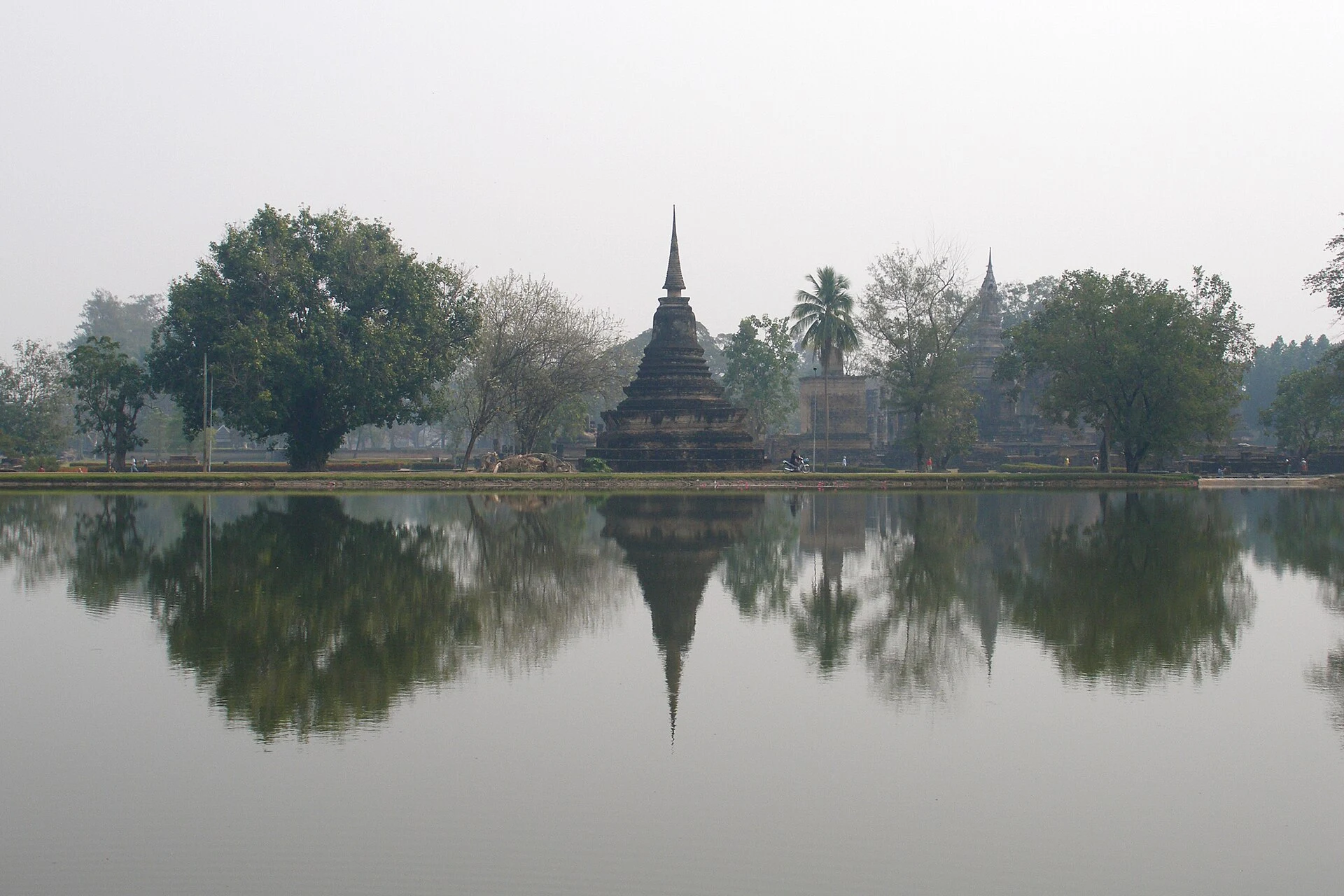
Start at Wat Mahathat, in the historic centre, to take in the arrangement of stupas, images and ceremonial buildings. Continue to Wat Sa Si, beside the water, and then Wat Si Sawai. This short sequence is not intended to sum up the park; it provides a visual foundation for recognising that the ponds and moats are not scenery but part of historic infrastructure.
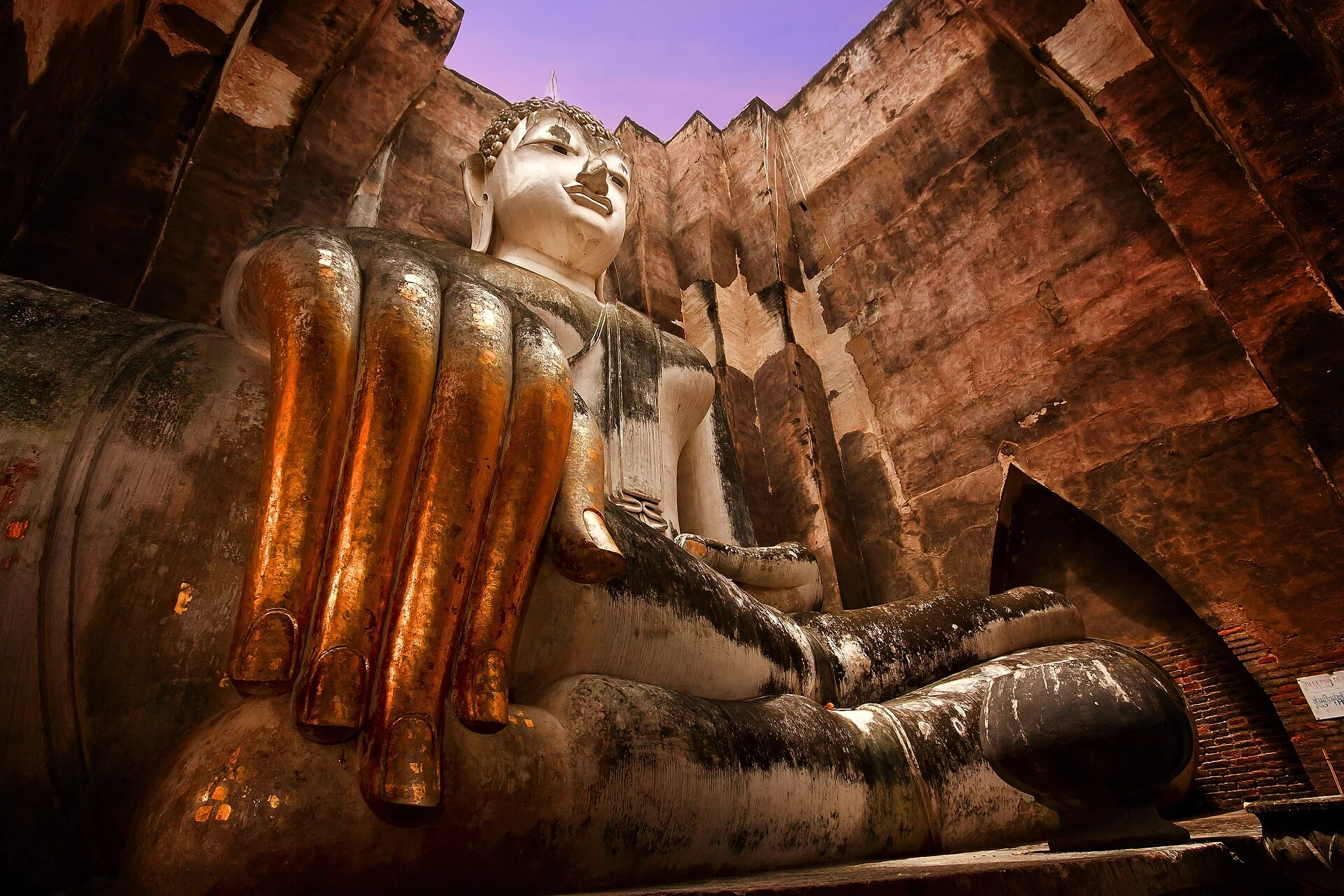
After a break, use the bicycle to travel north. Wat Si Chum deserves time because of its large Buddha image inside a high-walled structure; it should not be treated as a fleeting stop on the way to another ruin. If you choose Aranyik, accept the trade-off: there will be fewer landmark monuments concentrated together, but a more dispersed monastic landscape. Trying to cover all three zones on foot in a single afternoon reduces the visit to travelling and coping with the heat.

Bicycle, walking route or support vehicle
The park administration allows visits on foot, privately rented bicycles or motorbikes in the surrounding area, as well as by tram and three-wheeled vehicles. The bicycle is the most balanced option if you want to connect the central zone with Wat Si Chum while keeping the freedom to stop; walking works particularly well inside the central enclosure.
A tram or a vehicle with a driver may be preferable if you do not want to cycle or have limited time, but their services, routes and timetables should be confirmed on the day. For groups, the park also accepts requests for informative accompaniment. None of these alternatives replaces respectful engagement with the site: stay on designated routes, do not climb the structures and remember that some spaces retain religious significance.
Reading the city through its moats and water reservoirs
Sukhothai’s significance also lies beyond its sanctuaries. The moats, ponds, embankments and canals reveal a city designed to control and distribute water, protect itself and support everyday activities. Cycling between the zones, these open spaces help explain why the monuments are not simply gathered in an open-air museum.
This perspective links Sukhothai with Si Satchanalai and Kamphaeng Phet, the other two cities in the heritage group. If you have only one day, there is no need to add them out of obligation: choose Sukhothai to explore an extensive park in greater depth. With a weekend, Si Satchanalai offers another perspective, associated with monasteries and ceramic production, but requires you to plan the journey as a separate excursion.
Where to stay and what to check before setting out
To prioritise the park, look for accommodation in or near Mueang Kao, the area around the old city, rather than assuming that everything is close to the modern urban centre. Sukhothai Historical Park lies west of Sukhothai city, so your chosen location affects early-morning transfers, midday breaks and the return journey after your visit.
Before booking, check with the official bodies the opening hours for each zone, any days with evening opening, entry fees, bicycle or tram availability and any changes resulting from celebrations or conservation work. Do not base your plan on a fee, timetable or service mentioned in old guidebooks.
References and checks
- UNESCO, Historic Town of Sukhothai and Associated Historic Towns: context for the group of three cities, heritage listing, water infrastructure and site management.
- Thailand’s Fine Arts Department, Sukhothai Historical Park: park location, principal monuments and visitor arrangements.
- Tourism Authority of Thailand: cycling in the park and current references to Wat Mahathat and Wat Si Chum.
Information reviewed on 23 September 2026. Opening hours, access, fees, rentals and transport services are subject to change: confirm them with these sources before travelling.
References consulted during editorial review. Times, requirements and advisories may change: always confirm with the official source.
- https://whc.unesco.org/en/list/574 whc.unesco.org
- https://whc.unesco.org/en/documents/119859 whc.unesco.org
- https://www.tourismthailand.org/Destinations/Provinces/Kanchanaburi/114 www.tourismthailand.org
- https://whc.unesco.org/en/statesparties/th/documents whc.unesco.org
- https://www.tourismthailand.org/Trip-Planner/Suggestion-Detail/sukhothai-uttaradit-3-days www.tourismthailand.org
- https://whc.unesco.org/document/164754 whc.unesco.org
- https://whc.unesco.org/document/216969 whc.unesco.org
- https://api.tat.or.th/upload/live/multimedia/9370/Sukhothai_Uttaradit_Phitsanulok_Phetchabun.pdf api.tat.or.th