Xiengkhouang, Laos
The Plain of Jars from Phonsavan: Three Sites and a Clear Boundary
Sites 1, 2 and 3 offer an introduction to the archaeology of the Plain of Jars without turning a landscape shaped by war into an improvised excursion.
The Plain of Jars is neither a single monument nor a sequence of isolated objects: it is an archaeological complex scattered across the hills of Xiengkhouang. From Phonsavan, the useful decision is to choose the scale of visit that suits the time available and accept one non-negotiable limit: remain on the routes made safe despite the continuing presence of unexploded ordnance. The reward is not solving an alleged mystery, but observing closely an Iron Age funerary landscape and a region whose recent history still shapes how people move through it.
Start with the right scale
The heritage inscription comprises 15 components, but the usual tourist visit focuses on Sites 1, 2 and 3. They should not be treated as three interchangeable versions of the same place: each offers a different relationship between the jars, the terrain and the rural surroundings.
Site 1 is the most sensible choice if you have only a short day from Phonsavan. It brings together a large group, includes one of the largest pieces and quickly conveys the scale of these stone vessels. It is a good first stop for visitors who prioritise archaeology and want to minimise transfers.
Sites 2 and 3 are worth allowing extra time for because the jars appear on elevated ground and open the view towards fields and villages. Their interest does not lie in collecting photographs: it lies in comparing the arrangement of the groups, the stone discs and the traces of extraction and transport that help us imagine large-scale collective labour.
Choose between one focused day and two days
For a short visit, concentrate your efforts on Site 1 and leave enough time to return to Phonsavan without chaining together roads, heat and rushed walks. This option suits travellers who arrived the previous afternoon or are continuing their journey the following day.
With two days, devote one to Site 1 and the other to Sites 2 and 3. The second day allows you to take in the terrain more calmly and prevents you from judging the visit solely by the number of jars seen. Official tourism information indicates that public transport is available to Site 3, while Sites 1 and 2 generally require arranging local transport or a vehicle with a driver from Phonsavan. Timetables, frequency and road conditions should be confirmed locally before organising the trip.
Do not base your plan on reaching remote sites independently. Some heritage components lie outside circuits with visitor services; their inclusion in the inscribed property does not mean they are suitable or accessible for an independent visit.
Walking through a landscape affected by war
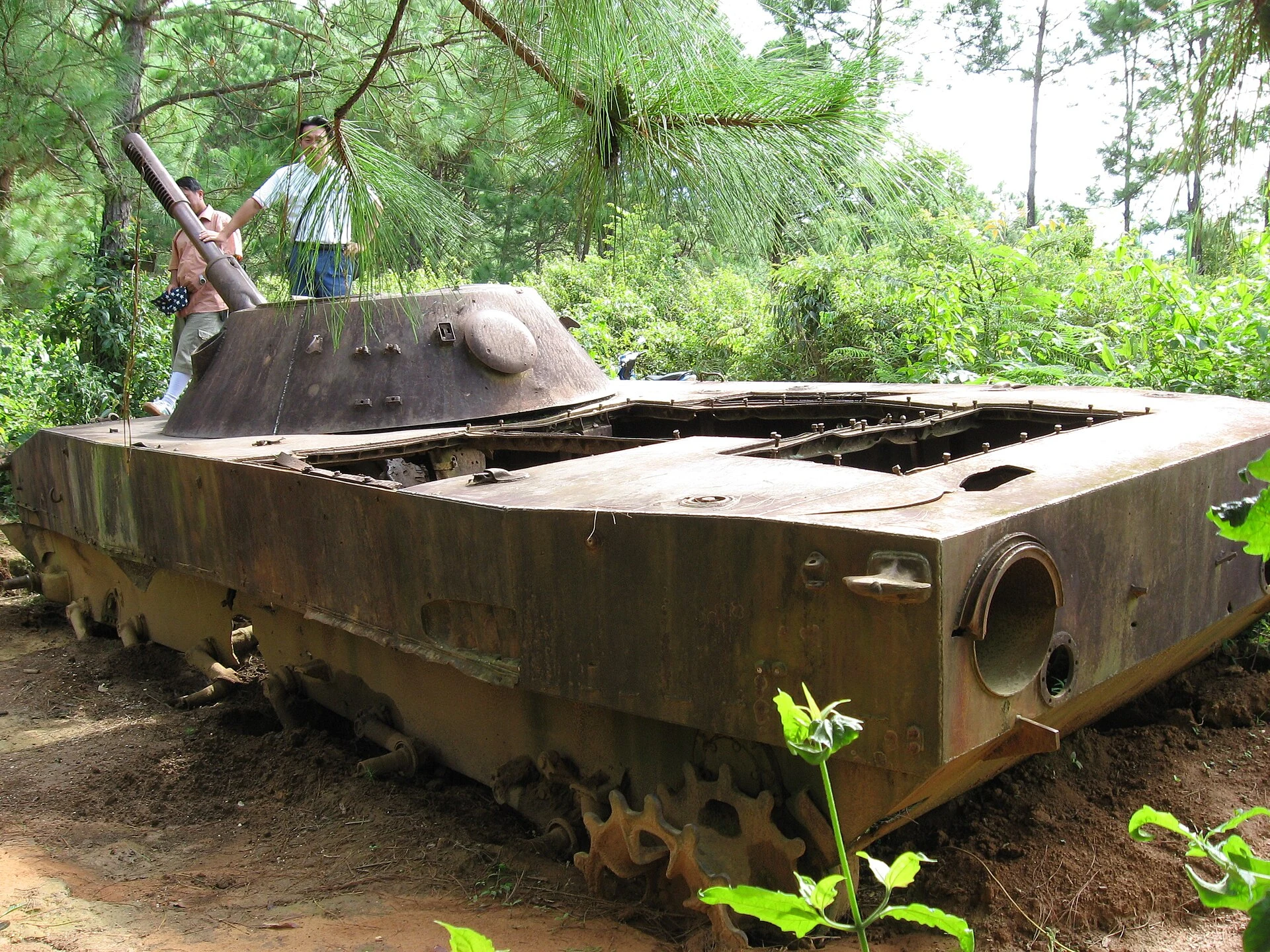
The jars belong to an ancient history, but Xiengkhouang also bears the material impact of the bombings of the second half of the 20th century. Craters, damaged fragments and the presence of unexploded ordnance mean the countryside cannot be treated as an open space for free exploration.
The practical rule is simple and allows no shortcuts: follow marked paths, do not cross fences or leave the route in search of better angles, and do not pick up or handle metal objects. This protects visitors, prevents interference with clearance work and respects the communities that live and farm in a region affected by this legacy.
During the rainy season, road and path conditions can change, and heavy storms can complicate travel in rural areas. Before leaving Phonsavan, ask for an update on access that day and change the order of the sites if local authorities or your driver advise it.
Read the jars without turning them into a legend
The large vessels, carved from stone and distributed across hills and spurs, are associated with funerary practices developed approximately between 500 BC and AD 500. The complex also preserves discs, secondary burials, markers, quarries and other archaeological elements. This combination matters more than a single explanation for the exact function of every vessel.
Research is ongoing, and not every aspect of the society that created these places has been resolved. It is more honest to focus on what can actually be observed: the skill required to extract, carve and move enormous blocks; the deliberate choice of locations; and the area’s probable connection with regional overland routes.
If you are looking for an experience centred on material culture and landscape, this visit has real depth. If you expect an archaeological theme park, with comprehensive interpretation at every point and spontaneous movement between dozens of sites, the destination requires you to adjust your expectations.
References to check before setting out
- UNESCO World Heritage Centre: scope of the inscribed property, archaeological values and maps of its 15 components.
- Official Laos tourism portal: information on Sites 1, 2 and 3, travel options from Phonsavan and operational changes.
- National Regulatory Authority for UXO/Mine Action Sector in Lao PDR: context and recommendations concerning the risk of unexploded ordnance.
- United States Department of State and the United Kingdom’s Foreign, Commonwealth & Development Office: current advice for Laos and Xiengkhouang, including alerts concerning security, roads and explosive remnants.
Consult these sources shortly before travelling: access, local transport, weather conditions and safety recommendations are all time-sensitive information.
References consulted during editorial review. Times, requirements and advisories may change: always confirm with the official source.
- https://whc.unesco.org/en/list/1587 whc.unesco.org
- https://whc.unesco.org/en/list/1587/documents/ whc.unesco.org
- https://whc.unesco.org/en/list/1587/maps whc.unesco.org
- https://whc.unesco.org/en/list/1587/gallery/ whc.unesco.org
- https://whc.unesco.org/document/176157 whc.unesco.org
- https://whc.unesco.org/en/documents/176336 whc.unesco.org
- https://whc.unesco.org/en/list/1587/indicators/ whc.unesco.org
- https://whc.unesco.org/en/list/1587/assistance/ whc.unesco.org
- Laos WikidataCC0 1.0 Wikidata · Q819
- Laos WikidataCC0 1.0 Wikidata · Q28322504
- Laos WikidataCC0 1.0 Wikidata · Q3217694
- laos WikidataCC0 1.0 Wikidata · Q383946
- Laos WikidataCC0 1.0 Wikidata · Q1805723
- Laos World Countries — mledozeODbL 1.0 World countries dataset by mledoze and contributors · ODbL 1.0
- Lao PDR World Bank Open DataCC BY 4.0 World Bank
- Laos DBpediaCC BY-SA 3.0 DBpedia
- Plain of Jars GeoNamesDatos geográficos bajo CC BY 4.0; requiere atribución a GeoNames. Fuente: GeoNames
- Phonsavan GeoNamesDatos geográficos bajo CC BY 4.0; requiere atribución a GeoNames. Fuente: GeoNames
- Phonsavan, Pek District, Xiangkhouang Province, Laos OpenStreetMapODbL 1.0; atribución y obligación de compartir bases derivadas. Fuente: OpenStreetMap
- Plain of Jars Site 1, ທາງອອ້ມສວນມາລີ, Phonsavan, Pek District, Xiangkhouang Province, Laos OpenStreetMapODbL 1.0; atribución y obligación de compartir bases derivadas. Fuente: OpenStreetMap