Oman · Ad Dakhiliyah
Birkat Al Mouz and Falaj Al-Khatmayn on an Omani oasis walk
At the foot of Jabal Al Akhdar, water in Birkat Al Mouz is not mere scenery: Falaj Al-Khatmayn shapes the palm groves, architecture and pace of a visit.
Conditions described in the guide: confirm current requirements and access with the official source before travelling.
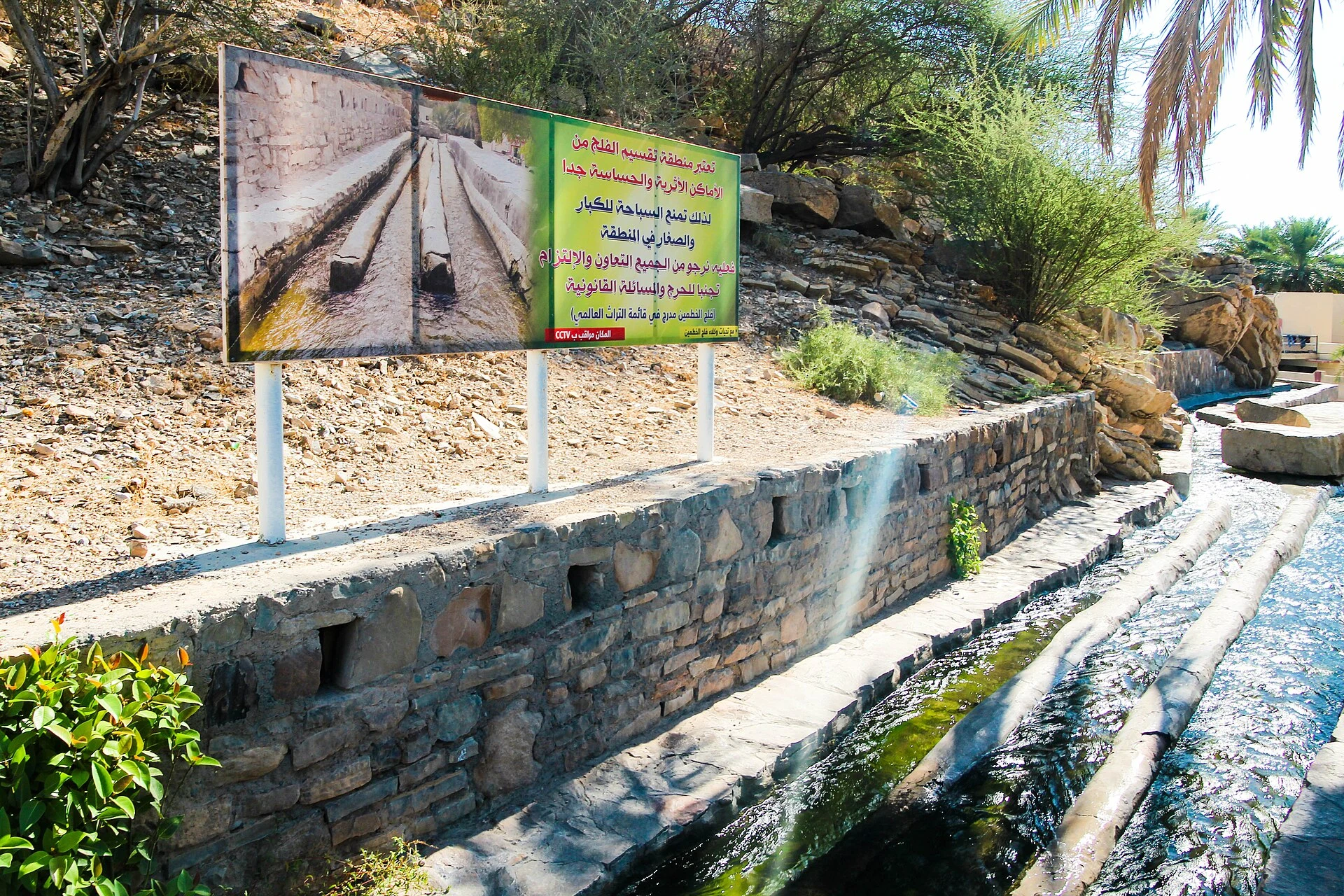
Birkat Al Mouz offers a different kind of stop in Oman’s interior: a cluster of earthen houses, palm gardens and channels where water still serves an everyday purpose. The main reason to pause here is Falaj Al-Khatmayn, one of five Omani irrigation systems inscribed on the World Heritage List, and the chance to understand it as living, shared infrastructure, rather than as an isolated ruin.
The visit works best as an attentive walk lasting a few hours, especially when combined with Bayt Ar-Ridaydah. There is no need to turn the place into an excursion with many stops: watching the channel pass through the fort and continue towards the cultivated fields offers a fuller reading of the site than simply seeking out old façades.
Start with the water, not the photograph
A falaj carries water by gravity from an underground source, spring or runoff to areas used for domestic and agricultural purposes. Thousands of these systems remain active in Oman; the five included in the heritage designation represent a technical and social tradition in which water distribution depends on community agreements and careful management.
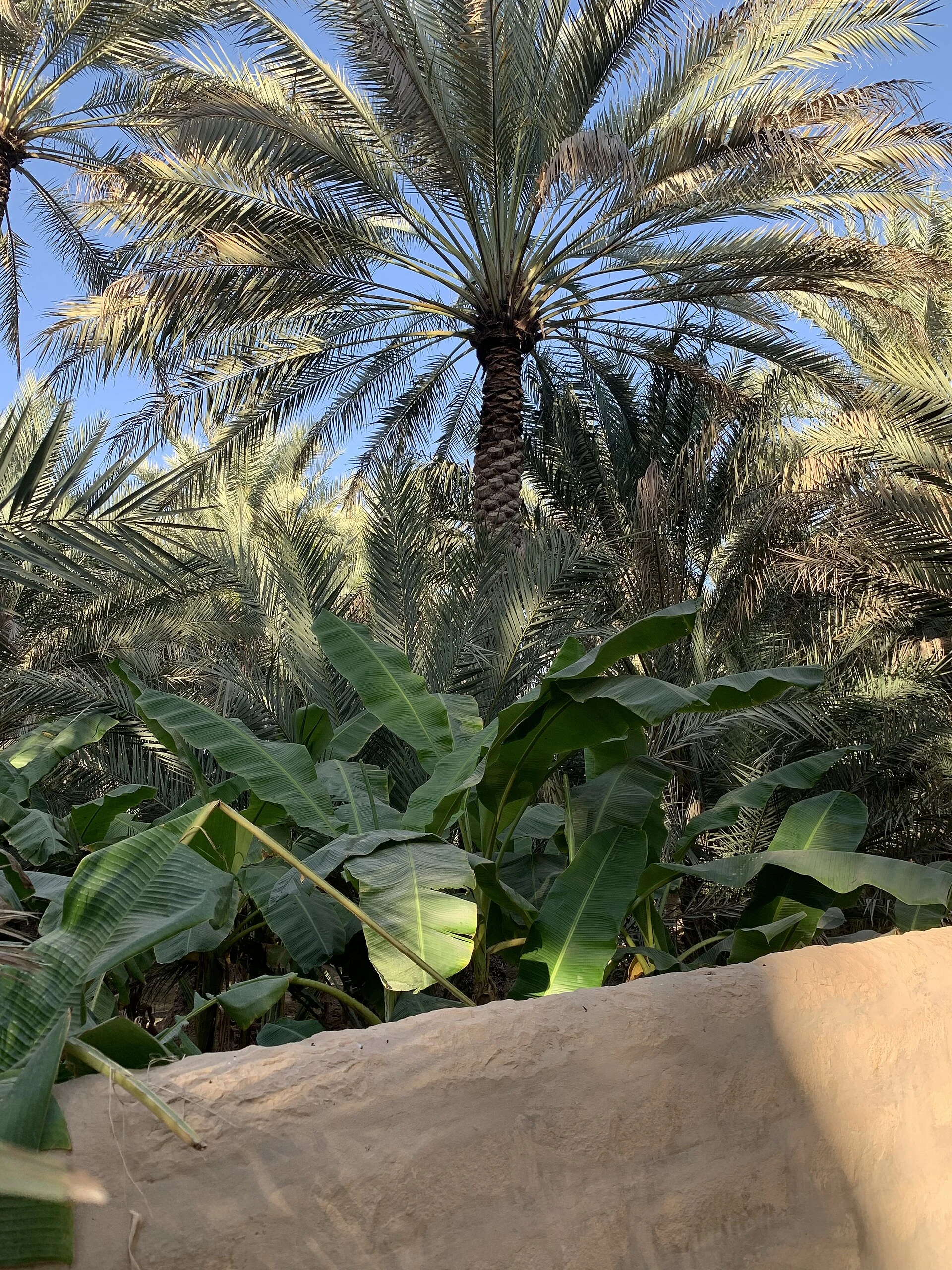
In Birkat Al Mouz, Al-Khatmayn is the key to understanding the landscape: the channel explains the presence of palm trees, the density of the vegetation and the position of the buildings. Walk along public sections without entering cultivated plots, house entrances or water-distribution points. The best souvenir here is not a picture of the water, but an understanding that it continues to support local uses.
Closed shoes with good grip are advisable: there are steps, uneven surfaces and narrow edges beside the channels. Keep your voice down, do not block work routes and ask before photographing people or domestic spaces.
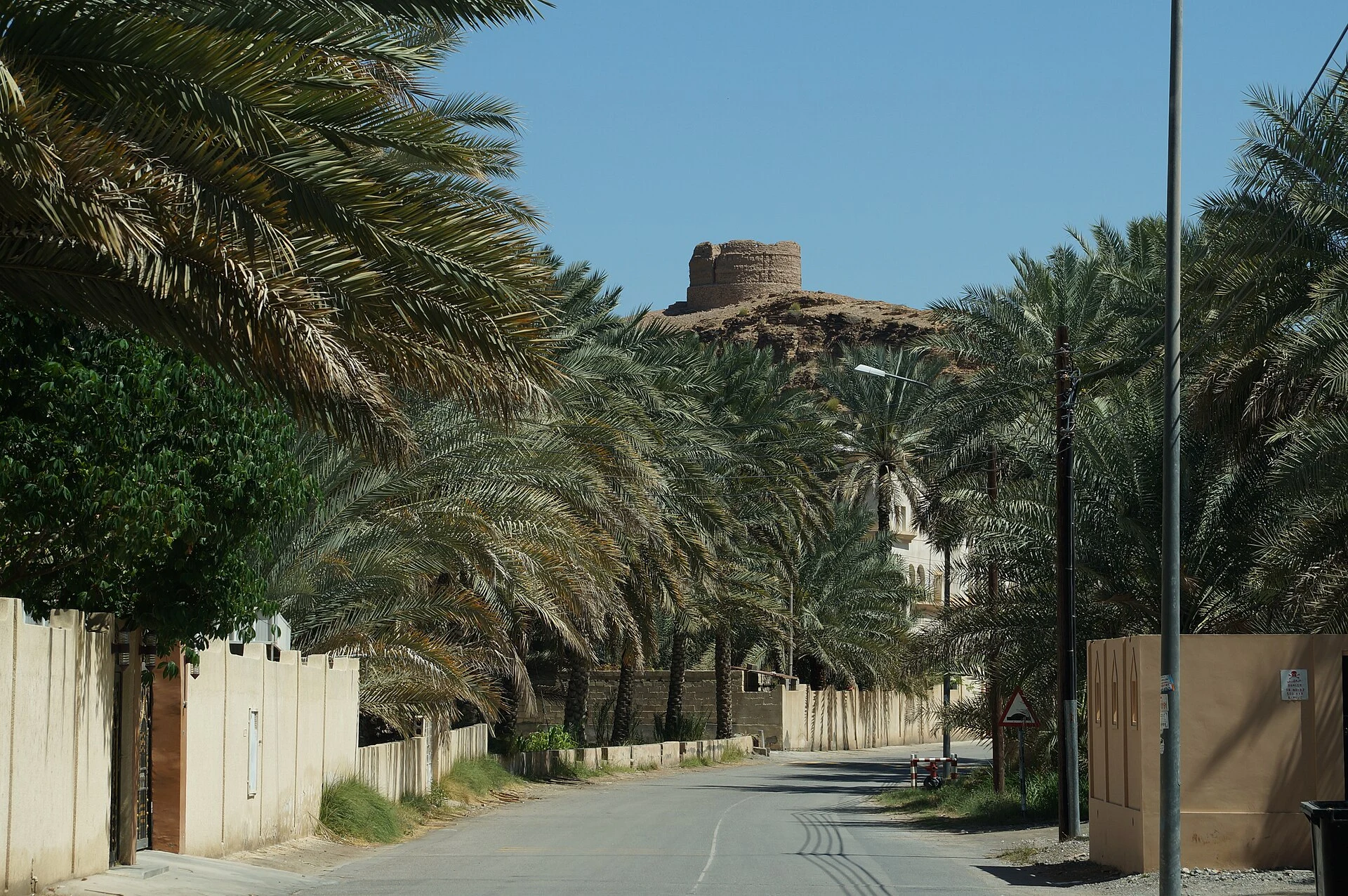
Bayt Ar-Ridaydah puts the channel into context
Around 24 kilometres from central Nizwa, at the entrance to Wadi Al-Muaydin and west of Birkat Al Mouz, Bayt Ar-Ridaydah reveals an unusual relationship between defensive architecture and irrigation: Falaj Al-Khatmayn crosses its courtyard. The building was erected in the 17th century and retains rooms, a well and defensive features that help connect water, supply and the control of routes towards Jabal Al Akhdar.
A visit to the fort complements the outdoor walk because it brings together information that the channel alone does not always make visible. It is also the more suitable part of the experience for visitors who need cultural attractions with facilities: the official listing indicates wheelchair accessibility within the site and guided tours available on request. This should not be extended to the historic streets or palm-grove paths, which have different conditions.
Opening hours, purchasing tickets at reception and guide availability are operational details: confirm them before travelling, especially if the fort is the focus of your day.
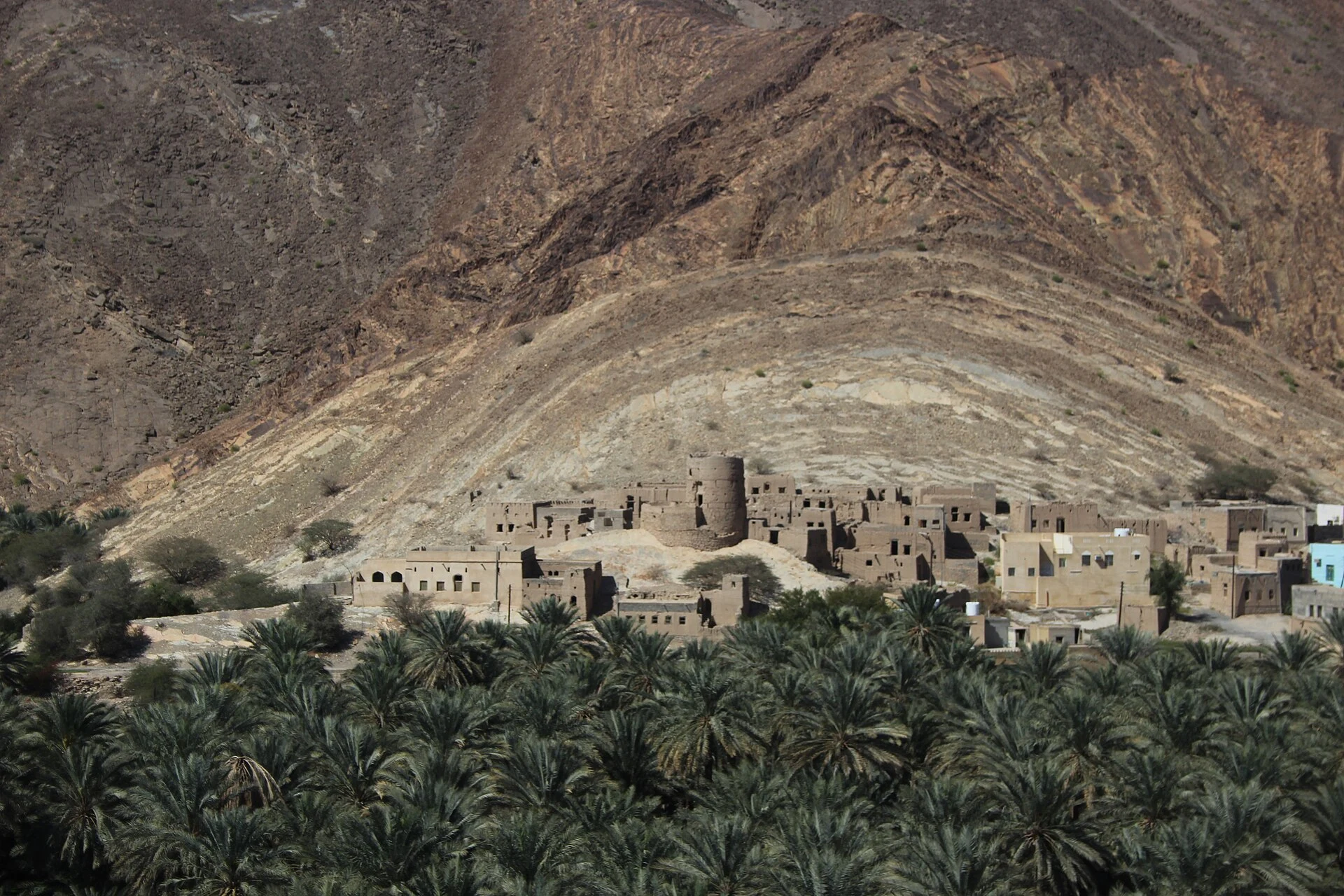
A useful stop on the route from Nizwa to Jabal Al Akhdar
Birkat Al Mouz works well as a break between Nizwa and the mountains, but it deserves time of its own rather than being treated as a simple scenic stop. A car or hired driver is the most realistic option for linking Nizwa, the fort and the village; this article does not present public transport as a practical way to arrive.
Plan Bayt Ar-Ridaydah first, then leave time to walk around the falaj at an unhurried pace. If you continue to Jabal Al Akhdar, keep the two plans separate: the oasis is explored on foot and without rushing, while the mountain road requires checking the vehicle’s condition and the requirements currently in force for the ascent.
The fort’s official tourism listing identifies October to April as the preferred visiting period. Treat this as guidance for an inland stop, not as a guarantee of temperature or water flow: check the weather forecast, road conditions and local notices on the specific date of your trip.
References and checks before setting out
Context sources: UNESCO World Heritage Centre, the listing for the Aflaj Irrigation Systems of Oman; National Museum of Oman, Aflaj Gallery; Experience Oman, listings for Birkat Al Mouz and Bayt Ar-Ridaydah.
Check before visiting: Experience Oman for opening hours, admission, facilities, accessibility and guided tours at Bayt Ar-Ridaydah; Oman’s Ministry of Heritage and Tourism and local authorities for road, weather or other notices affecting activities in Jabal Al Akhdar and the wadis.
UNESCO confirms that Al-Khatmayn forms part of a serial property comprising five aflaj. The National Museum provides the historical and technical framework for interpreting these channels as still-active water-management systems.
What to take away from Birkat Al Mouz
- A way to read the oasis: the falaj, gardens and architecture form a single system.
- A sensible order for the visit: the fort first for context; the walk along the water afterwards.
- A realistic expectation: this is an experience of observation and respect in an inhabited setting, not a theme park or a fully adapted urban route.
References consulted during editorial review. Times, requirements and advisories may change: always confirm with the official source.
- https://gov.om/en/ministry-of-heritage-and-tourism gov.om
- https://booknow.visitoman.om/en/destination/misfatalabriyyin booknow.visitoman.om
- https://whc.unesco.org/en/list/1207 whc.unesco.org
- https://mht.gov.om/ mht.gov.om
- https://gov.om/en/w/inspect-historical-or-archaeological-landmark gov.om
- https://mht.gov.om/contact-us_/contact-ministry/ mht.gov.om
- https://mht.gov.om/ar/ mht.gov.om
- https://whc.unesco.org/en/documents/198031 whc.unesco.org
- Omán WikidataCC0 1.0 Wikidata · Q842
- Oman WikidataCC0 1.0 Wikidata · Q13918545
- Oman WikidataCC0 1.0 Wikidata · Q20520262
- Oman World Countries — mledozeODbL 1.0 World countries dataset by mledoze and contributors · ODbL 1.0
- Oman World Bank Open DataCC BY 4.0 World Bank
- Oman DBpediaCC BY-SA 3.0 DBpedia