Central India · Madhya Pradesh
Sanchi and Udayagiri: linking stupa, museum and Gupta caves
A day trip from Bhopal or Vidisha to read two very different sacred landscapes: Sanchi’s monumental Buddhism and Udayagiri’s rock-cut sculpture.
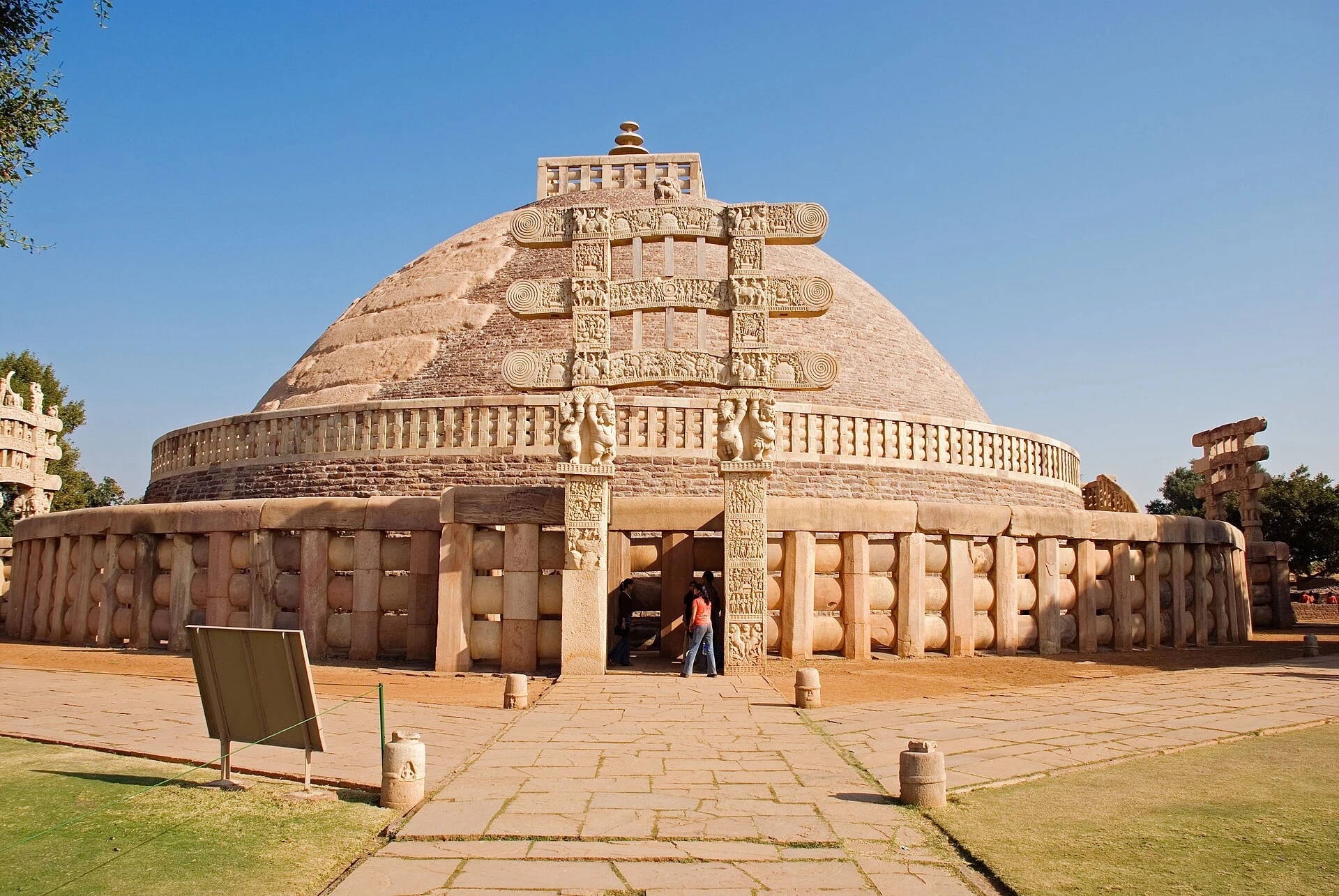
Sanchi and Udayagiri are not a hurried collection of monuments: together, they offer a way to follow two religious and artistic languages that developed in central India over several centuries. Sanchi’s stupa, toranas and monasteries call for time to look at their carved narratives; Udayagiri’s caves demand a different kind of attention, focused on rock, inscriptions and Gupta iconography. The plan works best as a full-day excursion with private transport between sites, rather than a race to tick off attractions.
Start with Sanchi and what its hill has to tell you
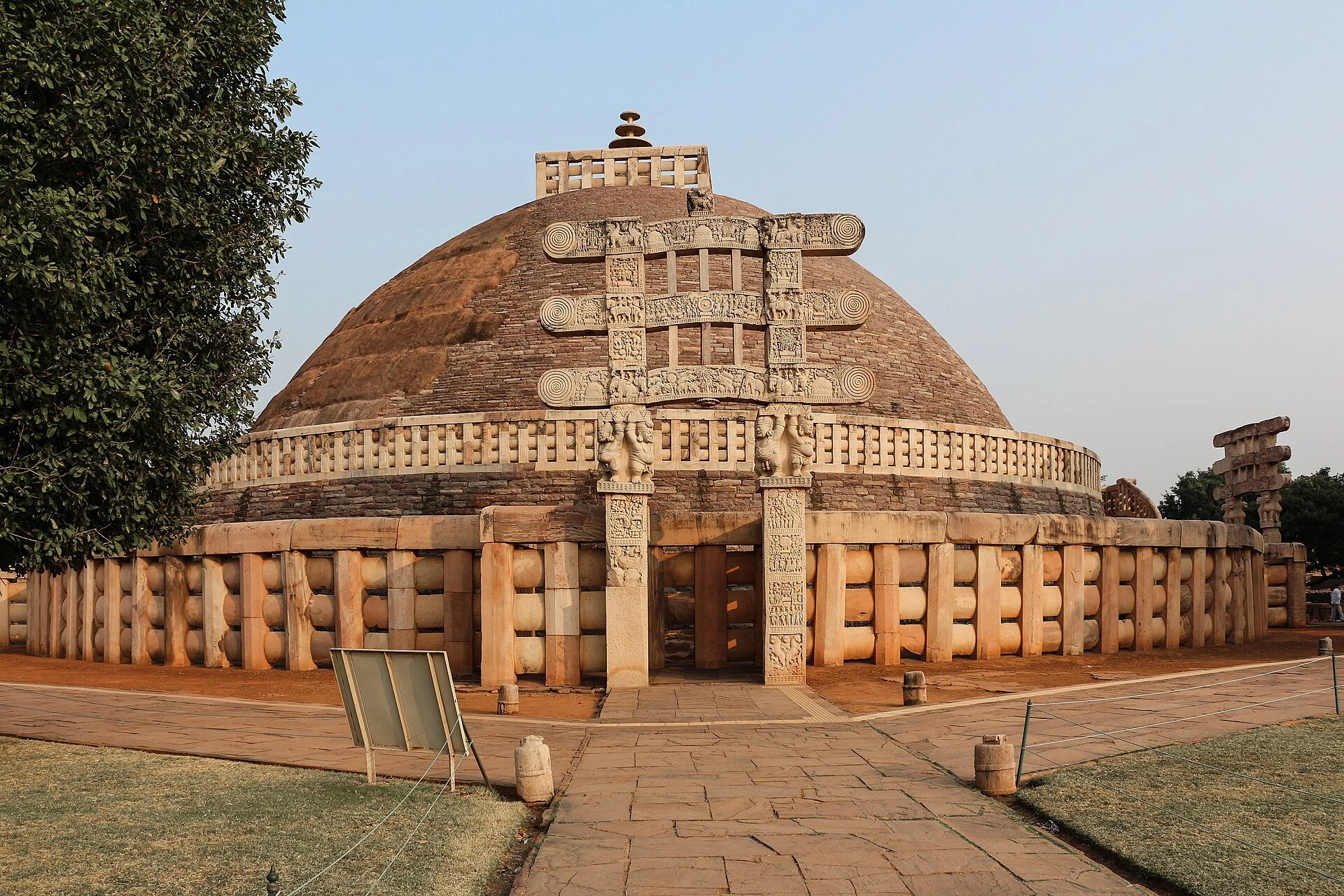
Sanchi Hill brings together stupas, temples, monasteries and a pillar associated with the period of Aśoka. Its importance does not rest solely on the Great Stupa: the complex reveals a long architectural continuity, from the early centuries BCE through later phases.
Devote the first part of your visit to Stupa 1, taking your time to walk around its four toranas, or monumental gateways. The reliefs are not read as a gallery of portraits: much of the early tradition represents the Buddha through symbols, episodes and indirect presences. This changes the way you visit the site: look for animals, trees, wheels, processions and narrative scenes before trying to identify a central figure.
Do not limit your visit to the main stupa. The smaller buildings, foundations, monastic remains and the elevated position of the complex show that Sanchi was a religious centre maintained over time, not an isolated monument. Walking across the hill is part of the experience; leave room for pauses and avoid planning Udayagiri within an overly tight time slot.
The museum provides context before you leave for Vidisha
The Sanchi Archaeological Museum, at the foot of the hill, is a useful stop if you want to connect the fragments and sculptures with the complex outdoors. Its galleries contain pieces from Sanchi and nearby places, including Buddhist and Brahmanical material from several periods.
The practical decision is simple: if you only have half a day, stay in Sanchi and combine the hill and museum. If you have a full day, visit the museum after the monuments or before climbing the hill, depending on the heat and your arrival time. This way, Udayagiri stops being a photographic add-on and becomes the second chapter of the route.
Museum opening hours, closing days, fees, access controls and any restrictions should be confirmed directly before setting out. Do not base your itinerary on schedules published by third parties or on old reviews.
Udayagiri changes the scale: a hillside carved in the Gupta period
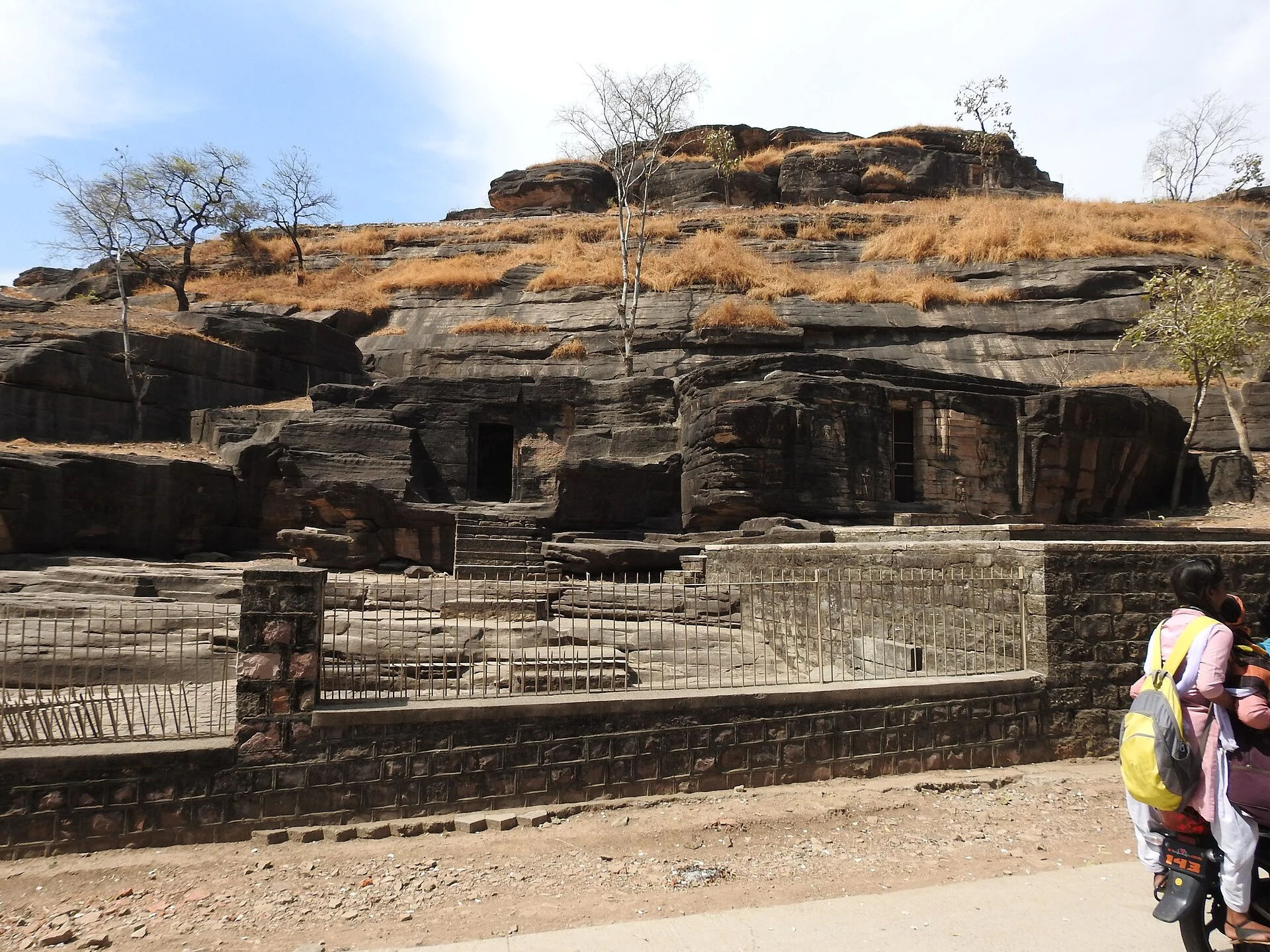
From the Sanchi area, travelling towards Vidisha and Udayagiri requires road transport to be arranged. The Udayagiri caves form a group of twenty excavated chambers in a sandstone hill and are associated with the Gupta period. Here, the interest lies not in a grand structure visible from afar, but in the relationship between relief, inscription and rock-cut space.
The most famous cave preserves a large relief of Varāha, Vishnu’s boar incarnation. It is worth observing without reducing it to a monumental image: notice how the composition makes use of the rock face and the density of figures accompanying the god. The site also preserves expressions of Hindu and Jain traditions, providing an important counterpoint to Sanchi’s predominantly Buddhist landscape.
This is not a place for the pace of an urban visit. The terrain, exposure to the sun and time needed to move between chambers make sturdy footwear and water advisable, along with realistic expectations: an attentive visit to Udayagiri means selecting what you want to look at rather than chasing every cave number.
A workable route from Bhopal, with Vidisha as the link
Bhopal is the most logical base for travellers arriving by air or long-distance train; Sanchi lies a few dozen kilometres from the city. Vidisha, meanwhile, has rail connections and serves as the territorial link for reaching Udayagiri.
For a full day, plan Sanchi in the morning, the museum if it is open, and then Udayagiri by road. A car with a driver or a taxi arranged for the day simplifies the connection between the two sites and reduces uncertainty over the final kilometres. If you travel by train to Vidisha, check the availability of local transport to both complexes beforehand, and do not assume frequent services or a late-night return.
The route also requires a decision about pace: Sanchi deserves more time if Buddhist art and architecture are your interests; Udayagiri deserves more time if Gupta sculpture and inscriptions are your priority. Trying to add many other places on the same day usually comes at the expense of understanding both.
Visit attentively: a religious landscape, not a backdrop
Sanchi remains important to Buddhist visitors and pilgrims, while Udayagiri retains a religious and historical dimension that cannot be reduced to its reliefs. Behave discreetly and without intrusion: do not climb structures or surfaces not intended for walking, do not touch sculptures, and leave space for anyone engaged in devotional practice.
Heat, harsh light and limited shade can significantly change the experience. October to March is generally the period recommended by local authorities for visiting Sanchi; even so, check the forecast and adapt the day. People with reduced mobility, families with pushchairs and travellers who need even surfaces should check the specific access conditions in advance: do not assume a visit without slopes or steps.
Verify before you go the opening hours, weekly closures, admission fees, photography rules, works and access arrangements for Sanchi, its museum and Udayagiri in the following official sources.
References to verify before travelling
- UNESCO World Heritage Centre, the entry for the Buddhist Monuments at Sanchi.
- Sanchi Archaeological Museum, managed by the Archaeological Survey of India.
- Vidisha District Government, official information on the Udayagiri caves and connections.
- Madhya Pradesh Tourism, official guidance on Sanchi and the Vidisha–Udayagiri circuit.
References consulted during editorial review. Times, requirements and advisories may change: always confirm with the official source.
- https://whc.unesco.org/en/list/524 whc.unesco.org
- https://whc.unesco.org/en/list/524/documents whc.unesco.org
- https://whc.unesco.org/en/list/524/maps/ whc.unesco.org
- https://whc.unesco.org/en/documents/104305 whc.unesco.org
- https://whc.unesco.org/en/documents/110643 whc.unesco.org
- https://whc.unesco.org/en/search/?criteria=Sanchi whc.unesco.org
- https://whc.unesco.org/en/documents/216877 whc.unesco.org
- https://whc.unesco.org/en/list/524/gallery/ whc.unesco.org