Mauritania · heritage and travel decisions
Chinguetti and Ouadane, two Adrar ksour to visit later
The ancient cities of Chinguetti and Ouadane preserve an exceptional Saharan urban form, but current warnings for Adrar make it prudent to postpone a tourist trip.
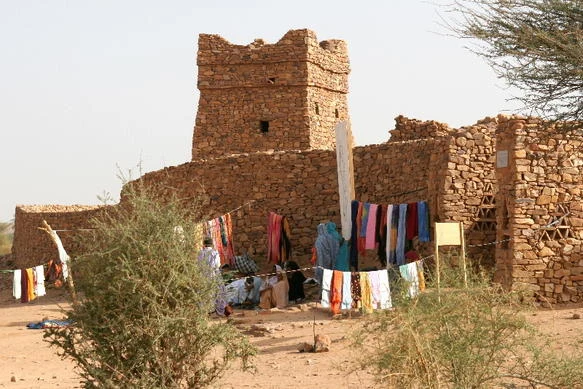
Chinguetti and Ouadane belong to a cultural landscape where stone, sand and former caravan routes still define the space. Their narrow streets, courtyard houses and square-minaret mosques help explain an urban tradition adapted to the desert. But today, practical judgment matters more than curiosity: travel advisories for Mauritania and the Adrar region are serious. For most travellers, postponing the visit is the most responsible option until official recommendations change.
Two cities for understanding the Saharan network
Chinguetti and Ouadane are not isolated ruins or sand-set film sets: they are two of the four ancient Mauritanian ksour jointly inscribed as World Heritage. They emerged between the eleventh and twelfth centuries as stopovers on routes linking the Maghreb, the Sahara and the regions south of the desert.
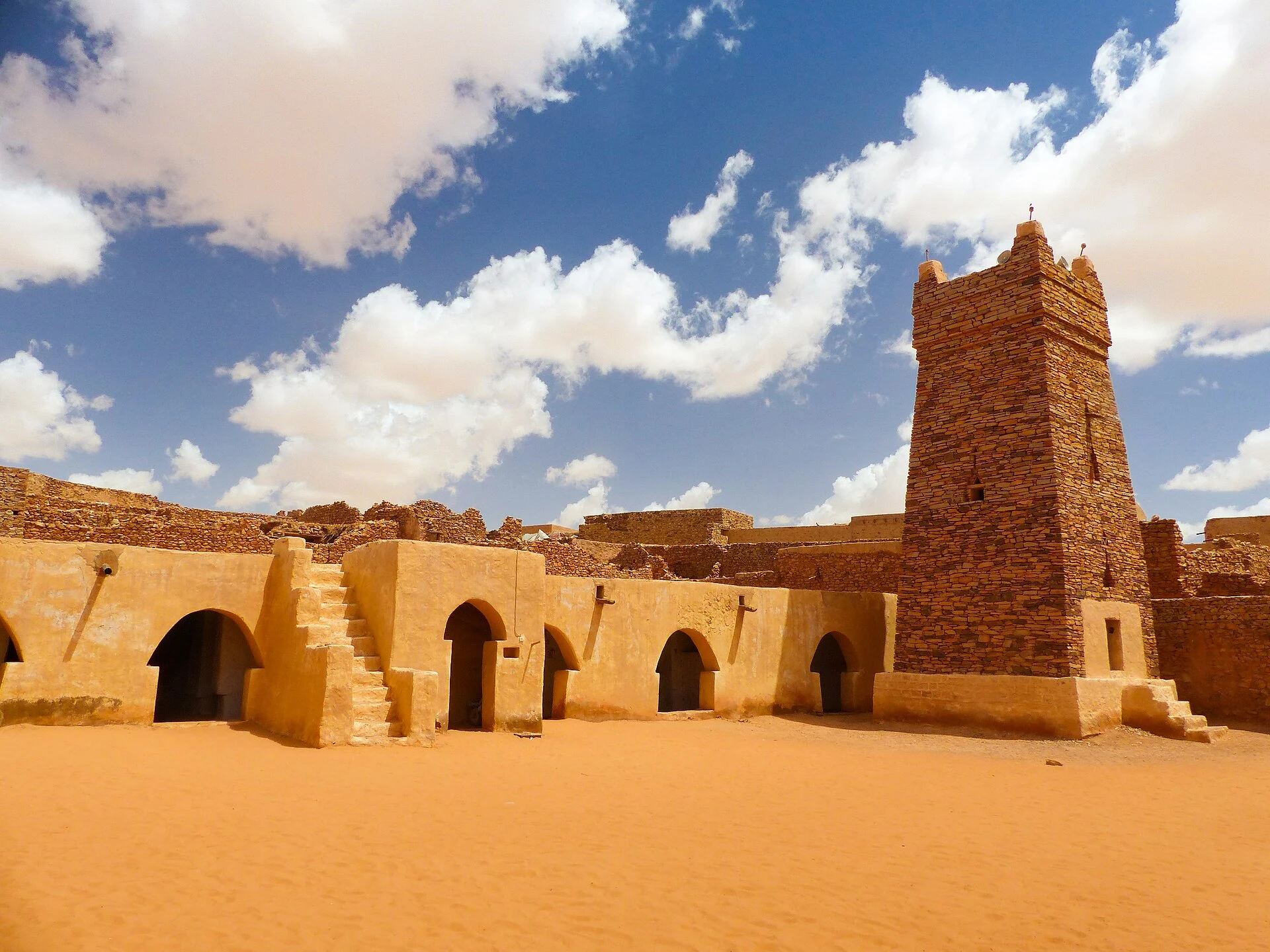
A visit would be worthwhile because of their compact urban fabric: winding passages, walls that are almost blank on the outside, interior courtyards and local stone. In Chinguetti, the historic mosque provides a visual focus for the old settlement; in Ouadane, the terraced town makes it possible to read the relationship between the settlement, the valleys and the arid surroundings. These are places to observe patiently an architecture shaped for the climate and community life, not to tick off in a series of hurried stops.
It is also important to avoid viewing them as frozen in the past. These complexes express the continuity—and transformation—of ways of living linked to nomadic cultures, Islamic knowledge and long-distance exchange. Their conservation faces real pressures, including sand accumulation, desertification and socioeconomic change.
Why the trip should remain on hold
The Adrar region is currently among the areas for which authorities in several countries maintain enhanced security advisories. One directly advises against travelling to Adrar because of the high risk of kidnapping; others urge travellers to reconsider trips to Mauritania because of terrorism, crime and limited healthcare infrastructure.
That changes the meaning of an itinerary completely. This is not a destination for improvising transport or driving independently to remote desert towns. Official recommendations themselves point out that travel outside urban areas can be difficult, discourage travelling at night and advise using suitable vehicles, supplies and experienced support.
The existence of geographical exceptions within some advisories is not a guarantee of safety or an invitation to travel. Military boundaries and regional conditions can change quickly. If your nationality’s official advisory discourages travel to Adrar, the practical conclusion is clear: postpone Chinguetti and Ouadane, even if both places lie outside certain restricted areas shown on other consular maps.
What to prepare now without turning it into a booking
Postponing the trip does not mean forgetting the destination. This can be a good time to place Chinguetti and Ouadane within the wider group of ancient ksour, which also includes Tichitt and Oualata. That perspective avoids reducing them to a photographic excursion and explains why their protection depends as much on the built fabric as on the communities and desert territory surrounding them.
When conditions change, prioritise a slow, local approach: confirm through an official source whether the area is suitable for travel, check road and checkpoint conditions, and use only services that can clearly explain their operating measures, routes and emergency contacts. Do not assume that timetables, accommodation, fuel, connectivity, guide availability or access to historic buildings will be in place.
If a reasonable window for travel eventually reopens, the best criterion will not be how many places fit on the map, but whether you can give both settlements enough time without forcing journeys or asking residents to turn religious, domestic or fragile spaces into spectacles for visitors.
References to check before making any plans
- United States Department of State — Mauritania Travel Advisory. Issued on 18 August 2026; it places the country at Level 3, “Reconsider Travel”, and identifies risks from terrorism, crime and limited healthcare infrastructure.
- Australian Government Smartraveller — Mauritania: travel advice and safety. Current on 16 September 2026; it advises against travelling to Adrar because of the high risk of kidnapping.
- United Kingdom Foreign, Commonwealth & Development Office — Regional risks and security in Mauritania. It notes varying restrictions in parts of Adrar and recommends a convoy and an experienced guide for travel outside urban areas, including the tourist sites of Chinguetti.
- UNESCO World Heritage Centre — Ancient Ksour of Ouadane, Chinguetti, Tichitt and Oualata. Source for the historical, urban and conservation context of the property inscribed in 1996.
Advisories, restricted areas, entry requirements, road conditions and available services are time-sensitive information: check them directly in these official sources before booking or travelling.
Key ideas
- Chinguetti and Ouadane offer insight into two historic Saharan cities linked to caravan routes and Islamic learning.
- Their value lies in inhabited architecture, their relationship with the desert and conservation that remains vulnerable.
- Current official recommendations for Adrar mean that a tourist trip should be postponed for now.
- Researching the heritage today and checking advisories in the future is a more useful way to prepare for a possible visit.
References consulted during editorial review. Times, requirements and advisories may change: always confirm with the official source.
- https://whc.unesco.org/en/list/750 whc.unesco.org
- https://whc.unesco.org/en/activities/1307/ whc.unesco.org
- https://whc.unesco.org/document/154180 whc.unesco.org
- https://whc.unesco.org/en/statesparties/mr whc.unesco.org
- https://whc.unesco.org/en/decisions/2999 whc.unesco.org
- https://travel.state.gov/en/international-travel/travel-advisories/mauritania.html travel.state.gov
- https://whc.unesco.org/en/list/750/documents/ whc.unesco.org
- https://whc.unesco.org/en/decisions/901/ whc.unesco.org
- Mauritania WikidataCC0 1.0 Wikidata · Q1025
- Mauritania WikidataCC0 1.0 Wikidata · Q309272
- Mauritania World Countries — mledozeODbL 1.0 World countries dataset by mledoze and contributors · ODbL 1.0
- Mauritania World Bank Open DataCC BY 4.0 World Bank
- Mauritania DBpediaCC BY-SA 3.0 DBpedia
- El camino de los lenguajes asociativos en Mauritania: La diversidad cultural como instrumento OpenAlexCC0 1.0 OpenAlex
- El camino de los lenguajes asociativos en Mauritania: La diversidad cultural como instrumento OpenAlexCC0 1.0 OpenAlex