Albania · historic city
Gjirokastër from the Bazaar to the Tower Houses and Fortress
A walking route through Gjirokastër to understand its tower houses, bazaar and fortress, with practical attention to steep slopes, cobblestones and changing opening hours.
Conditions described in the guide: confirm current requirements and access with the official source before travelling.
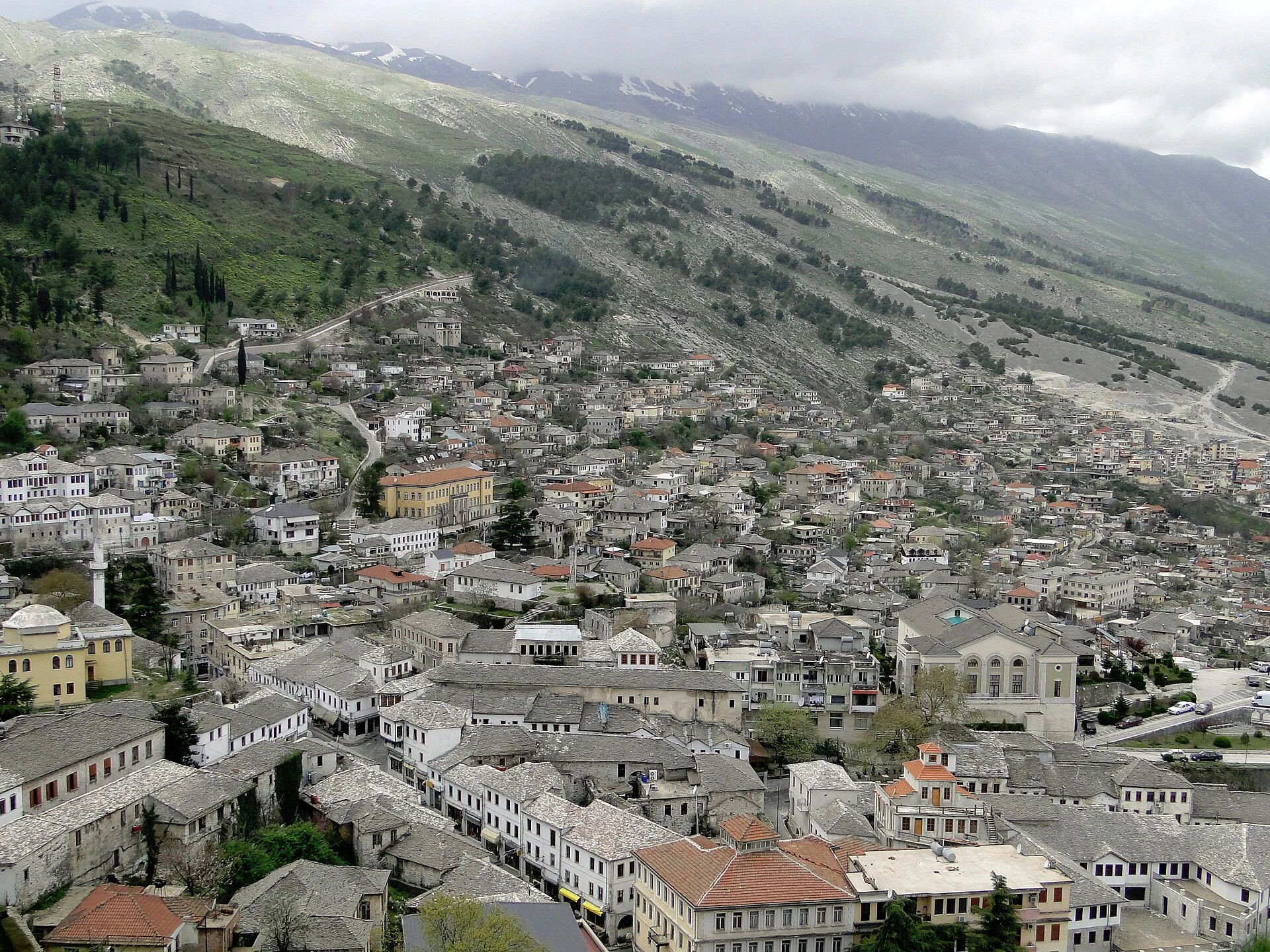
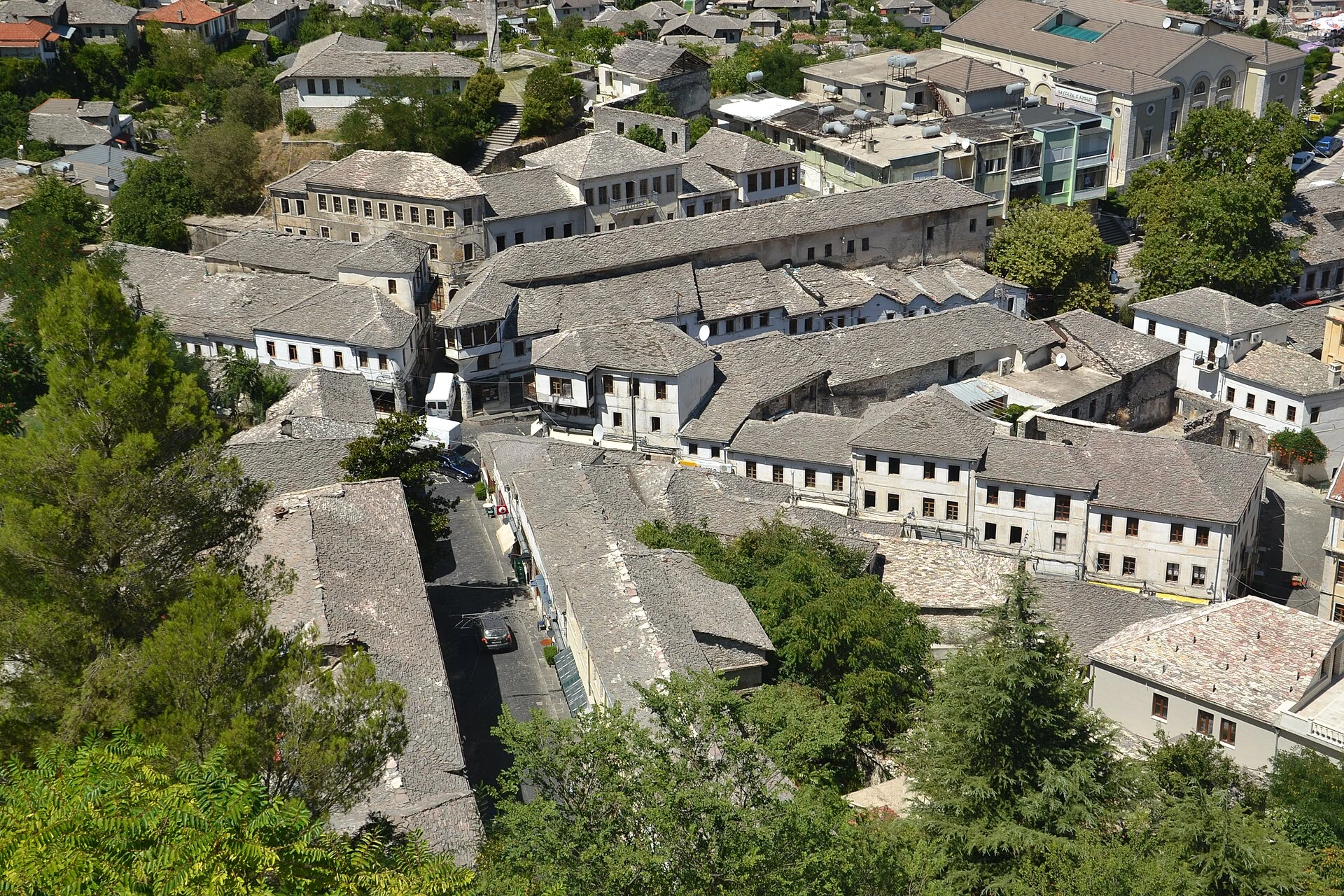
Gjirokastër is best experienced as a city on a hillside, not as a sequence of monuments. The fortress, old bazaar and tower houses form a connected whole that explains how power, trade and domestic life were organised on the slope overlooking the Drino Valley. Its historic centre shares a place on the World Heritage List with Berat, but here the appeal lies in the relationship between stone roofs, fortified residences and the streets climbing towards the castle.
For travellers short on time, the key decision is simple: save your energy for the hills and go inside at least one tower house. From the outside, the façades make a powerful impression; indoors, you can understand the hierarchy of spaces, domestic defence and the role of reception rooms. This is a slow-paced visit, with uneven paving and entrances that may change.
A short route that follows the logic of the city
Start at the old bazaar, around Qafë e Pazarit, when the shops and workshops begin their day. Do not treat it merely as a photo stop: it was the trading space that connected the residential neighbourhoods with the fortress. From there, the stone lanes let you read the city in layers: commerce below, homes stepping up the slope and military power above.
Continue towards the Gjirokastër fortress by whichever direct uphill route is open. The castle contains traces of different periods, including a weapons museum, the remains of a Communist-era prison and a US aircraft associated with the Cold War. This concentration of objects and ruins does not replace historical interpretation, but it does prevent the fortress from being reduced to a viewpoint.
Then go back down by a different street towards the historic houses. The detour is worthwhile: the urban fabric was not designed for fast movement or straight lines. Allow time for breaks, wear shoes with good grip and do not base your plans on a route accessible to wheeled mobility: the slopes, steps and cobblestones are a structural part of the experience.
Choosing between Zekate and Skënduli
Zekate House is a good choice if you want to understand the outward scale of a kullë, the Balkan tower house: stone walls, lower levels for service and defence, and upper rooms intended for receiving guests. Built in the early nineteenth century for the Zeko family, it preserves a particularly striking composition, both from the valley and from its upper rooms.
Skënduli House, built in 1823, offers another perspective: the interior layout, courtyards, staircases and wooden decoration make clear that these residences were family, social and defensive spaces at the same time. The visit often includes an explanation from someone connected with the house, so it may suit travellers seeking context more than panoramic views.
Do not try to rush through both. Choose one if you have an afternoon, and use the other as an alternative depending on its actual opening status. Historic houses may keep unpredictable hours; confirm access that same day at the local tourist information point or with the person responsible for the site. Do not assume they will be open simply because they appear on a map.
The fortress as an archive of overlapping eras
The fortress does not belong to a single chronology. Its elevated position explains its control over the valley, while its transformations reveal a history that extends beyond the domestic city of the seventeenth to nineteenth centuries. Set aside time for the walls, courtyards and views, but also for the features that speak of the twentieth century.
The remains of the Communist-era prison introduce an unsettling dimension of memory that deserves a sober visit. Similarly, the aircraft preserved inside the complex may arouse curiosity, although it is best understood within the history of the Cold War rather than treated as an isolated oddity. The fortress works best when visited as a place where military, administrative and cultural uses accumulated over time.
If time is limited, go in early or leave the climb until late afternoon, without promising yourself a quick visit. The slope, the size of the complex and exposure to the sun all affect the real effort required. Carry water and leave room to stop on the stone sections.
Staying up or down changes the trip
Staying near the bazaar lets you head out early to walk through the historic centre and return easily for a break; in exchange, you will have to deal with the hills and possibly awkward access for bulky luggage. A base in the lower part of the city usually makes arrivals, shopping and everyday travel easier, but adds uphill walks when visiting the historic area.
For a weekend getaway, a sensible plan is to devote one afternoon to the bazaar and a tower house, and the following morning to the fortress and quieter streets. This leaves room for a variable opening schedule without allowing it to derail the plan. If you have only a few hours, prioritise the bazaar, one historic house and the fortress; there is no need to turn every side street into a destination.
Gjirokastër’s conservation also depends on it remaining a lived-in city. Buy crafts only when you can identify the local work, ask before photographing private interiors and avoid climbing on walls, roofs or closed-off areas. Walking slowly is not merely decorative here: it reduces friction in narrow streets and lets you appreciate the domestic scale of the whole.
Check before you travel
Before setting out, check the opening hours, fees, temporary closures and visiting arrangements for the fortress, Zekate House and Skënduli House. It is also worth confirming pedestrian access from your accommodation if you are travelling with reduced mobility, heavy luggage or small children.
Sources consulted in preparing this route:
- UNESCO World Heritage Centre: the historic centres of Berat and Gjirokastër, heritage values and conservation documentation.
- National Tourism Agency of Albania: current information on Gjirokastër, its fortress and Zekate House.
- Gjirokastra Foundation: local information on Zekate and Skënduli houses, their features and visiting conditions.
These sources should be used as the reference for any operational detail that may change.
References consulted during editorial review. Times, requirements and advisories may change: always confirm with the official source.
- https://whc.unesco.org/en/list/569 whc.unesco.org
- https://whc.unesco.org/en/list/569/documents whc.unesco.org
- https://visit-gjirokastra.com/article/the_zekate_house visit-gjirokastra.com
- https://www.gjirokastra.org/sub_links/visiting_sub/visiting_zekate.html www.gjirokastra.org
- https://gjirokastra.org/gjirokastra/skenduli-house/ gjirokastra.org
- https://whc.unesco.org/document/219167 whc.unesco.org
- https://visit-gjirokastra.com/article/skenduli_house visit-gjirokastra.com
- https://whc.unesco.org/en/documents/111171 whc.unesco.org
- Albania WikidataCC0 1.0 Wikidata · Q222
- Albania WikidataCC0 1.0 Wikidata · Q1655535
- Albania WikidataCC0 1.0 Wikidata · Q1576577
- Albania WikidataCC0 1.0 Wikidata · Q107182203
- Albania WikidataCC0 1.0 Wikidata · Q932378
- Albania World Countries — mledozeODbL 1.0 World countries dataset by mledoze and contributors · ODbL 1.0
- Albania World Bank Open DataCC BY 4.0 World Bank
- Albania DBpediaCC BY-SA 3.0 DBpedia
- Gjirokastër GeoNamesDatos geográficos bajo CC BY 4.0; requiere atribución a GeoNames. Fuente: GeoNames
- Zekate House, Rruga Mazllëm Shazivari, Gjirokastra, Bashkia Gjirokastër, Gjirokastër County, 6001, Albania OpenStreetMapODbL 1.0; atribución y obligación de compartir bases derivadas. Fuente: OpenStreetMap