Eastern Switzerland · urban culture
St Gallen: bringing together a monastic library and a textile city
A day in St Gallen can connect medieval manuscripts, Baroque architecture and a textile industry that still offers clues to understanding the city.
Conditions described in the guide: confirm current requirements and access with the official source before travelling.
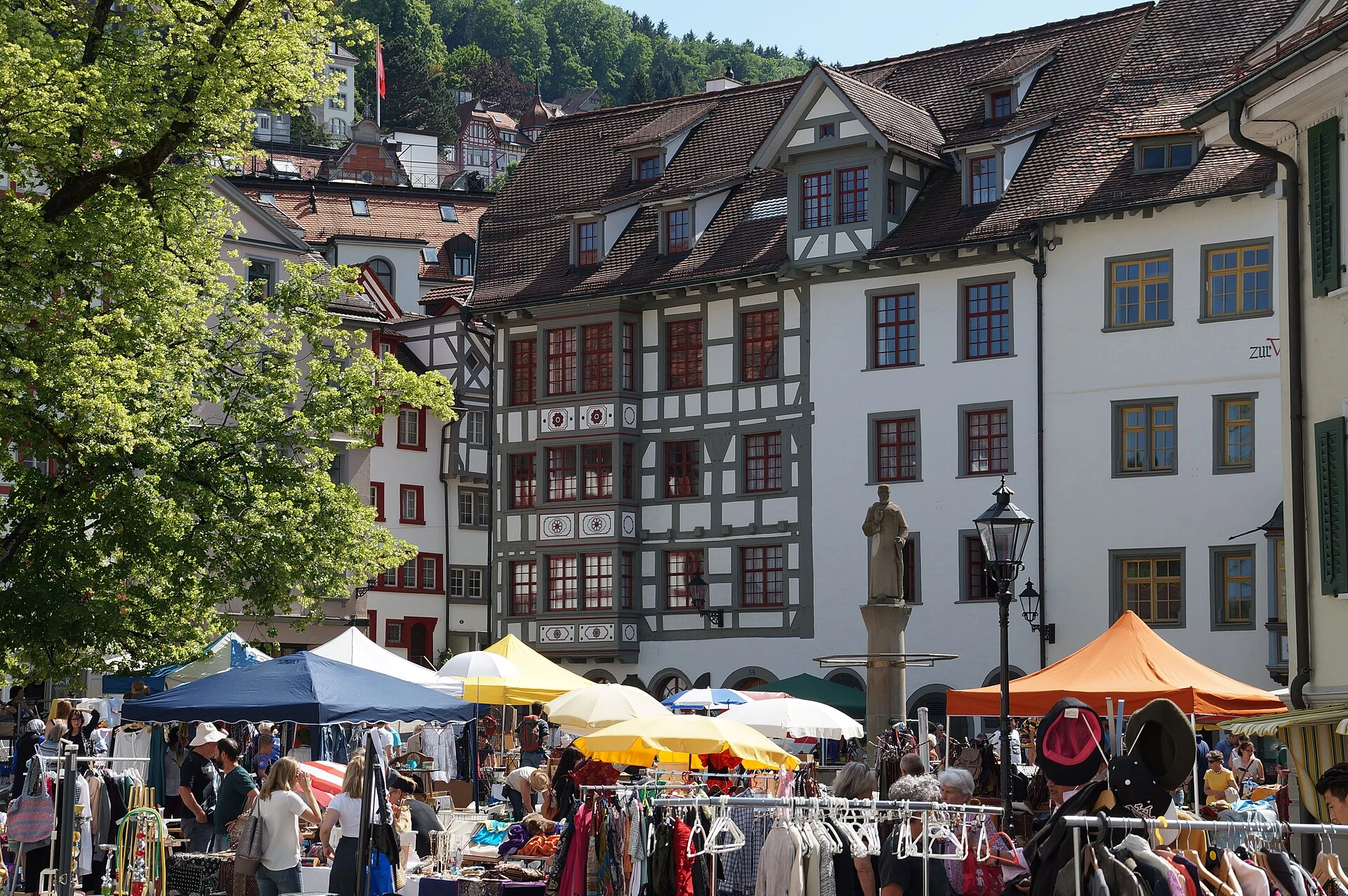
St Gallen rewards visitors who approach it as a city of two rhythms: that of an abbey that was once a centre of learning and that of a textile economy connected to the wider world. Rather than concentrating the day in a single famous room, it is better to weave together the library, cathedral, pedestrian streets and museum to understand how these two legacies still occupy the heart of the city.
A city best understood through its abbey precinct
The abbey precinct is not an isolated backdrop: it is the element that gives the visit its structure. The cathedral, square and Abbey Library reveal architectural transformations accumulated over centuries, while the documentary collections recall that the monastery was also a place of copying, study and administration.
In the library, attention should not stop at the Baroque hall. The collection’s value lies in its continuity and in manuscripts that help us consider how medieval knowledge was organised. Among them, the Carolingian plan of St Gallen stands out: it is not a literal guide to what can be seen today, but a document that allows us to imagine a monastic community, its functions and its space.
Allow time for the cathedral and library as distinct experiences. One conveys liturgical scale and architecture; the other, conservation and the transmission of written knowledge. Guided visits are available for those who want further explanation, but the language, schedule and format should be checked before setting out.
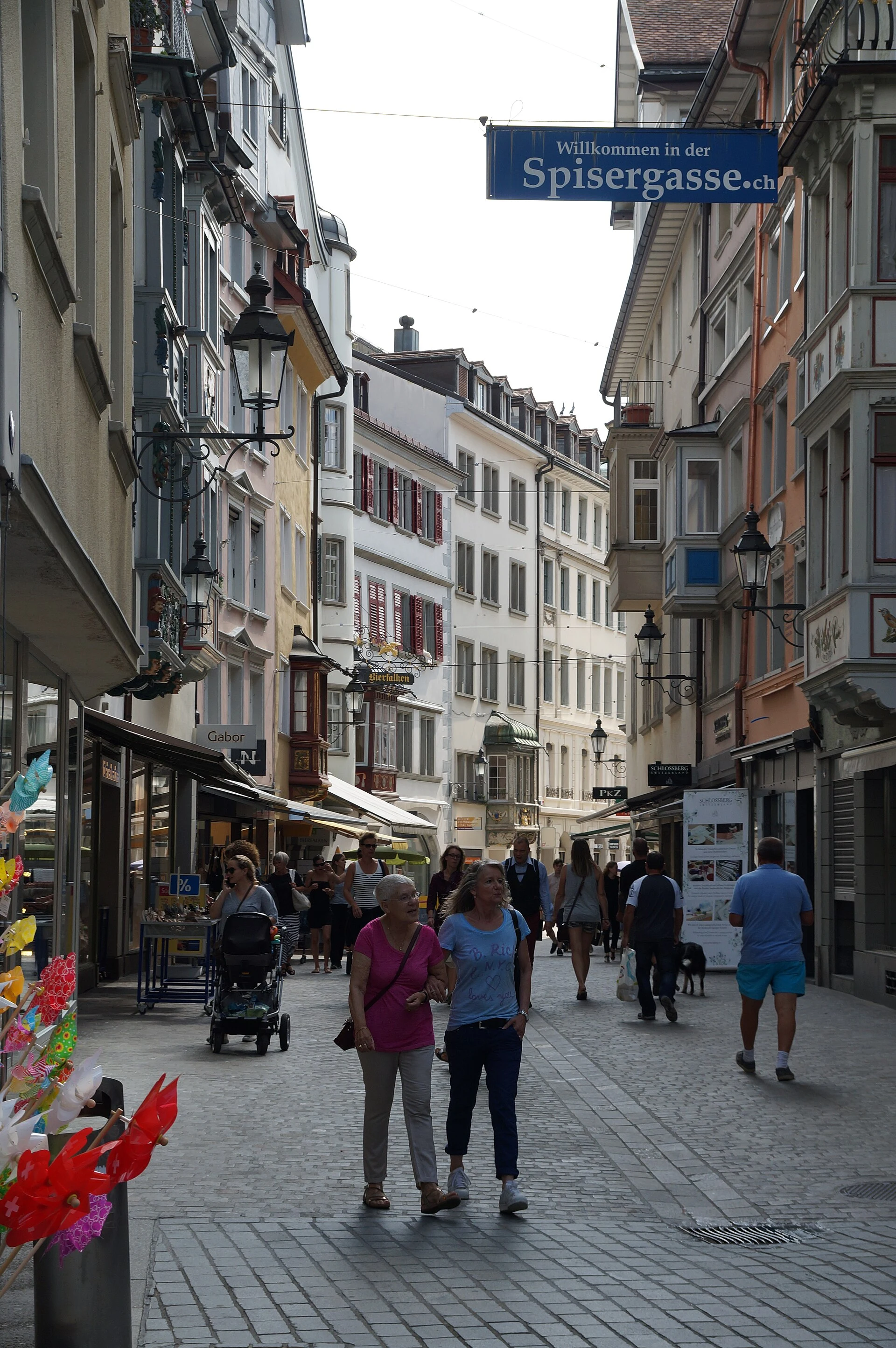
From embroidery to the museum: another way of reading St Gallen
A few streets from the abbey precinct, the Textile Museum offers a change of period without leaving the city centre. Its collections include embroidery, lace, textiles, clothing, sample books, drawings and photographs. More than a stop for admiring beautiful objects, it is a gateway to understanding a city that designed, produced and marketed textiles.
This contrast prevents the visit from having a single voice: the abbey speaks of institutions, manuscripts and religious continuity; the museum raises questions about craftsmanship, design, work, trade and the international circulation of materials and patterns. Temporary exhibitions may shift the emphasis of a visit, so it is best not to build the entire day around one particular display.
The museum’s historic building has limited accessibility. Anyone requiring specific assistance should contact the visitor services team in advance rather than assume that the entire route is barrier-free.
A city itinerary at a comfortable pace
St Gallen works well as a rail-and-walking escape. From the station, set out a simple sequence: first the old town streets and Textile Museum; then the abbey precinct; finally, an unhurried walk along the nearby pedestrian streets. This alternates indoor visits with time in the city and avoids spending the entire day moving from one gallery to the next.
If you have only a few hours, prioritise the Abbey Library, the cathedral and a walk through the old town. With a full day, add the Textile Museum. A second night makes sense for anyone who wants to explore the collections at leisure, join an available guided visit or use St Gallen as a base for continuing through eastern Switzerland.
The train is a practical way to arrive: long-distance connections run to and from Zurich, and the station is integrated into the city. Timetables, engineering works, route accessibility and ticket conditions vary; consult the official rail planner for the specific date.
Choices that make the visit better
Do not buy tickets or plan your day around a single image of the library. The experience is richer if you arrive with a question: how did a monastic institution gather and preserve knowledge, and how did a relatively compact city connect with the international textile industry?
Wear comfortable shoes for a day in the city and spread out the indoor visits: starting early at the abbey precinct usually leaves more time to read, rest and explore the streets without turning the museum into a rushed obligation. Respect each site’s photography and conservation rules; in a heritage library, protecting the collections comes before capturing the travel image.
Before travelling, check opening hours, exceptional closures, combined tickets, guided visits and accessibility arrangements. These details may change with the season, exhibition installations, celebrations or conservation work.
Official sources to check before travelling
- UNESCO World Heritage Centre: historical, architectural and documentary context for the Abbey of St Gallen.
- St Gallen Abbey District: access to the Abbey Library, visitor rules, tickets, accessibility and guided-visit programme.
- St Gallen Textile Museum: collections, current exhibitions, limited accessibility and visitor information.
- Swiss Federal Railways: rail connections and up-to-date journey planning to St Gallen.
References consulted during editorial review. Times, requirements and advisories may change: always confirm with the official source.
- https://www.stiftsbezirk.ch/en/opening-hours www.stiftsbezirk.ch
- https://www.textilmuseum.ch/en/visit/ www.textilmuseum.ch
- https://whc.unesco.org/en/list/268 whc.unesco.org
- https://www.textilmuseum.ch/en/ www.textilmuseum.ch
- https://www.textilmuseum.ch/en/collections/ www.textilmuseum.ch
- https://www.stiftsbezirk.ch/en/stiftsbibliothek/reading-room www.stiftsbezirk.ch
- https://www.stiftsbezirk.ch/en/public-tours www.stiftsbezirk.ch
- https://www.stiftsbezirk.ch/en/stiftsbibliothek www.stiftsbezirk.ch
- Suiza WikidataCC0 1.0 Wikidata · Q39
- Suiza WikidataCC0 1.0 Wikidata · Q35445772
- Suiza WikidataCC0 1.0 Wikidata · Q99316809
- Switzerland World Countries — mledozeODbL 1.0 World countries dataset by mledoze and contributors · ODbL 1.0
- Switzerland World Bank Open DataCC BY 4.0 World Bank
- Switzerland DBpediaCC BY-SA 3.0 DBpedia
- El turismo en Suiza o el advenimiento de un modelo de excelencia (siglos XIX y XX) CrossrefMetadatos públicos; derechos específicos por campo cuando correspondan Crossref