Bosnia and Herzegovina · Central Bosnia
Jajce brings together a waterfall, mills and the memory of 1943
Jajce is best understood in two parts: a steep historic centre and, five kilometres away, the Pliva Lakes with their wooden mills. The visit gains depth when you include the AVNOJ Museum and avoid confusing a Tentative List entry with a UNESCO inscription.
Conditions described in the guide: confirm current requirements and access with the official source before travelling.
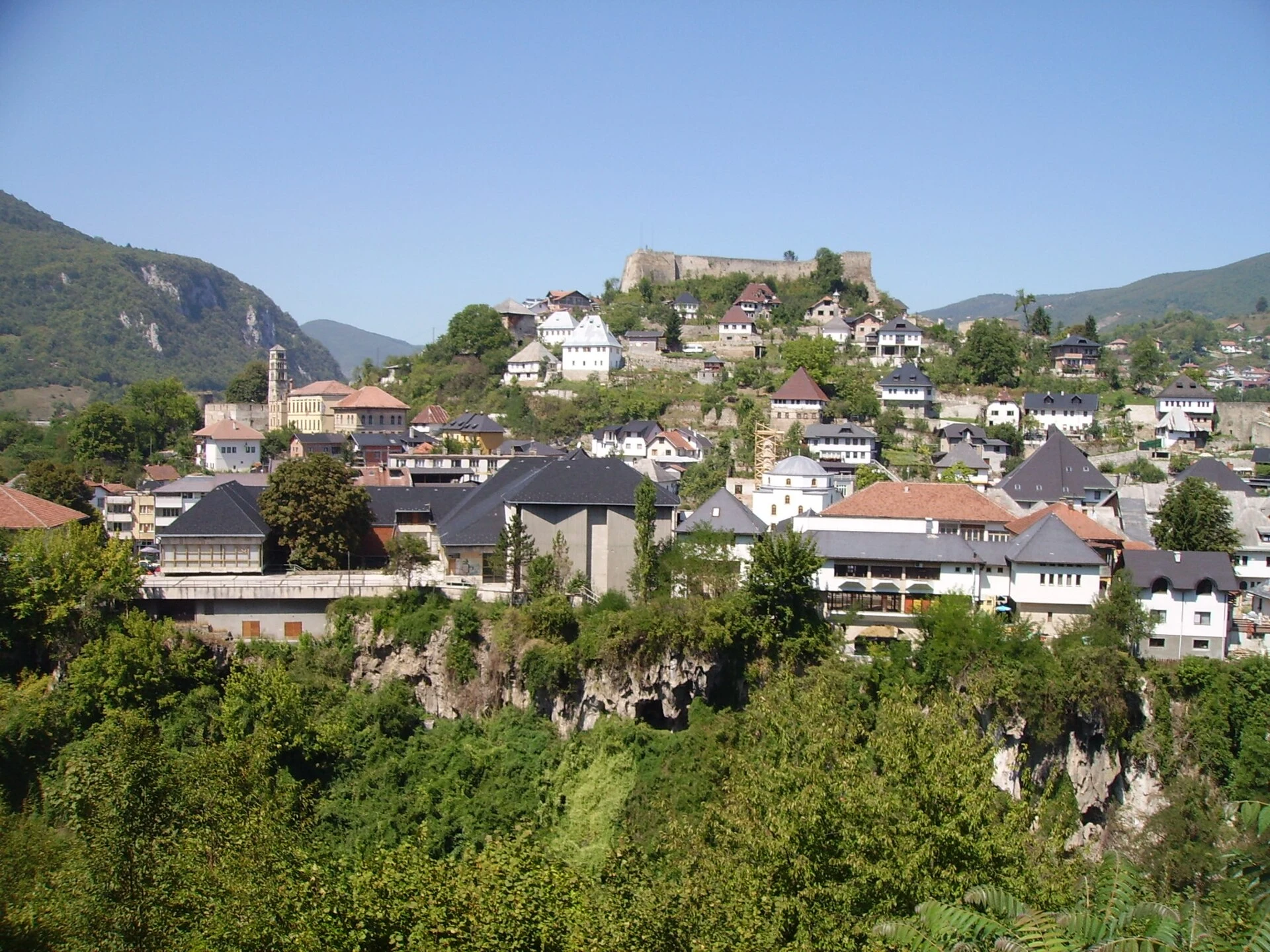
Jajce brings together water, defensive architecture and political memory on a scale that invites you to slow down. The waterfall is next to the centre; the fortress, old streets and several monuments rise up the hillside; and the Pliva Lakes lie outside the core, with the mlinčići—watermills—between the two. Planning these areas as two separate stages prevents a rushed visit and leaves room to understand why 1943 remains such a decisive date here.
Two scales keep Jajce from becoming a photo stop
The first good decision is to separate the historic centre from the Pliva Lakes. The waterfall lies at the foot of the town, while the urban route climbs towards the fortress along sloping streets, steps and uneven paving. The Large and Small Pliva Lakes, by contrast, are about five kilometres from the centre and have a different rhythm: shores, still water and a group of wooden mills set on a tufa barrier.
For a one-day visit, devote the morning to the town centre and leave the lakes for the afternoon. Anyone arriving late or relying on tight connections should choose one of the two areas rather than trying to cover everything. The historic centre rewards a slow walk; the lakes deserve time of their own, not a few-minute detour.
A walk that follows the slope and the city’s layers
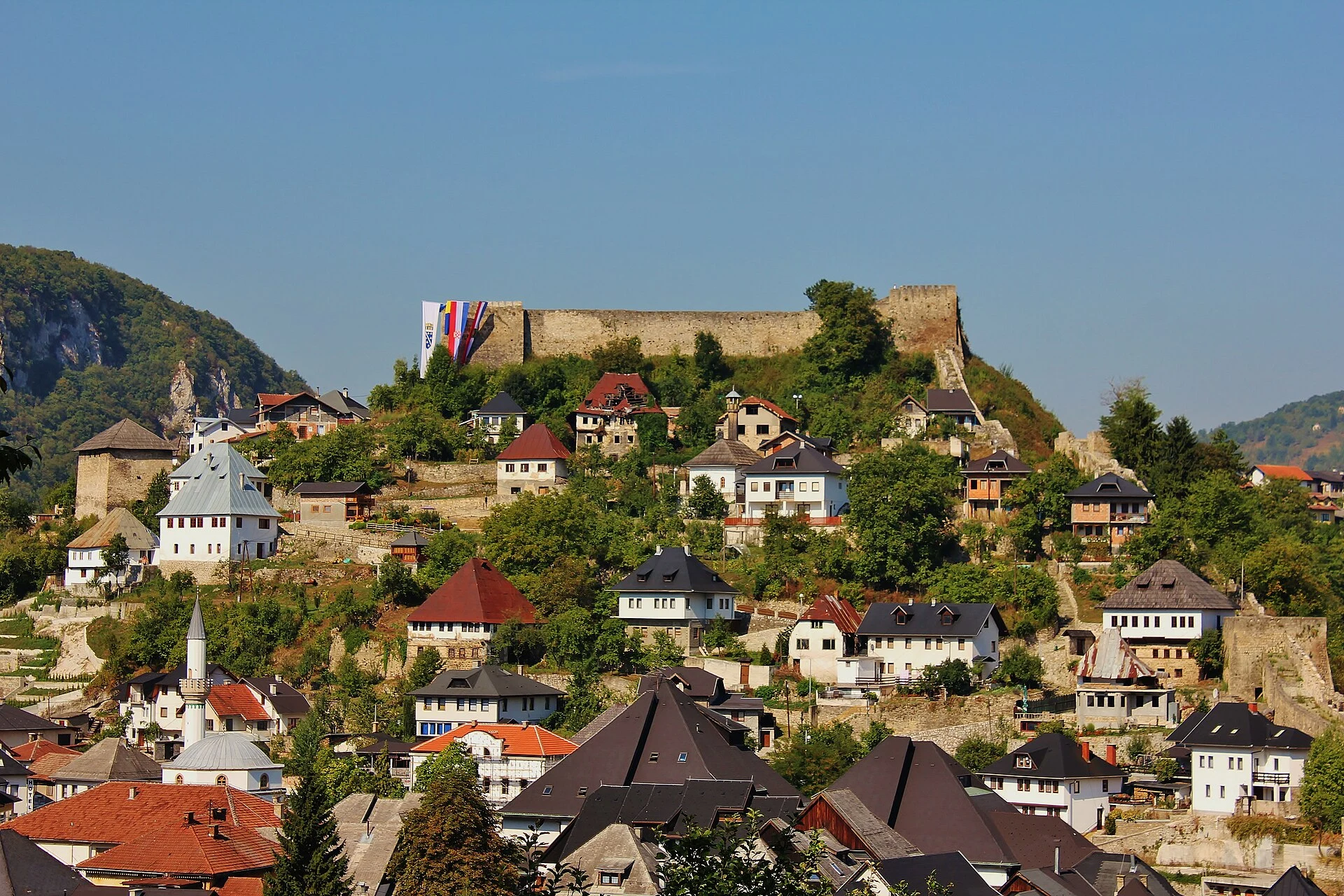
Begin beside the Pliva waterfall, where the river drops towards the Vrbas below the town. From there, it makes sense to gain height gradually: gates, walls, religious buildings and traces of different periods appear within a compact but decidedly non-horizontal urban fabric.
The fortress offers a sense of the wider setting: Jajce was established on a rocky elevation between the Pliva and Vrbas rivers. The route can also include the Catacombs, or underground church, and the complex of St Mary’s with the bell tower of St Luke, without treating them as an indistinguishable collection of monuments. Choose two or three interiors and save some energy for the final climb. The gradient and steps are the main practical constraint; this is not a suitable route for anyone who needs a completely level walk.
Access to interiors, opening hours and entry conditions may change. Check them on the day with the local heritage agency or each institution.
The Pliva Lakes and mills: a landscape shaped for production
Between the Large and Small Lakes stand the mlinčići, small wooden mills associated with using the Pliva’s current to grind grain. Their importance goes beyond their appearance: the group explains a historic relationship between water power, work and landscape.
Walk along the designated paths and avoid descending onto slopes, tufa barriers or wet areas in search of a different viewpoint. Tufa forms part of the structure organising this system of water, lakes and mills; preserving it also depends on not using the edge as a shortcut. If you are interested in swimming, rowing or booking activities on the lake, confirm locally which areas are authorised, the condition of the water and which operators are available before relying on them.
The cultural landscape of the lakes and mills has national recognition; in addition, in 2026 the municipality processed protection for the Pliva landscape. This does not replace the usage rules in force during your visit.
The AVNOJ Museum gives Jajce a second reading
The Museum of the Second AVNOJ Session prevents Jajce from being reduced to a medieval town and river landscape. The second session of the Anti-Fascist Council of National Liberation of Yugoslavia was held in this building on 29 and 30 November 1943, a pivotal event in the formation of post-war federal Yugoslavia.
The visit provides documents and context for placing the site within the anti-fascist struggle and the political history of south-eastern Europe. It also requires acknowledging another layer: the building was damaged during the 1992–1995 war in Bosnia and Herzegovina, and the museum reopened after partial restoration. This history makes the site both a historical museum and a place of memory.
This is not a decorative visit: allow time to read, ask questions and accept that Yugoslav memories are experienced differently across the region. Check the opening hours and available exhibitions beforehand.
Getting around: walk in the centre, with a separate plan for Pliva
The historic centre is best explored on foot, provided you are comfortable with the slope. To connect it with the Pliva Lakes, plan a specific transfer: your own vehicle, a taxi, hired transport or an organised excursion. Local guided tours offer programmes linking the urban monuments with the lakes, which can be useful if you would rather not work out that logistical jump yourself.
A car gives you flexibility to combine both areas, but it does not remove the need to walk in the centre or guarantee parking. Without a vehicle, do not assume that bus, taxi or excursion timetables will fit your arrival and departure: check current connections before arranging a return trip from another city.
Jajce appears on Bosnia and Herzegovina’s Tentative List for UNESCO, but it is not inscribed on the World Heritage List. This distinction matters when researching the destination and setting expectations.
A useful precaution beyond established urban areas
In Jajce, the responsible choice is to stay on streets, marked paths and well-used surfaces. Bosnia and Herzegovina has areas affected by landmines and unexploded ordnance; do not turn a walk in the surroundings into an improvised exploration of unmarked tracks, abandoned ruins or slopes outside known itineraries.
This recommendation is not intended to describe the urban centre as unsafe, but to set a clear boundary for rural excursions and mountain activities. Consult the up-to-date maps and notices from the national mine-action centre if you plan to leave the routes in use. Also check your country’s official travel advice, especially if political, transport or weather conditions change.
References to check before setting out
- Jajce Agency for Cultural, Historical and Natural Heritage and Tourism Development: relative locations of the waterfall, Pliva Lakes, mills and local itineraries or guides.
- Museum of the Second AVNOJ Session, Jajce: historical content, location, exhibitions and current opening hours.
- UNESCO World Heritage Centre: Jajce’s status on the Tentative List; this should not be confused with inscription on the World Heritage List.
- Municipality of Jajce and the Commission to Preserve National Monuments of Bosnia and Herzegovina: protection and management of the Pliva landscape and mills.
- Bosnia and Herzegovina Mine Action Centre and your national consular authority: risk maps, travel advice and updated safety recommendations.
Check opening hours, admission, guided itineraries, local transport, path conditions and any temporary restrictions before travelling.
References consulted during editorial review. Times, requirements and advisories may change: always confirm with the official source.
- https://whc.unesco.org/en/statesparties/ba whc.unesco.org
- https://whc.unesco.org/en/tentativelists/%3F%26%26action%3Dlisttentative%26pattern%3Dbosnia%26state%3D%26theme%3D%26criteria_retrication%3D%26date_start%3D%26date_end%3D%26order%3D whc.unesco.org
- https://whc.unesco.org/en/tentativelists/action%3Dlisttentative%26order%3Dstates%26state%3Dba whc.unesco.org
- https://whc.unesco.org/en/search/?category=Tentative+Lists&criteria=bosnia+ whc.unesco.org
- https://whc.unesco.org/document/175443 whc.unesco.org
- https://whc.unesco.org/en/search/?criteria=buy+cocaine+JAJCE.%F0%9D%90%82%F0%9D%90%8E%F0%9D%90%8A%F0%9D%90%92%F0%9D%90%93%F0%9D%90%8E%F0%9D%90%91%F0%9D%90%84.%F0%9D%90%8D%F0%9D%90%84%F0%9D%90%93 whc.unesco.org
- https://whc.unesco.org/en/search/?category=Tentative+Lists&criteria=buy+cocaine+JAJCE.%F0%9D%90%82%F0%9D%90%8E%F0%9D%90%8A%F0%9D%90%92%F0%9D%90%93%F0%9D%90%8E%F0%9D%90%91%F0%9D%90%84.%F0%9D%90%8D%F0%9D%90%84%F0%9D%90%93 whc.unesco.org
- https://whc.unesco.org/en/search/?category=Tentative+Lists&criteria=House&maxrows=200 whc.unesco.org
- Bosnia y Herzegovina WikidataCC0 1.0 Wikidata · Q225
- Bosnia y Herzegovina WikidataCC0 1.0 Wikidata · Q99286256
- Bosnia and Herzegovina World Countries — mledozeODbL 1.0 World countries dataset by mledoze and contributors · ODbL 1.0
- Bosnia and Herzegovina World Bank Open DataCC BY 4.0 World Bank
- Bosnia and Herzegovina DBpediaCC BY-SA 3.0 DBpedia
- Jajce GeoNamesDatos geográficos bajo CC BY 4.0; requiere atribución a GeoNames. Fuente: GeoNames
- Jajce GeoNamesDatos geográficos bajo CC BY 4.0; requiere atribución a GeoNames. Fuente: GeoNames
- Jajce, Jajce Municipality, Central Bosnia Canton, Federation of Bosnia and Herzegovina, 70101, Bosnia and Herzegovina OpenStreetMapODbL 1.0; atribución y obligación de compartir bases derivadas. Fuente: OpenStreetMap
- Jajce, Jajce Municipality, Central Bosnia Canton, Federation of Bosnia and Herzegovina, 70101, Bosnia and Herzegovina OpenStreetMapODbL 1.0; atribución y obligación de compartir bases derivadas. Fuente: OpenStreetMap
- Pliva Waterfall GeoNamesDatos geográficos bajo CC BY 4.0; requiere atribución a GeoNames. Fuente: GeoNames
- Pliva Waterfall, II zasjedanja AVNOJ-a, Stari grad, Jajce, Jajce Municipality, Central Bosnia Canton, Federation of Bosnia and Herzegovina, 70101, Bosnia and Herzegovina OpenStreetMapODbL 1.0; atribución y obligación de compartir bases derivadas. Fuente: OpenStreetMap