Kiribati · Line Islands
Kiritimati, an atoll to explore by lagoon and birds
On Kiritimati, the lagoon’s scale, infrequent flights and guided birdwatching matter more than collecting stops.
Conditions described in the guide: confirm current requirements and access with the official source before travelling.
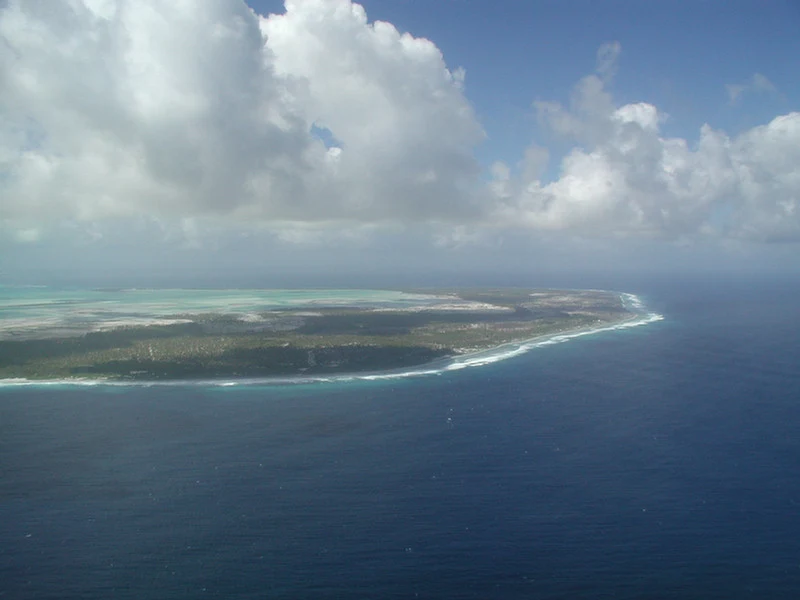
Kiritimati—also known in some bookings as Christmas Island, Kiribati—calls for a journey at a deliberate pace. Its vast lagoon and intertidal flats mainly attract people who want to fish, watch birds or understand an inhabited atoll without treating it like a beach resort.
The useful question is not how many places fit into your itinerary, but whether you can leave room for air connections, coordinate outings with local guides and accept that the experience depends on tides, logistics and respect for a fragile environment. Planning a few objectives and several flexible days usually makes more sense than chasing a list of points on the map.
A lagoon that shapes the journey
The lagoon and its hard-packed sand flats are the main reason to give Kiritimati time. Fly-fishing for species such as bonefish takes place in these shallow environments, while the outer waters offer a different kind of outing, usually by boat and with specific logistical requirements.
For non-anglers, the same geography helps define another priority: birds, lagoon scenery and short observation walks. Do not assume that every stretch of coast, smaller island or passage between lagoon and ocean is freely accessible or suitable for exploring without an escort. Before booking, ask exactly which areas the outing will visit, how long you will be exposed to the sun and whether the programme can adapt to the tide.
The trade-off is clear: Kiritimati offers space and silence, not a succession of immediately available services. A guide who knows the waters and access points adds more to the journey than trying to cover the atoll independently.
Birds and guides: a responsible choice
Kiritimati is important for seabirds and is also home to the bokikokiko, known as the Kiritimati reed warbler. The country’s public wildlife conservation unit monitors bird and turtle colonies and may accompany both residents and visitors on observation activities.
Choosing a guided outing is not only a way to identify species: it helps avoid breeding colonies, nests and sensitive areas. Bring binoculars, keep your distance, do not use playback calls and leave no food or waste on the islets or lagoon edges. If a visit coincides with a breeding area or a local restriction, change your plans without insisting.
It is also reasonable to ask the guide which rules apply that day and how payment supports local work. The most valuable observation is the one that does not force an approach or turn birds’ behaviour into a spectacle.
The calendar matters as much as the ticket
Kiritimati has limited air connections, and the itinerary may include links from Fiji, Hawai‘i or Tarawa. Crossing the International Date Line can also make the departure or arrival date appear to move backwards or forwards, depending on the direction of the flight.
Book with a buffer before and after international flights and record separately the local date for each leg, along with the departure and arrival cities. This is especially useful if you are connecting through Honolulu and Nadi: looking only at the take-off time is not enough. Avoid scheduling a non-refundable activity or a tight connection on the day you arrive.
Operating days, routes and aircraft are variable details. Check the timetable directly with the operating airline and confirm with your accommodation or local provider that they can receive you on the actual arrival date, not merely the date first shown in your calendar.
A history that should not be reduced to a photograph
The atoll also bears the legacy of the British nuclear tests of Operation Grapple, carried out in 1957 and 1958, and of US tests conducted from the area in 1962. This is an important past, but not an attraction to consume hurriedly or an excuse to enter installations, remains or land of uncertain use independently.
If this subject forms part of your journey, seek historical context rather than dramatisation. Ask a local guide or the relevant authority which places can be visited appropriately and which accounts are considered pertinent. Do not present a single version of a history involving the atoll, its residents, military personnel and decisions made outside Kiribati.
Historical documents about monitoring and studies do not replace individual health guidance or current local confirmation. Anyone with specific concerns should consult up-to-date official sources and, where appropriate, professional medical advice before travelling.
A short stay, but with purpose
A first trip can be organised around a simple base: one day to get oriented and arrange transport, one guided bird or lagoon outing, and one day set aside for fishing or for returning to the landscape that best fits the tide. Leaving one day free of a fixed programme protects the journey against flight changes, operational weather or guide availability.
There is no need to turn every activity into an adventure. Choosing local providers, carrying a reusable bottle, minimising single-use packaging and following waste instructions are practical decisions on an atoll where resources and logistics have visible limits.
Kiritimati works best for travellers willing to observe slowly: its value lies in understanding how the lagoon, birds and everyday movements shape an inhabited island, not in marking a remote destination as a conquest.
References to check before booking
- Kiribati Tourism Authority: information on arrival in the country, connections to Kiritimati, nature activities and fishing.
- Air Kiribati and Nauru Airlines: published timetables and operational notices for connections between Kiritimati, Tarawa and other islands.
- Kiribati Ministry of Environment, Lands and Agricultural Development: Wildlife Conservation Unit and guidance on accompaniment for birdwatching.
- Kiribati Ministry of Finance and Economic Development: national report on key biodiversity areas and protection of Kiritimati’s islets.
- Government of the United Kingdom: historical documentation on the British atmospheric tests and associated monitoring programmes.
Confirm flights, access, guide availability, visiting conditions and any health or environmental information that may have changed directly with these entities.
References consulted during editorial review. Times, requirements and advisories may change: always confirm with the official source.
- https://kiribatitourism.gov.ki/journey-with-us kiribatitourism.gov.ki
- https://mfed.gov.ki/sites/default/files/2025-06/KIRIBATI%20BIODIVERSITY%20AREA%20Report%20-%20KBA%20REPORT%20FINAL.pdf mfed.gov.ki
- https://airkiribati.com.ki/flight-schedule/ airkiribati.com.ki
- https://www.ramsar.org/our-work/wetlands-international-importance/ramsar-list www.ramsar.org
- https://www.ramsar.org/sites/default/files/documents/library/orm-6_meeting_report_final.pdf www.ramsar.org
- https://www.ramsar.org/sites/default/files/documents/importftp/COP13NR_Kiribati_e.pdf www.ramsar.org
- https://www.ramsar.org/fr/node/7603 www.ramsar.org
- https://www.nauruair.com/travel-info/flight-schedule www.nauruair.com
- Kiribati WikidataCC0 1.0 Wikidata · Q710
- Kiribati World Countries — mledozeODbL 1.0 World countries dataset by mledoze and contributors · ODbL 1.0
- Kiribati World Bank Open DataCC BY 4.0 World Bank
- Kiribati DBpediaCC BY-SA 3.0 DBpedia
- Kiritimati GeoNamesDatos geográficos bajo CC BY 4.0; requiere atribución a GeoNames. Fuente: GeoNames
- Kiritimati GeoNamesDatos geográficos bajo CC BY 4.0; requiere atribución a GeoNames. Fuente: GeoNames
- Kiritimati, Line Islands, Kiribati OpenStreetMapODbL 1.0; atribución y obligación de compartir bases derivadas. Fuente: OpenStreetMap
- Cassidy International Airport OpenFlightsODbL 1.0 (base de datos) / DbCL 1.0 (contenidos) Cassidy International Airport · OpenFlights · ODbL 1.0