Kuwait · urban culture
Kuwait City through the thread of sadu, from museum to souq
A day in Kuwait City to understand al sadu weaving as a living practice and connect it with a museum, souq and realistic transport choices.
Conditions described in the guide: confirm current requirements and access with the official source before travelling.
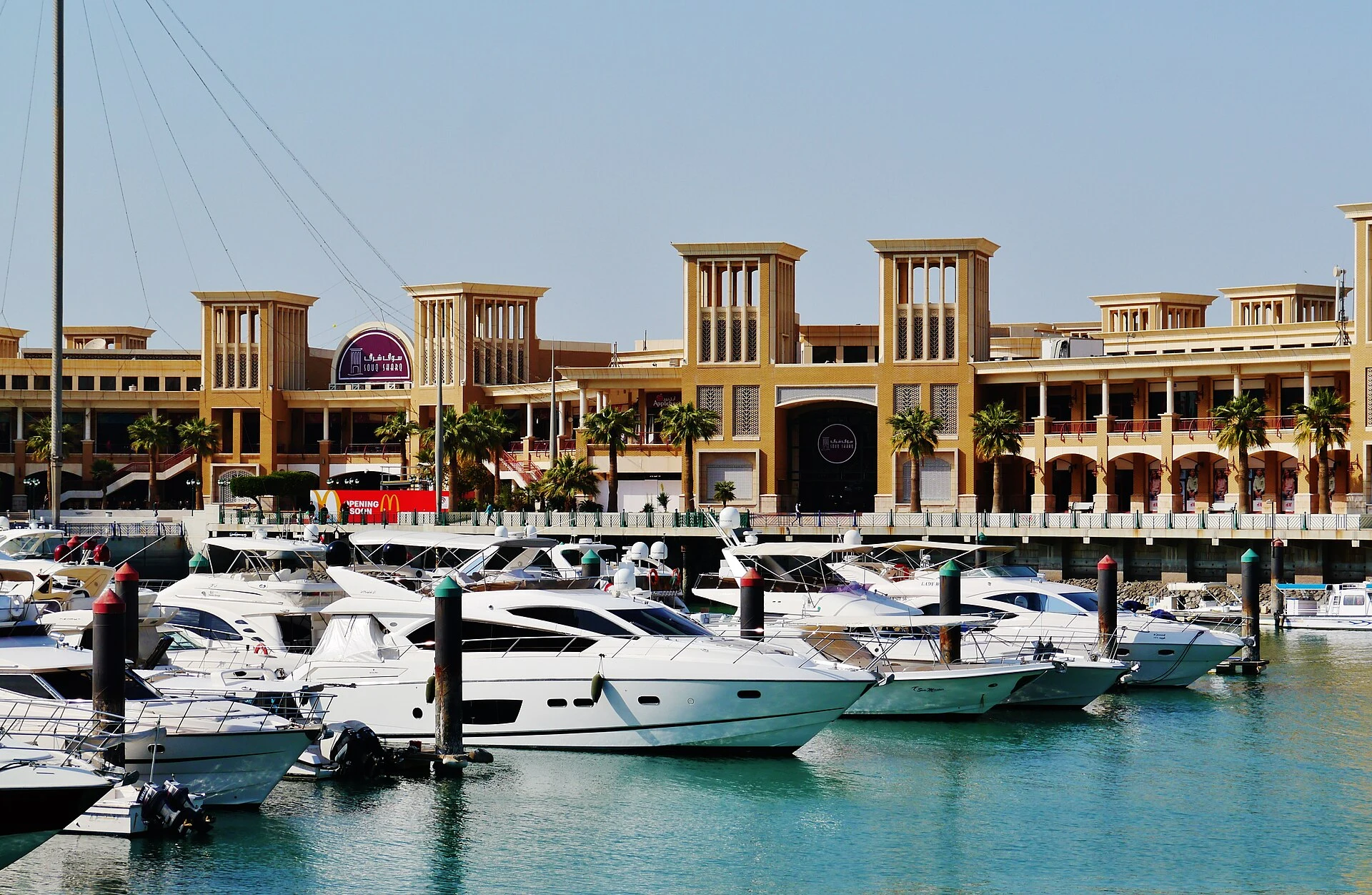
Kuwait City reveals more depth when you follow a material instead of chasing a list of icons. Al sadu weaving connects Bedouin memory, the work of women weavers and contemporary design; Al-Mubarakiya Souq adds the city’s commercial, everyday scale. This is not a route to complete entirely on foot: it suggests two or three stops, with time to look, ask questions and rest between journeys.
Sadu is a practice before it is a pattern
Al sadu is made on a ground loom and is recognised by geometric compositions, repeating rhythms and intense colours. For a long time, it produced objects for everyday use: pieces for the hair tent, textile furnishings and items linked to domestic and pastoral life. Its history also reflects the knowledge and authority of women weavers, the main transmitters of the technique.
In Kuwait City, the best starting point is Sadu House. Its museum explores the transition from desert to city, a useful key to avoid reading the motifs as isolated decoration. Notice the relationship between fibre, function and pattern; then ask, if staff are available, which parts of the process are still practised and which pieces come from contemporary production. If you buy a textile, prioritise traceability: who made it, what material was used and whether the piece was handwoven.
Sadu House deserves an unhurried visit
Sadu House occupies a historic residence and brings together textile pieces, references to the bayt al-sha'ar — the hair tent — and explanations of the weaving process. It is a compact stop, but worth your attention: the interest lies less in collecting photographs than in understanding why a functional technique endures as a cultural language.
The institution offers museum tours and learning programmes, including in-person weaving courses for adults. Do not assume that a guided visit, workshop or practical session will be available on the day you arrive: check the institution’s visitor channel in advance. Also confirm opening hours, weekly closure and any Ramadan or holiday adjustments; these details vary and should be checked before setting out.
From the museum to Al-Mubarakiya: changing scale
Al-Mubarakiya works well as a second anchor because it shifts attention from museum interpretation to a commercial setting of narrow streets, stalls and restaurants. Rather than treating it as a backdrop, explore it with a simple task: observe what is sold for everyday use, which products are presented as souvenirs and where food activity is concentrated.
The contrast with Sadu House helps show how traditional motifs circulate in a contemporary city. Set aside time to sit down for a meal or a drink, but avoid turning the stop into a shopping race. Ask permission before photographing vendors, craftspeople or customers; it is equally important not to automatically assume that every item with a sadu aesthetic is artisan-made.
Transport: two well-chosen stops beat a long route
Kuwait City does not reward a day built around long walks between neighbourhoods. The most sensible option is to group each visit on foot and use a taxi or bus for the journey between Sadu House, the city centre and other institutions. Urban operators publish network maps and digital tools, but routes, stops and frequencies may change.
If you want to add the National Museum of Kuwait, check its booking or access system beforehand: the state cultural body lists it among the museums requiring visit planning. It is a good extension for anyone wanting to connect textiles, material history and national collections; if access is unavailable, keep the day to two hubs — Sadu House and Al-Mubarakiya — and you will have more time to observe at leisure.
The order depends on your confirmed timings. A practical sequence is to start at the museum, travel to the souq for the middle part of the day and add a third institution only if the booking, transport and your energy all work. Do not force all three points if that means reducing the visit to a series of rushed transfers.
Official references to check before your visit
- Al Sadu Society / Sadu House: museum content, visits, tours, courses and opening hours, all subject to change.
- UNESCO, Traditional Al Sadu Weaving: background on the technique, its bearers and its inscription as intangible cultural heritage.
- Kuwait National Council for Culture, Arts and Letters: National Museum, Sadu House and visit requests within its museum network.
- CityBus and Kuwait Public Transport Company: maps, apps and bus network; verify the current stop and service for each journey.
- Al-Mubarakiya Souq: location and possible changes to market opening hours.
References consulted during editorial review. Times, requirements and advisories may change: always confirm with the official source.
- https://www.nccal.gov.kw/en/virtual-tour www.nccal.gov.kw
- https://www.nccal.gov.kw/en/museums www.nccal.gov.kw
- https://nccal.gov.kw/en/ nccal.gov.kw
- https://booking.ascckw.com/ booking.ascckw.com
- https://nccal-prod.nccal.gov.kw/en/historic-buildings nccal-prod.nccal.gov.kw
- https://nccal.gov.kw/ar/museums nccal.gov.kw
- https://www.nccal.gov.kw/?pagesize=30&viewmode=grid www.nccal.gov.kw
- https://www.nccal.gov.kw/ar/virtual-tour www.nccal.gov.kw
- Kuwait WikidataCC0 1.0 Wikidata · Q817
- Kuwait World Countries — mledozeODbL 1.0 World countries dataset by mledoze and contributors · ODbL 1.0
- Kuwait World Bank Open DataCC BY 4.0 World Bank
- Kuwait DBpediaCC BY-SA 3.0 DBpedia