Pakistan · urban heritage and decisions to make first
Lahore: From the Fort to Shahi Hammam and the Shalimar Gardens
A visit to Lahore makes more sense when you distinguish the royal precinct, the walled city and the water garden—without overlooking a security context that requires last-minute checks.
Lahore lets you see courtly power, neighbourhood commerce and a complex Sikh heritage within one city. But the first decision is not which monument to photograph; it is whether current conditions justify the trip. As of 21 September 2026, treat security, transport and opening arrangements as variables to reconfirm before committing to bookings. If the journey goes ahead, this itinerary proposes three stops with different rhythms, rather than a race through the best-known sites.
The decision to make first: security before itinerary
Current official advisories for Pakistan recommend reconsidering travel or warn of serious and changing risks, including terrorism, crime, kidnapping and possible disruption to transport. Lahore should not automatically be treated as an exception to this national context.
Before buying non-refundable services, check your nationality’s travel advisory, your insurance conditions and the status of flights and roads for the exact dates. Do not build gatherings, political events, major celebrations or night travel into the plan. If local authorities, your accommodation or consular advisories discourage a particular movement, the responsible alternative is to scale back the programme or postpone it.
Two stops, not one continuous walk
Lahore Fort and the Shalimar Gardens form a single World Heritage inscription, but they are about seven kilometres apart and reflect very different urban settings. The fort stands beside the walled city; Shalimar is a separate garden precinct. Trying to connect them on foot takes attention away from both and adds unnecessary exposure to traffic and to a sprawling city.
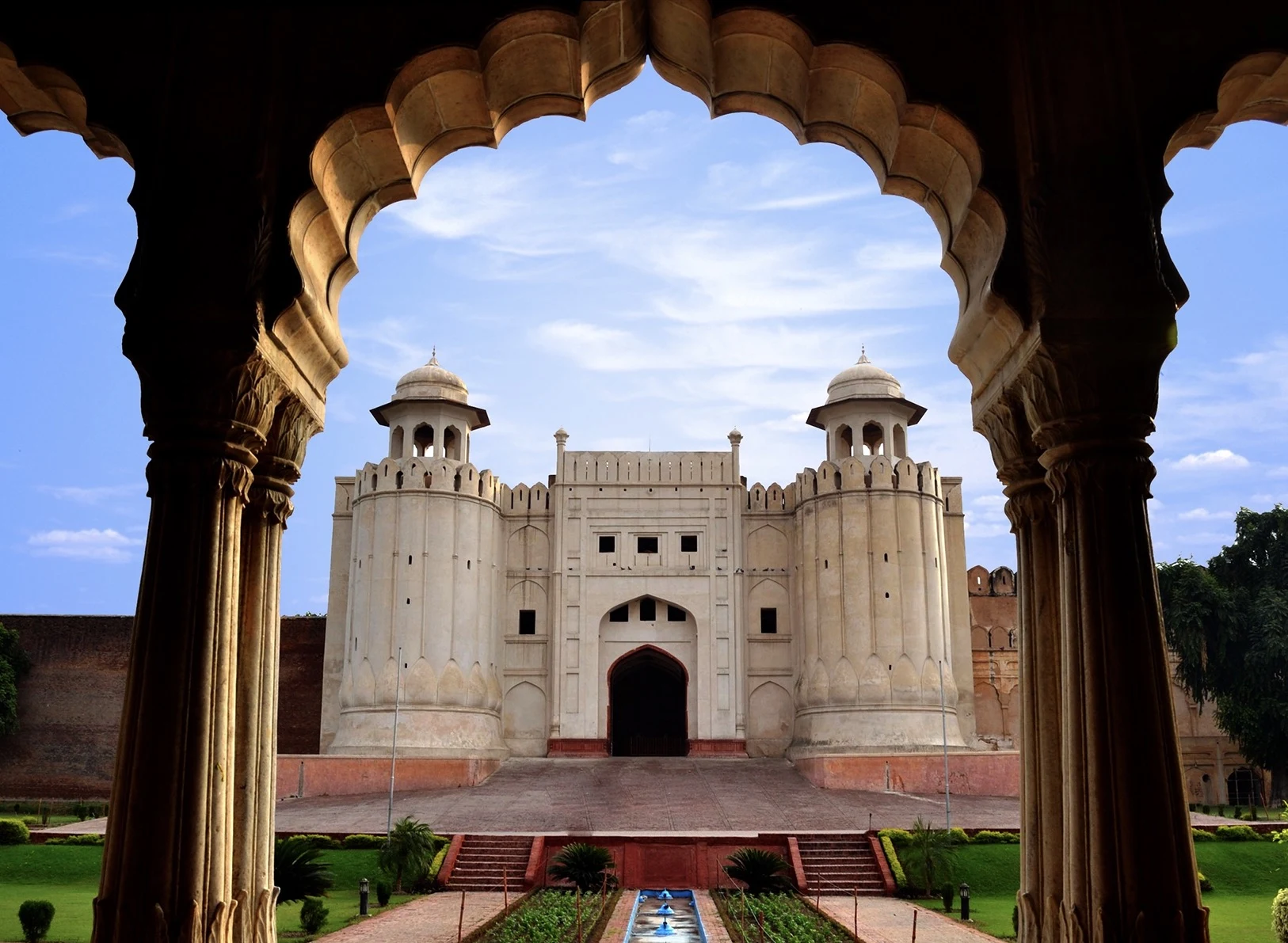
Set aside a first block for Lahore Fort and its immediate surroundings: Alamgiri Gate, Hazuri Bagh and the façades of the Badshahi Mosque create a coherent spatial reading, although each site may have its own rules. Leave the garden for another part of the day or, better still, a second day. Between the two stops, arrange transport with a reputable provider recommended by your accommodation or checked locally; do not base the plan on an improvised connection.
Delhi Gate and Shahi Hammam: a city-lived-in stop
Entering through Delhi Gate directs the visit towards part of the walled city where heritage is not isolated from commerce, homes and everyday movement. The key is to slow down: narrow streets, local activity and religious entrances call for an attitude of observation, not occupation of the space.
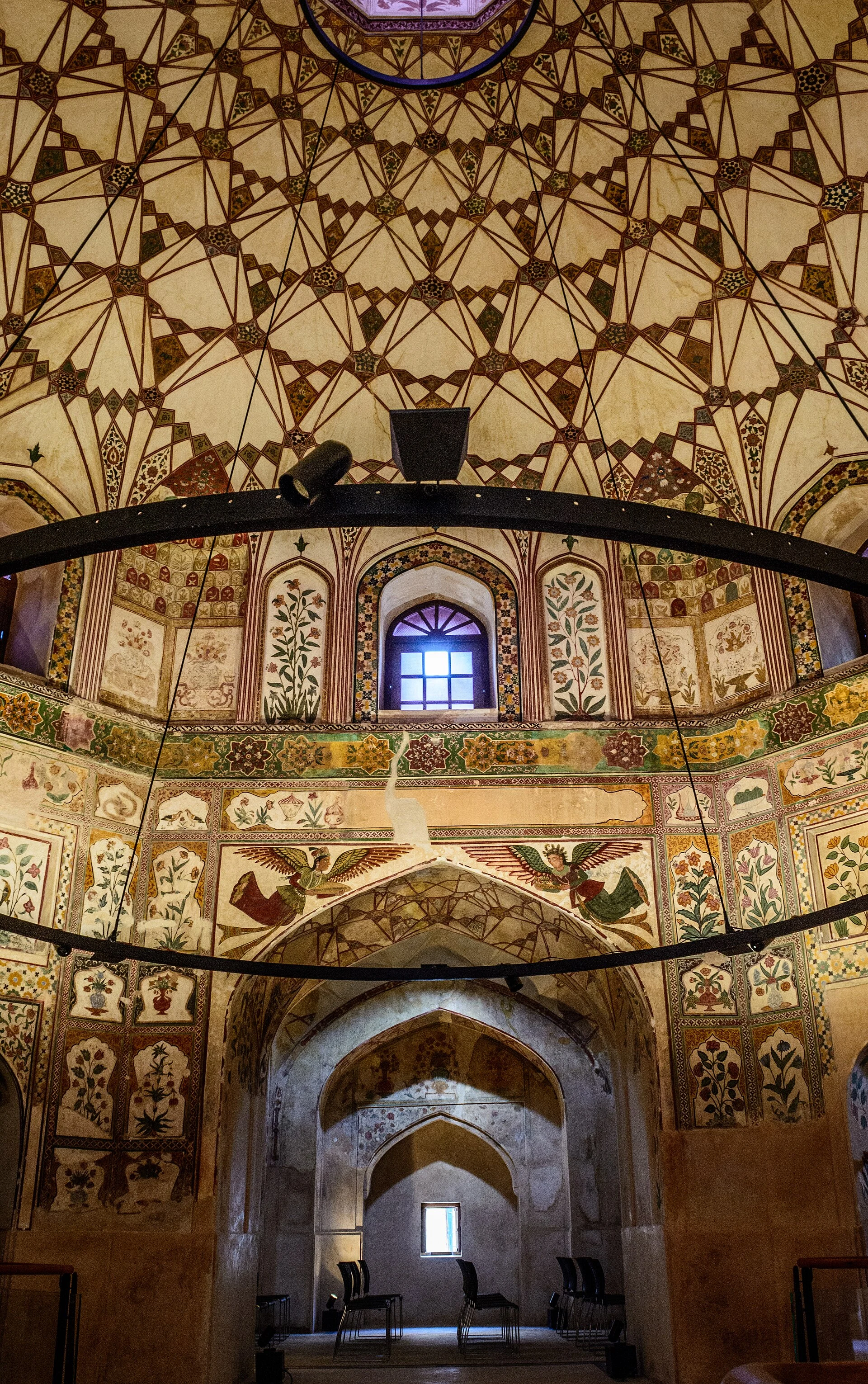
The Shahi Hammam shows that the route is not only about palaces. This Mughal-era public bath retains rooms, conduits and wall decoration that speak of urban infrastructure connected to travellers and commerce. Nearby Wazir Khan Mosque continues that reading through tilework, mural painting and calligraphy. In places of worship, confirm access for the day, dress respectfully and do not photograph people or prayer areas without permission.
Reading Lahore through several layers of power
The fort brings together work commissioned by several Mughal rulers, from the brick and sandstone architecture associated with Akbar to the marble, inlay and mosaic of Shah Jahan’s period. The best way to explore it is to choose a few elements and observe materials, water, courtyards and changes of scale rather than chase a complete list of pavilions.
The perspective broadens when you recognise the Sikh presence alongside the fortified precinct: the mausoleum of Ranjit Singh recalls that Lahore was also the capital of a Sikh empire in the nineteenth century. Later, colonial infrastructure and uses altered the area. This succession prevents the site from being reduced to a uniform image of the Mughal past and makes it possible to appreciate how present-day conservation coexists with urban pressures and restoration work.
Shalimar: a garden designed around water
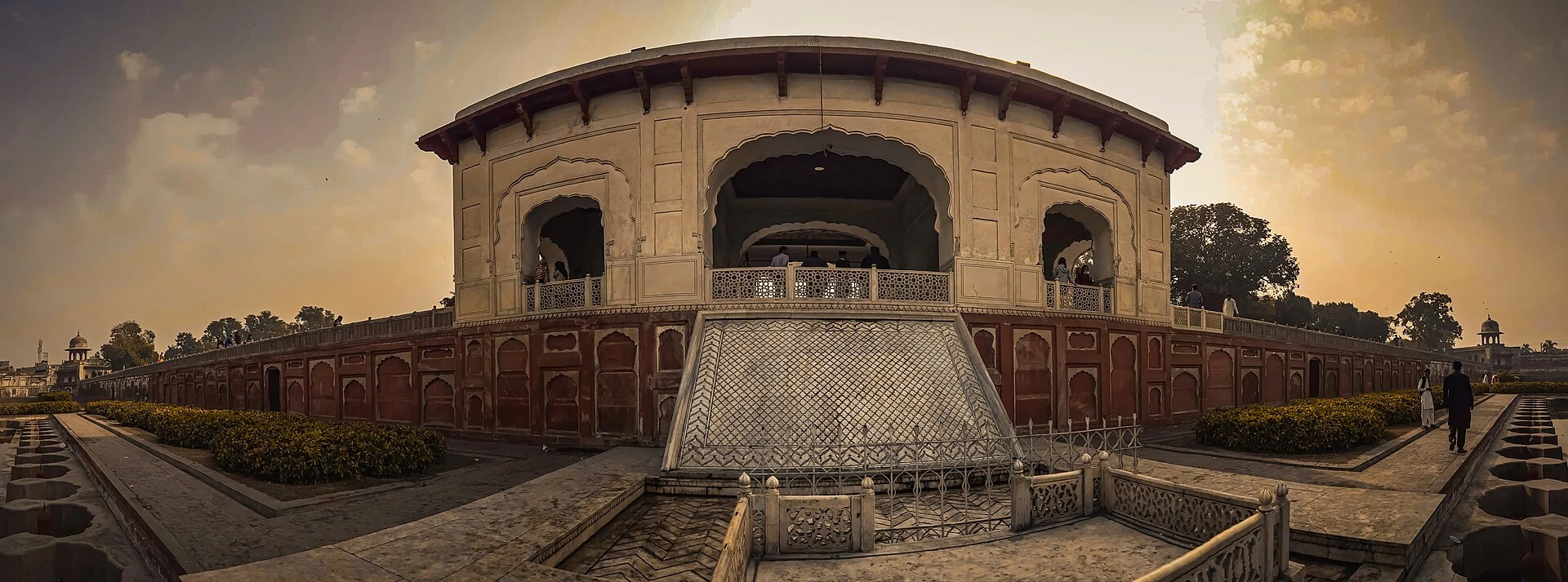
At Shalimar, the visit is less about accumulating buildings than following a structure: three descending terraces, channels, reservoirs, pavilions and fountains. Their names—Farah Baksh, Faiz Baksh and Hayat Baksh—help distinguish the levels, but the main focus should be how water organises views, coolness and hierarchies within a walled garden.
The conservation of the hydraulic system and its setting has been an important issue for the complex. Do not therefore assume that every fountain, area or entrance will be operating. Check the site’s status on the same day and respect barriers, work areas and designated routes. An attentive visit offers more than entering flowerbeds, feeding animals or treating the garden as a backdrop for photo shoots.
Practical checks before setting out
Fees, opening hours, temporary closures, guided visits, entry requirements and security measures may change. Confirm the opening of the Fort, Shahi Hammam and Shalimar directly with Lahore’s heritage authority, and check whether restoration work is under way. To decide on transport and how long to remain in the city, consult updated consular advisories just before departure and during the trip.
Sources to check before travelling
- Walled City of Lahore Authority: monuments, routes, openings and operational notices.
- UNESCO World Heritage Centre: Lahore Fort and Shalamar Gardens, heritage values and conservation.
- United States Department of State: travel advisory for Pakistan, issued 16 June 2026.
- UK Foreign, Commonwealth & Development Office: travel and security advice for Pakistan, updated 7 August 2026.
References consulted during editorial review. Times, requirements and advisories may change: always confirm with the official source.
- https://whc.unesco.org/en/list/171 whc.unesco.org
- https://whc.unesco.org/en/list/171/documents whc.unesco.org
- https://whc.unesco.org/en/documents/108826 whc.unesco.org
- https://whc.unesco.org/en/activities/765 whc.unesco.org
- https://whc.unesco.org/en/statesparties/pk whc.unesco.org
- https://walledcitylahore.gop.pk/product/shahi-hammam/ walledcitylahore.gop.pk
- https://whc.unesco.org/en/decisions/2688 whc.unesco.org
- https://whc.unesco.org/document/156102 whc.unesco.org
- Pakistán WikidataCC0 1.0 Wikidata · Q843
- Pakistan World Countries — mledozeODbL 1.0 World countries dataset by mledoze and contributors · ODbL 1.0
- Middle East, North Africa, Afghanistan & Pakistan (IBRD only) World Bank Open DataCC BY 4.0 World Bank
- Middle East, North Africa, Afghanistan & Pakistan (IDA total) World Bank Open DataCC BY 4.0 World Bank
- Middle East, North Africa, Afghanistan & Pakistan World Bank Open DataCC BY 4.0 World Bank
- Middle East, North Africa, Afghanistan & Pakistan (excluding high income) World Bank Open DataCC BY 4.0 World Bank
- Pakistan World Bank Open DataCC BY 4.0 World Bank
- Middle East, North Africa, Afghanistan & Pakistan (IDA & IBRD) World Bank Open DataCC BY 4.0 World Bank
- Pakistan DBpediaCC BY-SA 3.0 DBpedia
- Lahore GeoNamesDatos geográficos bajo CC BY 4.0; requiere atribución a GeoNames. Fuente: GeoNames
- Lahore GeoNamesDatos geográficos bajo CC BY 4.0; requiere atribución a GeoNames. Fuente: GeoNames
- Lahore, Lahore City Tehsil, Lahore District, Lahore Division, Punjab, 54100, Pakistan OpenStreetMapODbL 1.0; atribución y obligación de compartir bases derivadas. Fuente: OpenStreetMap
- Lahore Fort, Shahi Mohallah Street, Shahi Mohallah, Walled City of Lahore, Lahore, Lahore City Tehsil, Lahore District, Lahore Division, Punjab, 54100, Pakistan OpenStreetMapODbL 1.0; atribución y obligación de compartir bases derivadas. Fuente: OpenStreetMap
- Shalimar Gardens, Major Jameel Shaheed Road, Baghbanpura, Begampura, Shalimar Tehsil, Lahore District, Lahore Division, Punjab, 54840, Pakistan OpenStreetMapODbL 1.0; atribución y obligación de compartir bases derivadas. Fuente: OpenStreetMap
- Alama Iqbal International Airport OpenFlightsODbL 1.0 (base de datos) / DbCL 1.0 (contenidos) Alama Iqbal International Airport · OpenFlights · ODbL 1.0