Denmark · Wadden Sea National Park
Mandø, a Danish island to explore at the tide’s pace
On Mandø, in southwestern Jutland, arrival is not a formality: the tide determines the road, the timetable and the kind of visit worth planning.
Conditions described in the guide: confirm current requirements and access with the official source before travelling.
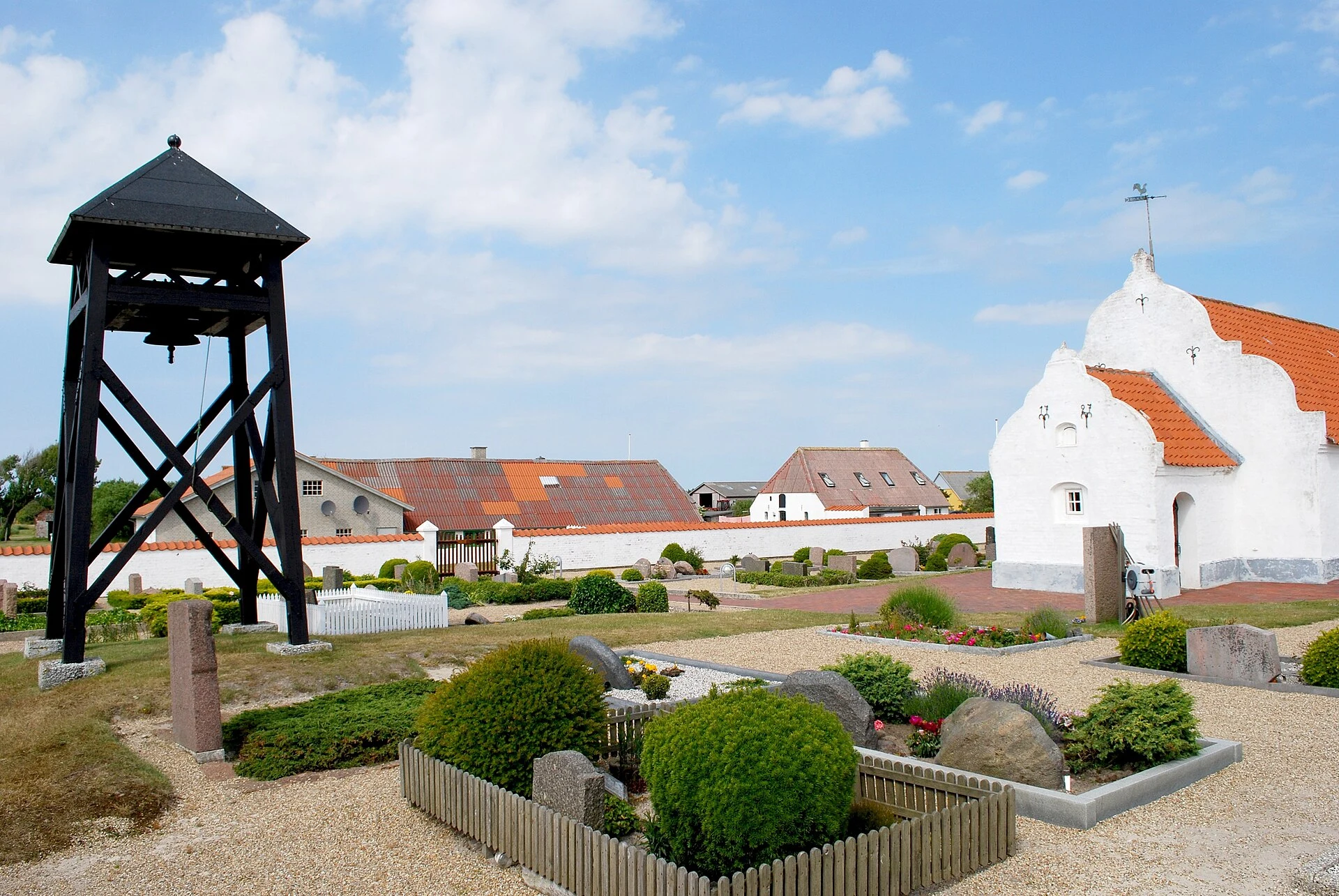
Mandø offers a very particular way to experience Denmark’s coast: accepting that the tide organizes the day. This small marsh island, part of the protected Wadden Sea landscape, is not best enjoyed by collecting stops, but by carefully calculating your arrival and departure, allowing extra time and understanding why birds, seals and intertidal channels need space. For anyone who would rather not drive along a road that can be flooded, the tractor bus makes the logistics part of the experience.
Deciding whether Mandø fits your trip
Mandø works especially well as a leisurely excursion from the Ribe area, or as an overnight stay if you would rather not depend on an immediate return. It is not an island for an improvised late arrival: access via Låningsvejen, a low causeway across the seabed, is covered at high tide.
The reward for that restriction is a landscape where the relationship between marsh, sediment and tide can be read clearly. Mandø is not a sandy island like its neighbors Fanø and Rømø: much of its land was formed by fine deposits from the Wadden Sea. Its low profile, dikes and salt meadows explain both its appearance and its vulnerability.
Choose Mandø if you are interested in observing a changing environment and can organize your day around a crossing time. If you want rigid schedules, plenty of dining options or the freedom to travel without checking weather conditions, another coastal base may be a better choice.
Arriving without turning the road into a gamble
For private vehicles, the relevant route is Låningsvejen. It should only be crossed during the window indicated by tide tables and local notices; the national park warns that traffic is undertaken at your own risk. It is not enough to estimate low tide roughly: wind, water levels and visibility can alter conditions.
The old Ebbevej is something different. It is a historic track visible at low tide, now intended for approaching on foot from the mainland by following signs and staying out of mud and channels. It is not a route for private cars.
The simplest car-free alternative is Mandøbussen, the tractor-bus service from Vester Vedsted. Its timetable depends on the tide and may be changed or cancelled because of high water. During the summer period published by the operator, some departures require booking. Before buying a ticket or turning up, confirm the timetable, departure point, bicycle rules and boarding options if you need mobility assistance.
Giving the day a realistic pace
A good round-trip plan does not need to cover every corner. Allow time for the crossing, start at the island’s welcome point and explore the settled area and dikes at an unhurried pace. Mandø’s open horizontal scale encourages you to pause for the sky, salt pasture and birds rather than chase a list of monuments.
If you book an excursion to Koresand, the great sandbank to the southwest, treat it as a separate, guided activity, not as a spontaneous extension of your walk. The trip helps explain how sand and water move through the Wadden Sea, but it also depends on conditions and local scheduling.
Travelers bringing their own bicycle may find the island’s terrain easy to cycle, although they must first work out how to get there and back with it. If you are walking, bring footwear suitable for wet, uneven ground, a windproof layer and an extra layer: the lack of shelter makes the weather feel more intense than the distance might suggest.
Watching wildlife without taking over its space
Mandø is a valuable place to watch migratory and breeding birds, but good wildlife watching here is based on distance and stillness. Flocks need to feed and rest with minimal disturbance; use binoculars rather than approaching, avoid surrounding groups of birds and follow any temporary or area-specific signs.
Seals also rest on nearby sandbanks. Watching them from a distance is preferable to approaching for photographs. Tide channels, meanwhile, are neither shortcuts nor play areas: they can fill quickly and change appearance in a short time.
This caution does not diminish the visit; it gives it meaning. The Wadden Sea is an extensive intertidal system spanning Denmark, Germany and the Netherlands, and is crucial to millions of birds along their migration routes. Arriving, observing and leaving without forcing the place’s rhythm is the most responsible way to be there.
When staying overnight is worthwhile
Staying overnight has a practical advantage: it keeps the whole experience from being compressed between two crossings. It allows you to walk at the end of the day, when visitor activity decreases, and experience the night-time darkness of an island with little light pollution.
In return, it requires more planning. Accommodation is limited, and the following day’s return will still depend on the tide or scheduled transport. Do not assume that booking accommodation solves the mobility question: confirm both elements separately.
For a first visit, the tractor bus and a day trip offer the clearest balance between simplicity and context. For anyone who already knows they are looking for silence, open skies and a less hurried visit, one night may justify the extra coordination.
Key ideas for planning Mandø
Before setting out, check the status of Låningsvejen, the forecast and the crossing times for the exact date.
Without a car, prioritize the tractor bus and check in advance whether booking is required, whether the service is operating and where it departs from.
On the intertidal coast, do not venture onto mud, channels or sandbanks outside an organized activity; keep your distance from seals and birds.
If staying on the island, book well ahead and confirm accommodation and the outward and return journeys separately.
Sources to check before setting out
Information about tides, crossings, bookings, guided departures and possible cancellations is date-sensitive. Always check these sources before organizing your trip:
- Wadden Sea National Park: Mandø, Låningsvejen, wildlife and guided activities.
- Mandøbussen: operating timetable, bookings, departure point and changes caused by water levels.
- VisitDenmark: current rules for Ebbevej and precautions on intertidal terrain.
- UNESCO World Heritage Centre: ecological context and transnational protection of the Wadden Sea.
References consulted during editorial review. Times, requirements and advisories may change: always confirm with the official source.
- https://whc.unesco.org/en/list/1314 whc.unesco.org
- https://whc.unesco.org/en/statesparties/dk whc.unesco.org
- https://whc.unesco.org/en/statesparties/dk/documents whc.unesco.org
- https://whc.unesco.org/en/list/1314/documents whc.unesco.org
- https://whc.unesco.org/archive/advisory_body_evaluation/1314ter.pdf whc.unesco.org
- https://whc.unesco.org/en/documents/114800 whc.unesco.org
- https://whc.unesco.org/en/decisions/8746 whc.unesco.org
- https://whc.unesco.org/en/list/1314/maps/ whc.unesco.org
- Dinamarca WikidataCC0 1.0 Wikidata · Q35
- Dinamarca WikidataCC0 1.0 Wikidata · Q5257930
- Dinamarca WikidataCC0 1.0 Wikidata · Q141511775
- Dinamarca WikidataCC0 1.0 Wikidata · Q105699357
- Denmark World Countries — mledozeODbL 1.0 World countries dataset by mledoze and contributors · ODbL 1.0
- Denmark World Bank Open DataCC BY 4.0 World Bank