Doha, Qatar
Msheireb and the National Museum: a day of Doha stories
An urban route linking four historic houses with an immersive museum to explore Qatar’s social, economic and spatial transformations.
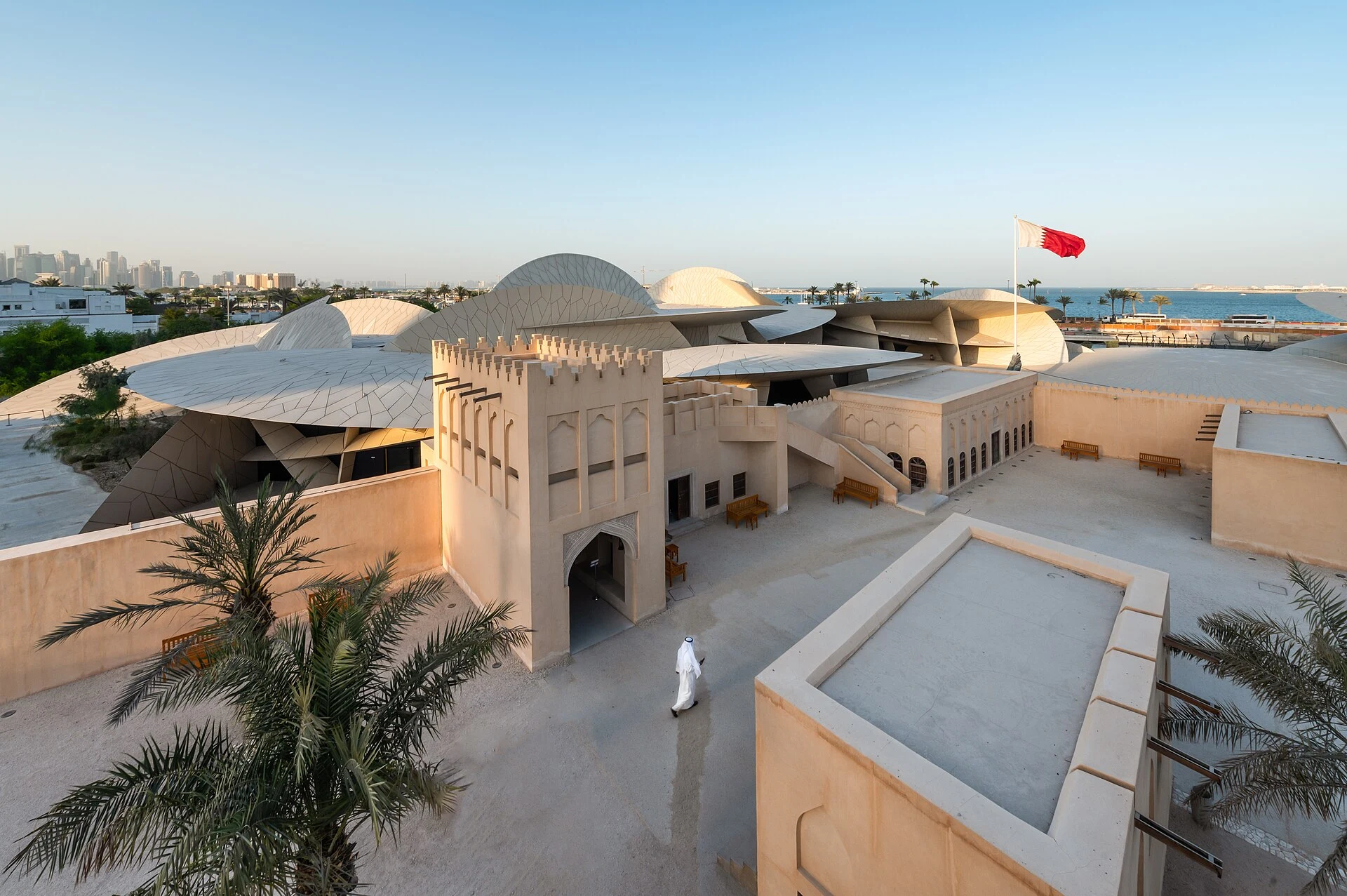
Doha is easier to understand when different scales and narratives are compared. Msheireb Museums preserves four historic houses in the former commercial heart of the city, while the National Museum of Qatar offers a broad, sensory and contemporary account of the land, society and formation of the state. Between the two, Souq Waqif is more than a simple break: it helps reveal how markets, housing, mobility and public life continue to shape the centre.
This is a cultural route that can be completed without a car, designed for travellers who would rather spend time with the content than string together a series of monuments. You will need to adjust the order according to closing days and the current admission windows.
Two museums, two scales for approaching Doha
Start with the National Museum of Qatar if you are looking for an overview. Its galleries connect geology, the coast, ways of life, archaeology, pearls, economic change and Qatar’s recent political history. Inspired by the mineral formation known as the desert rose, the building surrounds the former palace of Sheikh Abdullah bin Jassim Al Thani. The architecture is not merely a striking container; it creates a relationship between a historic residence and a highly contemporary museum.
Then change scale at Msheireb Museums. The four houses do not tell exactly the same story: Bin Jelmood House examines slavery and its contemporary forms of exploitation; Company House focuses on people connected with the beginnings of the oil industry; Mohammed Bin Jassim House explores Doha’s urban development; and Radwani House looks at Qatari domestic life. Do not turn the visit into a quick confirmation of a preconceived idea about the country. Let the tensions between maritime trade, labour, oil, family and urban renewal emerge separately.
An itinerary that works by metro and on foot
The National Museum and Msheireb stations are marked on Doha Metro’s Gold Line. This makes it possible to organise the two institutions as the endpoints of a car-free day; Souq Waqif is within walking distance of Msheireb and offers a sensible transition between the museums.
A practical sequence is to visit the National Museum first, take the metro to Msheireb, and set aside the afternoon for the historic houses and the market. The alternative makes sense on Fridays: begin at Msheireb when it opens in the afternoon and move the National Museum to another morning, or to its extended Thursday hours if they fit your schedule.
The urban route is short on the map but exposed to the heat. Carry water, use covered walkways where available, and avoid planning too many outdoor streets during the central hours of the day. The metro takes care of the main journey; on this route, walking is a way to read the city centre, not a test of endurance.
Souq Waqif as a pause, not a shopping checklist
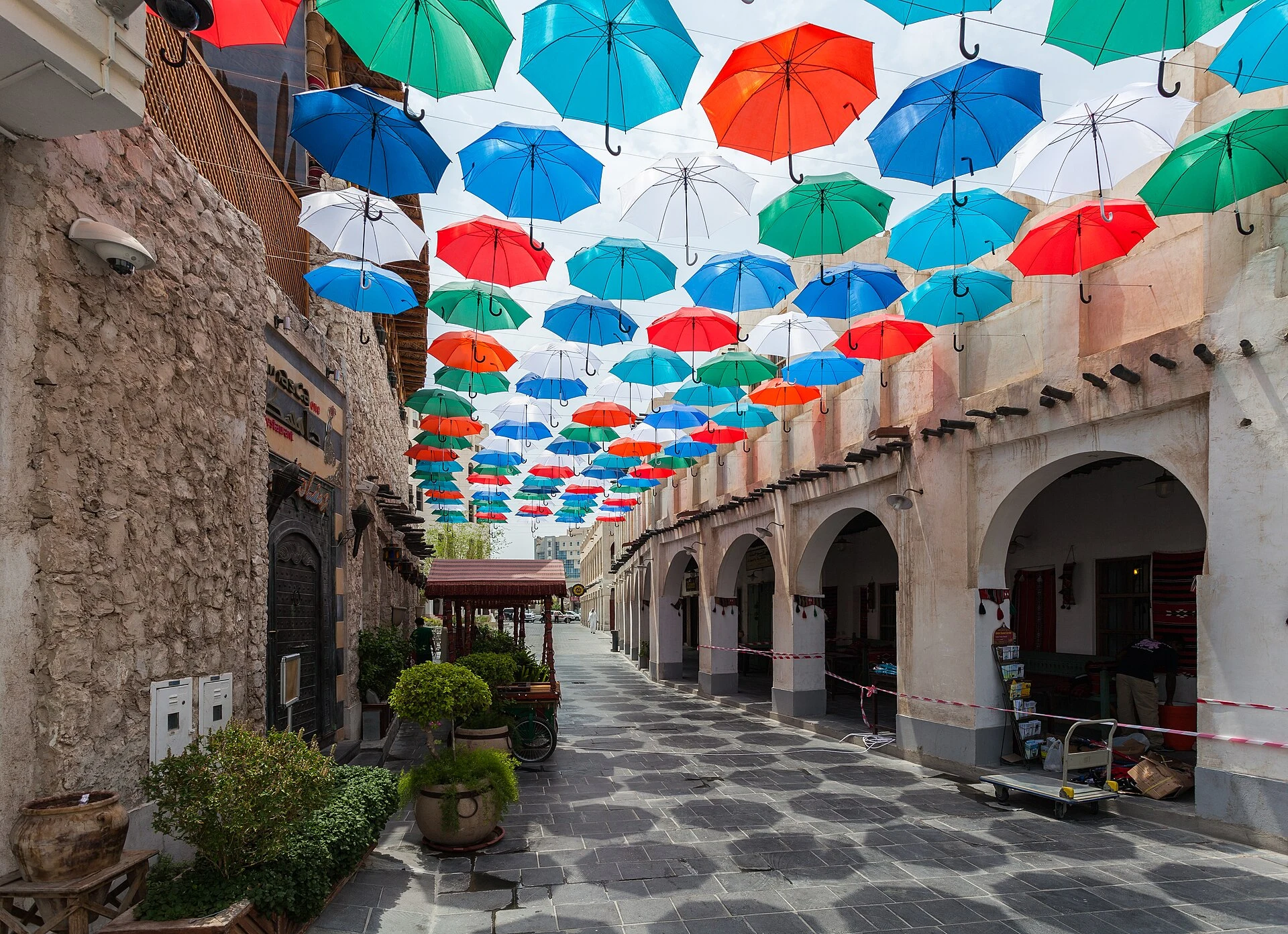
After leaving Msheireb, enter Souq Waqif without feeling obliged to cover it all. Walk through a few passages, observe the rhythms of deliveries, cafés, shops and meeting places, and return to one of the squares or side streets if the main flow becomes too crowded. Seeing the market as an everyday space is more rewarding than pursuing a particular purchase.
The contrast with Msheireb Downtown deserves attention: the heritage houses are embedded in a major urban regeneration project, while the market presents itself as a continuation of a historic commercial area. These are landscapes with different layers and implicit debates about memory, reconstruction and representation. Keep that difference in view rather than assuming that the whole setting reproduces the Doha of another era intact.
Wear clothing that covers your shoulders and knees in the museums, and avoid intrusive photographs of workers, traders or families. In the galleries, rules concerning bags, food, tripods, flash photography and taking pictures may limit what you can bring or do.
Accessibility, pace and decisions before setting out
The route can easily be adapted for a leisurely visit. Msheireb Museums states that most of its spaces are wheelchair accessible and that visitor wheelchairs are available. The National Museum includes multisensory resources, tactile models with braille and other forms of assistance. Even so, contact each institution in advance if you need to confirm a specific service or personal support during your visit.
Do not schedule both museums as a race. Choose two or three houses at Msheireb if you have a particular interest—for example, Bin Jelmood and Company House for a social and labour-focused reading—or allow time for all four if urban history is your priority. At the National Museum, the immersive galleries may take longer than expected; also check whether any room is temporarily closed for improvement works.
Opening hours, public-holiday closures, admission and special Ramadan schedules change. Confirm everything on the same day or before buying transport, especially if your day depends on a Friday opening or a particular metro connection.
Sources to check before you go
- Qatar Museums, “Plan Your Visit” and the official ticketing system: National Museum opening hours, last admission, gallery availability and access windows.
- Qatar Museums, “Visitor Guidelines” and “Accessibility”: dress, photography and luggage rules, plus accessibility resources.
- Msheireb Museums, “Visit” and the Heritage Houses pages: opening arrangements, Sunday closure, free admission, guided tours and house accessibility.
- Qatar Rail, official Doha Metro and Lusail Tram maps: stations, the Gold Line, travel cards and operating hours.
- Visit Qatar pages for Msheireb Museums and the National Museum of Qatar: urban orientation and the relationship with Souq Waqif.
Check these official sources before you go: opening hours, tickets, partial closures and transport services are all calendar-sensitive details.
References consulted during editorial review. Times, requirements and advisories may change: always confirm with the official source.
- https://msheirebmuseums.com/en/visit/ msheirebmuseums.com
- https://msheirebmuseums.com/en/contact-us/ msheirebmuseums.com
- https://visitqatar.com/intl-en/things-to-do/art-culture/museums/msheireb visitqatar.com
- https://qm.org.qa/en/visit/ qm.org.qa
- https://visitqatar.com/intl-en/things-to-do/art-culture/museums/national-museum visitqatar.com
- https://visitqatar.com/intl-en/highlights/hidden-gems visitqatar.com
- https://msheirebmuseums.com/en/shop/customer-service/contact-us/ msheirebmuseums.com
- https://visitqatar.com/tr-tr/things-to-do/art-culture/museums/msheireb visitqatar.com
- Catar WikidataCC0 1.0 Wikidata · Q846
- Qatar World Countries — mledozeODbL 1.0 World countries dataset by mledoze and contributors · ODbL 1.0
- Qatar World Bank Open DataCC BY 4.0 World Bank
- Mundial de Catar: autogol o éxito para los patrocinadores. Análisis de los videos publicados en YouTube y la respuesta de la audiencia OpenAlexCC0 1.0 OpenAlex