Panama’s Caribbean coast
Portobelo brings together fortresses, Afro-descendant memory and Congo culture
A day —or better still, a night— to connect the forts around the bay, the Royal Customs House and the cultural practices that give Portobelo its contemporary presence.
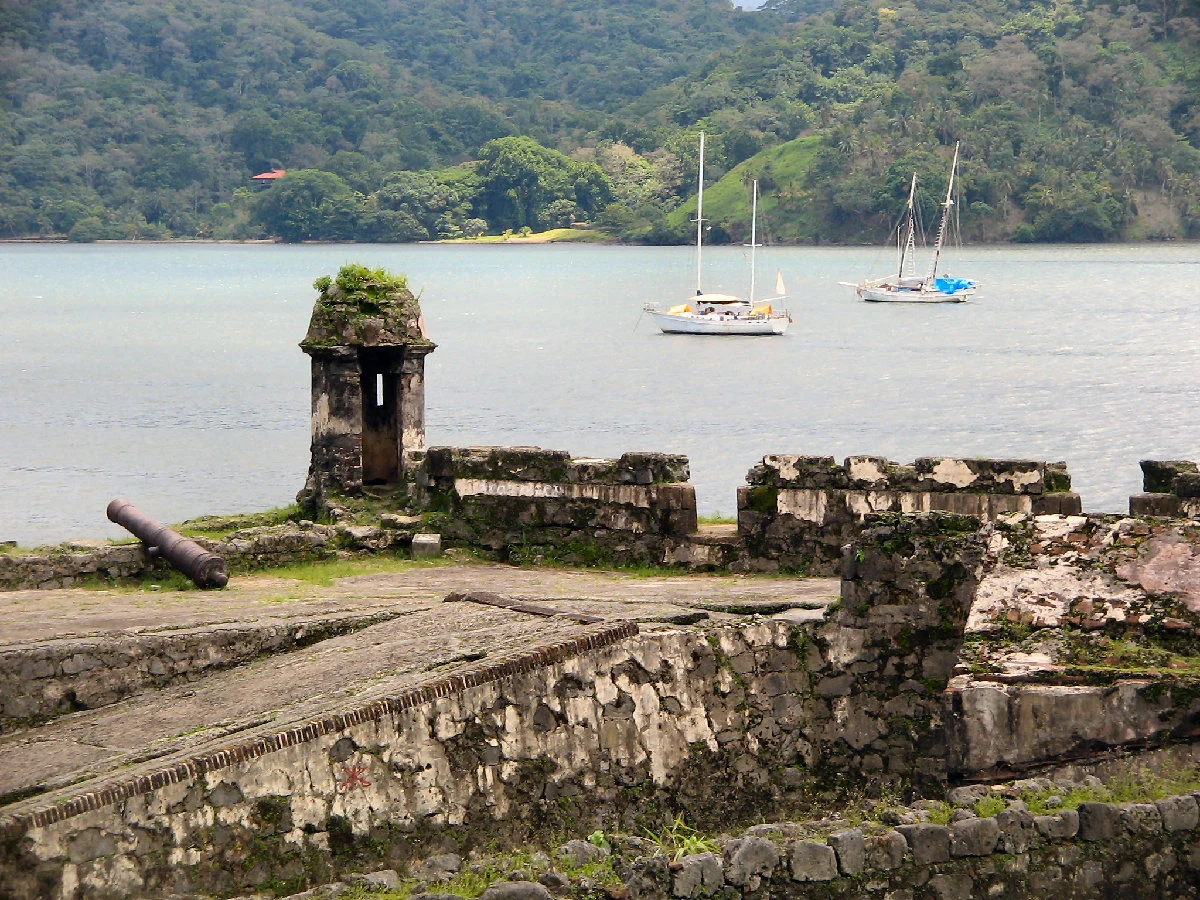
Portobelo concentrates a port history of Atlantic scale in a small town facing the Caribbean. Visiting its fortifications means looking beyond the cannons: the bay was part of a trade route sustained in part by colonial violence and enslavement. Congo culture, alive in communities across Colón Province, offers another indispensable perspective: memory, creativity and community continuity. Plan with some flexibility, because conservation work may change access to buildings and sites.
Organize your visit around the bay
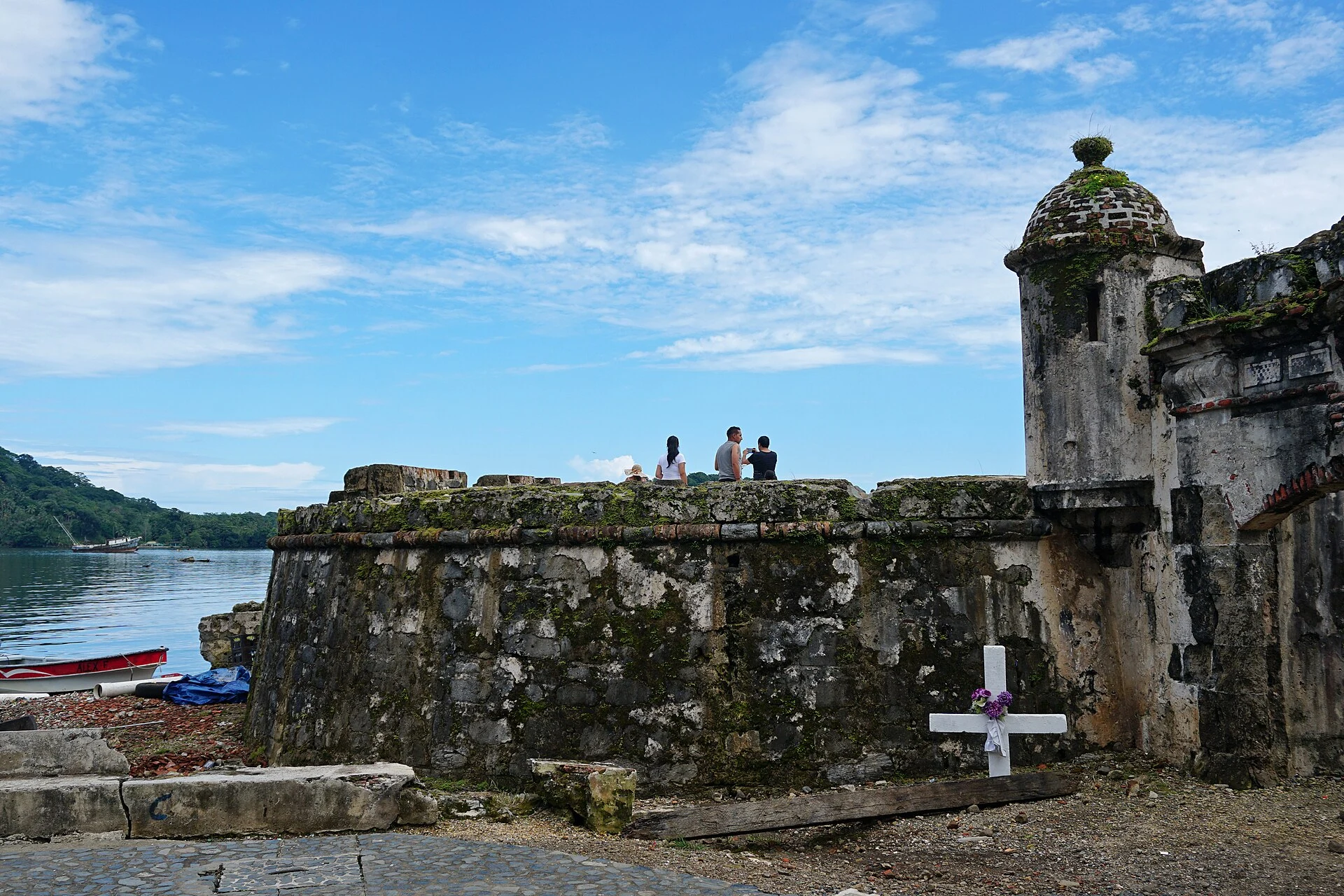
Start along the town waterfront, where San Jerónimo Fort helps explain the direct relationship between the walls, the sea and the settlement. Continue to the Royal Customs House, whose historic role helps place the fairs and the transisthmian movement of goods in context; when it is open, its museum provides a useful grounding before you seek out viewpoints or ruins.
The Castle of Santiago de la Gloria completes this first look at the defenses. Do not try to take in every remnant as a series of identical stops: some are best understood through their position around the bay, while others reveal more about the evolution of military architecture. Allow time to walk between the fort, the square and the Customs House, and leave sites outside the center for a second part of the day if you have transport and have confirmed that access is available.
Read the ruins as heritage under conservation
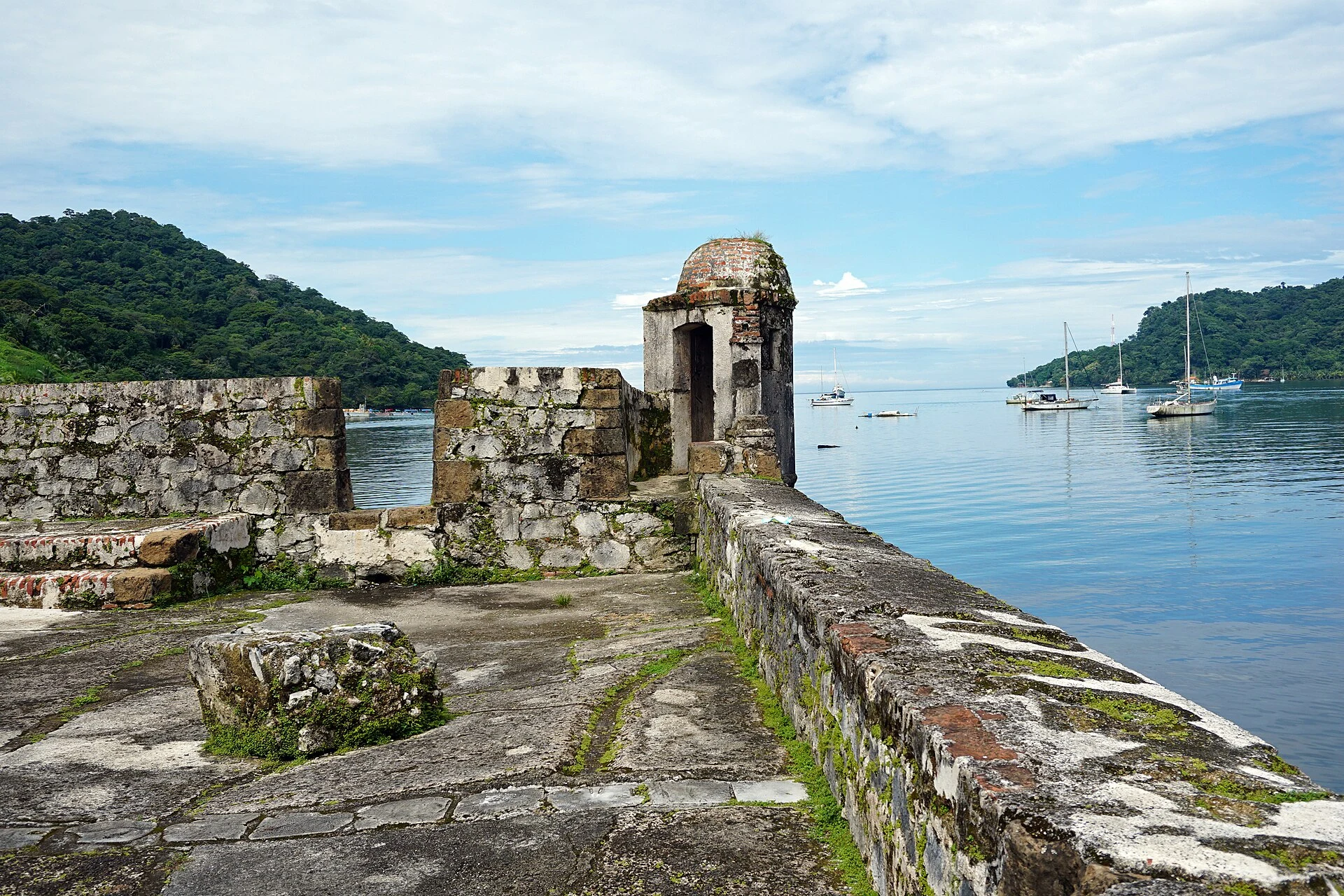
Portobelo’s defenses formed part of a broader defensive system together with San Lorenzo, at the mouth of the Chagres River. Their design changed over the centuries in response to military technologies, topography and the conditions of the tropical coast. That scale explains why the landscape matters as much as each individual building.
The fortifications remain on the List of World Heritage in Danger. This does not diminish the interest of a visit; on the contrary, it encourages you to pay attention to their material fragility. Restoration and consolidation work is under way, and heavy rain or flooding can affect low-lying areas of the bay. Before setting out, check with local heritage authorities which monuments, short trails, museum and church are actually available that day. Do not cross barriers, unstable walls or work areas to get a photograph.
Congo culture calls for listening, not hurried consumption
The ritual and festive expressions of Congo culture are recognized as intangible cultural heritage. Music, dance, clothing, theatricality and humor are not decorative additions to the forts: they convey Afro-descendant memory linked to resistance, freedom and the historical experiences of communities along the Colón coast.
The responsible way to approach them is as a living practice. If you happen to encounter a public activity, follow the organizers’ instructions, ask before photographing people and avoid requesting private performances or turning religious ceremonies into a spectacle. The Church of San Felipe and devotion to the Black Christ call for the same consideration: respect times of worship, the movement of worshippers and any rules in place at the site. For food or crafts, prioritize local businesses and creators, agree on the price clearly and value the work without aggressive haggling.
Decide whether to return the same day or stay overnight
From Panama City, Portobelo can be reached by road in about two hours under favorable conditions; there is also a bus connection from the Albrook terminal. Public transport reduces the cost, but it can limit your return time and your ability to connect with places outside the town. Confirm routes, schedules and the last service before relying on this option.
A day trip works for the historic center, but an overnight stay in Portobelo offers a more sensible pace if you want to visit calmly, eat in town and avoid rushing from fort to fort. Bring water, rain protection and shoes with good grip for uneven surfaces. Checking in advance the schedules, works, celebrations and weather conditions should be part of the plan: here, it is both a matter of caring for heritage and of making realistic logistical choices.
Sources to check before traveling
Check updates on access and conservation with Panama’s Ministry of Culture and the Municipality of Portobelo. For heritage context, review UNESCO’s entry and conservation decisions concerning the fortifications of Portobelo-San Lorenzo, as well as UNESCO’s register dedicated to the ritual and festive expressions of Congo culture. For transport from Panama City and general planning, cross-check the information with the Panama Tourism Authority and the operator of the Albrook terminal.
References consulted during editorial review. Times, requirements and advisories may change: always confirm with the official source.
- https://sicultura.micultura.gob.pa/espacios-culturales/monumentos-sitios-declarados-patrimonio/conjunto-monumental-historico-del-casco-antiguo-de-la-ciudad-de-panama sicultura.micultura.gob.pa
- https://whc.unesco.org/en/list/135 whc.unesco.org
- https://micultura.gob.pa/2024/04/15/congos-reafirman-su-patrimonio-inmaterial-en-festival/ micultura.gob.pa
- https://micultura.gob.pa/2025/01/29/el-ministerio-de-cultura-impulsa-la-restauracion-de-las-fortificaciones-del-caribe/ micultura.gob.pa
- https://micultura.gob.pa/wp-content/uploads/2020/01/Reporte-Ejecutivo-Julio-2019.pdf micultura.gob.pa
- https://micultura.gob.pa/2025/08/27/el-aniversario-de-aduanas-espacio-para-conocer-la-historia-de-panama/ micultura.gob.pa
- https://micultura.gob.pa/2026/02/23/autoridades-inspeccionan-los-avances-de-la-restauracion-de-la-iglesia-de-portobelo/ micultura.gob.pa
- https://micultura.gob.pa/2024/09/10/presidente-mulino-pone-en-marcha-acciones-para-rescatar-la-iglesia-e-historia-de-portobelo/ micultura.gob.pa
- Panamá WikidataCC0 1.0 Wikidata · Q804
- Panamá WikidataCC0 1.0 Wikidata · Q1004891
- Panama WikidataCC0 1.0 Wikidata · Q94016605
- Panama WikidataCC0 1.0 Wikidata · Q93971275
- Panama World Countries — mledozeODbL 1.0 World countries dataset by mledoze and contributors · ODbL 1.0
- Panama World Bank Open DataCC BY 4.0 World Bank
- Panama DBpediaCC BY-SA 3.0 DBpedia
- Panamá Viejo: una experiencia exitosa de gestión patrimonial OpenAlexCC0 1.0 OpenAlex
- Turismo urbano, desarrollo local y sostenibilidad en el municipio de Panamá OpenAlexCC0 1.0 OpenAlex
- Turismo urbano, desarrollo local y sostenibilidad en el municipio de Panamá CrossrefMetadatos públicos; derechos específicos por campo cuando correspondan Crossref
- Importancia de establecer un Observatorio de Turismo Sostenible para el desarrollo del turismo en Panamá. CrossrefMetadatos públicos; derechos específicos por campo cuando correspondan Crossref
- Educación, comunicación y turismo: un modelo interdisciplinario para la sostenibilidad territorial en Panamá CrossrefMetadatos públicos; derechos específicos por campo cuando correspondan Crossref
- Sociedad, economía y cultura material: Historia urbana de Panamá la Vieja CrossrefMetadatos públicos; derechos específicos por campo cuando correspondan Crossref
- Literatura oral indígena Open LibraryCC0 1.0 (registros de catálogo) Open Library
- Portobelo GeoNamesDatos geográficos bajo CC BY 4.0; requiere atribución a GeoNames. Fuente: GeoNames
- Portobelo, Colón, Panama OpenStreetMapODbL 1.0; atribución y obligación de compartir bases derivadas. Fuente: OpenStreetMap
- Portobelo, Colón, Panama OpenStreetMapODbL 1.0; atribución y obligación de compartir bases derivadas. Fuente: OpenStreetMap