Flevoland · Heritage and landscape
Schokland on foot and by bicycle, the former polder island
Schokland reveals the Dutch polder as a story of evacuation, archaeology and land reclaimed from the water. A leisurely plan begins at the museum and continues to the island’s former extremities.
Conditions described in the guide: confirm current requirements and access with the official source before travelling.
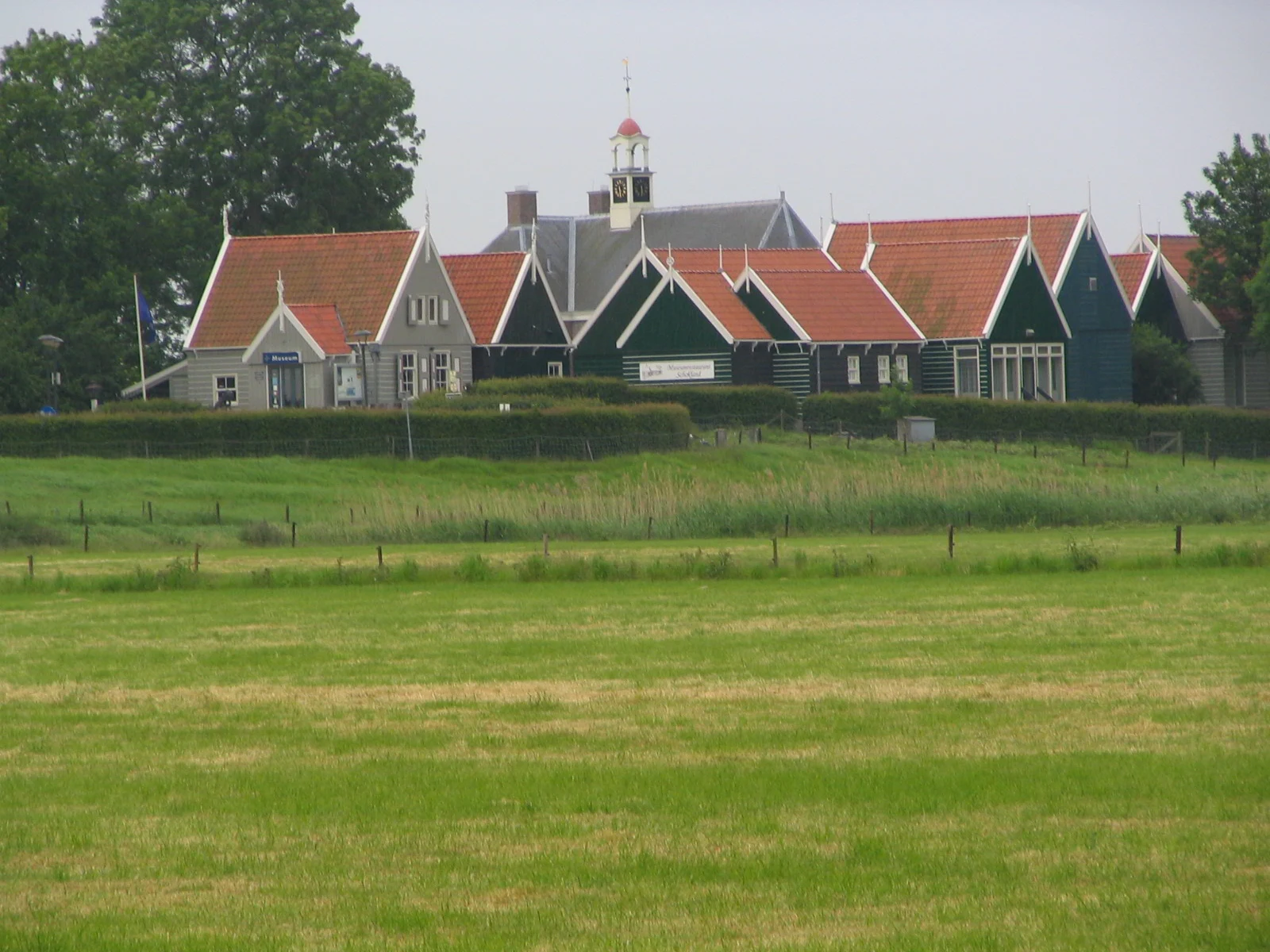
In the middle of the rectilinear fields of the Noordoostpolder, Schokland preserves the raised shape of an island that ceased to be one. Visiting it works best as a way of reading the landscape: the water is no longer in sight, but it organises everything you see. Between the museum, the former settlements and the flat paths, the small scale makes it possible to understand ten thousand years of human occupation without turning the visit into a hurried stop.
An inland island that explains the terrain
Schokland was first a peninsula, then an island exposed to the Zuiderzee and, after its inhabitants were evacuated in 1859, became part of the polder when this section of sea was drained in the 1940s. That sequence is the key to the visit: do not look for a vanished coastline, but for the inhabited mounds, dykes, ruins and field alignments that still reveal the island’s outline.
The site’s value also lies in what does not surface. Prehistoric remains lie beneath the fields, and the preserved locations together trace a long history of adapting to water. Treat the paths and archaeological areas as part of the heritage, not as shortcuts: stay on the marked routes and let the polder’s vastness become part of the experience.
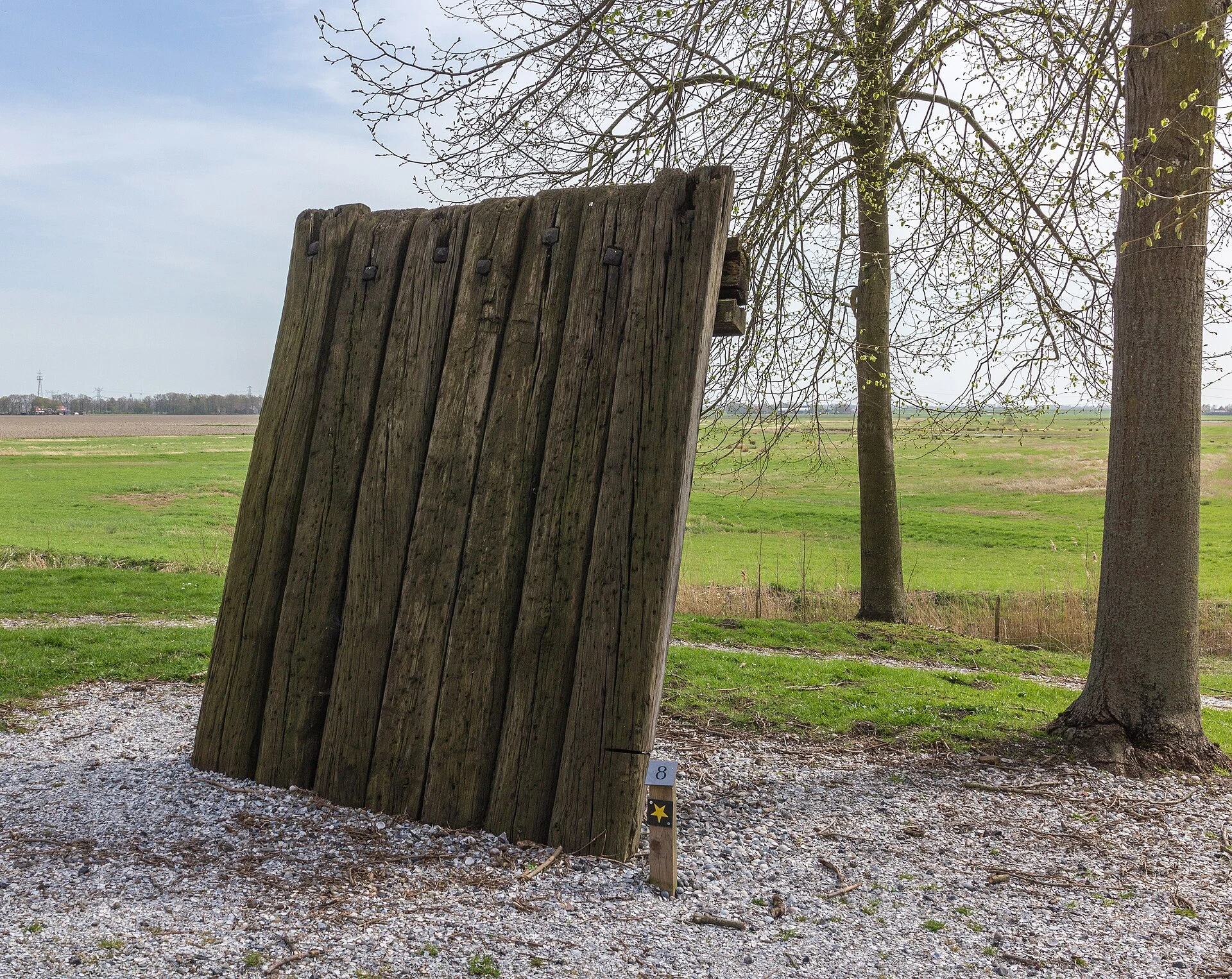
Start at Middelbuurt and do not reduce the visit to the museum
The Museum Schokland, in Middelbuurt, provides the necessary framework before you head out: the permanent exhibition covers life alongside water, from prehistory to the creation of the Noordoostpolder. It is a useful first stop for identifying in the landscape the layers that later appear scattered around the site: the church, the former harbour, the reconstructed homes and the artificial elevations.
Then set aside time for two ends of the former island. At Oud-Emmeloord, the lighthouse keeper’s house and fog-signal keeper’s house have been preserved; at the Zuidpunt, the ruins of Ens church and the maritime marker recall that this inland landscape once had shipping, storms and evacuations. The visit becomes more meaningful when you compare these landmarks with the crops surrounding them today.
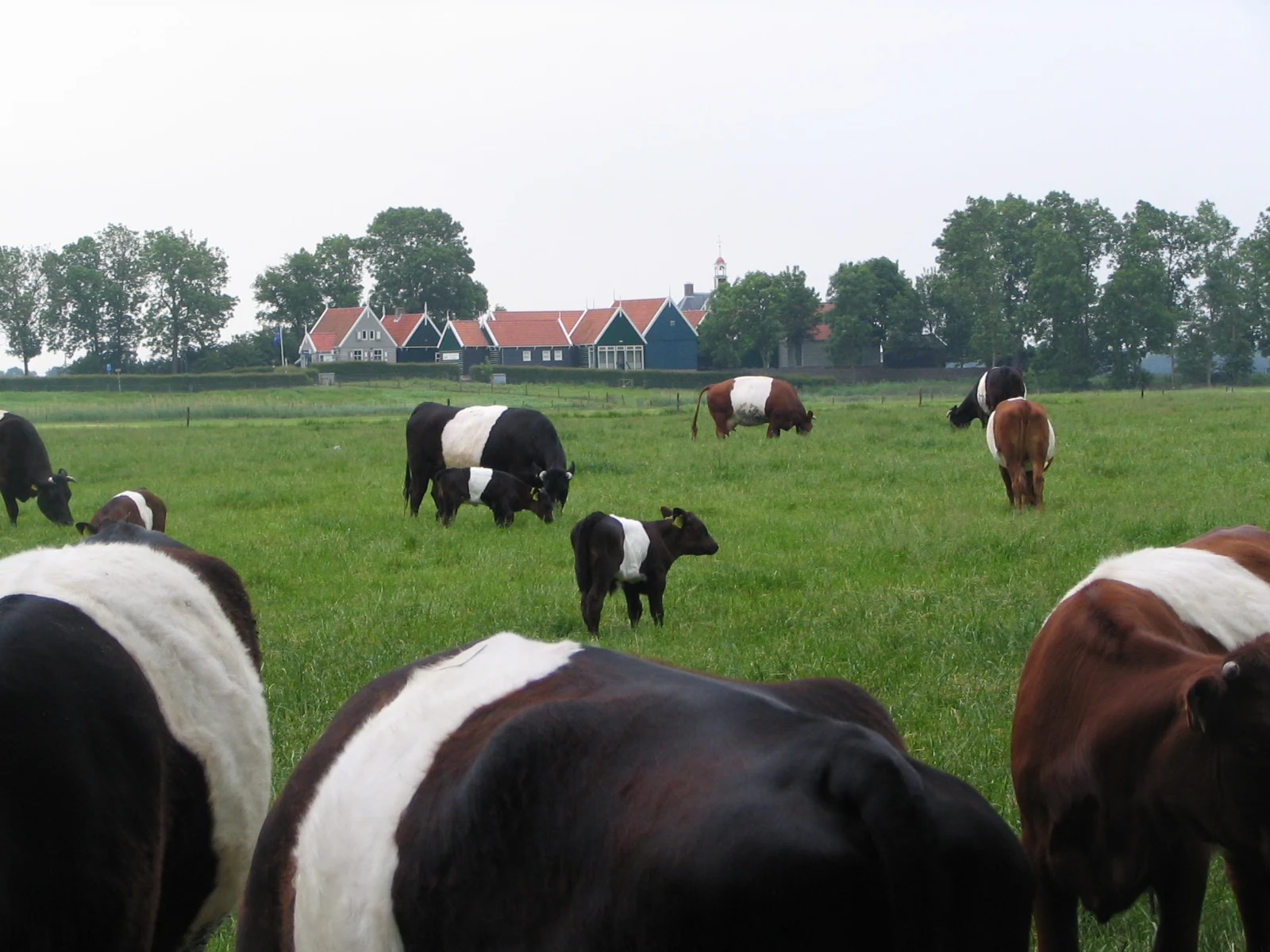
On foot or by bicycle: choose according to what you want to understand
Walking helps you sense the slight but decisive rise of the former island above the polder. Cycling, by contrast, makes it easier to connect Middelbuurt, Oud-Emmeloord and Zuidpunt, and to understand the relationship between the remains and the rural road network. The museum provides information about walking and cycling routes; ask for the current leaflet before setting out.
There is no need to turn Schokland into a race between photo spots. A slow visit works especially well if you alternate a museum room with an outdoor stretch and a pause to observe the geometry of the land. Bring water, protection from the wind and suitable footwear for rural paths: the lack of hills does not remove exposure to the elements.
Arriving without a car is possible, but it shapes the day
A car offers flexibility for dividing up the stops, but it is not the only option. From Monday to Friday, route 215 connects the area with the Museum Schokland stop; at weekends, the combination changes and may involve travelling to Ens and walking about four kilometres, or using local transport. Check the current timetable for the operator and the museum before planning the day: frequencies and connections are details that change.
For visitors with mobility needs, the main building, shop, restaurant and permanent exhibition have access for wheelchair users or people with walkers, while the outdoor area is only partially accessible. The routes from the car parks to the lighthouse keeper’s house and the Zuidpunt ruins are paved. It is best to contact the museum in advance if you need to confirm assistance, wheelchair loans or the specific conditions of a route.
When to choose a guided visit
Schokland can be explored independently, but a guided visit organised by the museum provides context for groups, families or travellers who want to connect the archaeological discoveries with the contemporary landscape. Tours are available in several languages, subject to advance request; they are not essential for entering or walking around the site.
Allow a full day if you want to combine the museum and landscape, or include Schokland in a broader Flevoland route if you are travelling by bicycle. The important thing is not to present it as an island preserved intact: its interest lies precisely in its transformation from a maritime community into an archaeological landform within reclaimed land.
References to check before setting out
UNESCO World Heritage Centre — Schokland and its surroundings: history, heritage boundaries and protected archaeological features.
Museum Schokland — opening hours, admission, walking and cycling routes, guided visits, accessibility and transport.
Stichting Werelderfgoed Nederland — information about the public transport connection introduced in March 2026 and route 215.
References consulted during editorial review. Times, requirements and advisories may change: always confirm with the official source.
- https://waddenvereniging.nl/ontdekken/wadlopen/ waddenvereniging.nl
- https://waddenvereniging.nl/verschilmaken/vijf-vragen-over/baggerstop-vaargeul-boontjes/ waddenvereniging.nl
- https://waddenvereniging.nl/ontdekken/voor-de-jeugd/wadgids/eb-en-vloed/ waddenvereniging.nl
- https://waddenvereniging.nl/wadweten/7352-het-wad-van-west-naar-oost/ waddenvereniging.nl
- https://waddenvereniging.nl/nieuws/10960-goede-voornemens-boek-je-belevenis/ waddenvereniging.nl
- https://waddenvereniging.nl/waddenmagazine/reisgids-voor-de-zintuigen/ waddenvereniging.nl
- https://qsr.waddensea-worldheritage.org/annex-tourism-2017 qsr.waddensea-worldheritage.org
- https://waddenvereniging.nl/waddengebied/het-ritme-van-de-zee/ waddenvereniging.nl
- Países Bajos WikidataCC0 1.0 Wikidata · Q55
- Países Bajos WikidataCC0 1.0 Wikidata · Q476033
- Países Bajos WikidataCC0 1.0 Wikidata · Q16250490
- Netherlands World Countries — mledozeODbL 1.0 World countries dataset by mledoze and contributors · ODbL 1.0
- Netherlands World Bank Open DataCC BY 4.0 World Bank
- Publicidad institucional y cultura de paz en los Países Bajos CrossrefMetadatos públicos; derechos específicos por campo cuando correspondan Crossref
- Historia jurídica en los Países Bajos y Bélgica en torno a 1924 CrossrefMetadatos públicos; derechos específicos por campo cuando correspondan Crossref
- University History in the Low Countries = Historia de la Universidad en los Países Bajos CrossrefMetadatos públicos; derechos específicos por campo cuando correspondan Crossref
- Publicidad institucional y cultura de paz en los Países Bajos CrossrefMetadatos públicos; derechos específicos por campo cuando correspondan Crossref
- Tipografía y estilos tipográficos del siglo xv en los Países Bajos: CrossrefMetadatos públicos; derechos específicos por campo cuando correspondan Crossref
- El gobierno de los Países Bajos en el cursus honorum de la Monarquía hispana CrossrefMetadatos públicos; derechos específicos por campo cuando correspondan Crossref
- Países Bajos CrossrefMetadatos públicos; derechos específicos por campo cuando correspondan Crossref
- Los Países Bajos: ¿un país tolerante? CrossrefMetadatos públicos; derechos específicos por campo cuando correspondan Crossref