Zambia · Luangwa Valley
South Luangwa: choosing a walking safari and the right season
The park lends itself to combining vehicle drives with guided walks, but it is worth deciding on the season, base and access arrangements before committing to an itinerary.
Conditions described in the guide: confirm current requirements and access with the official source before travelling.
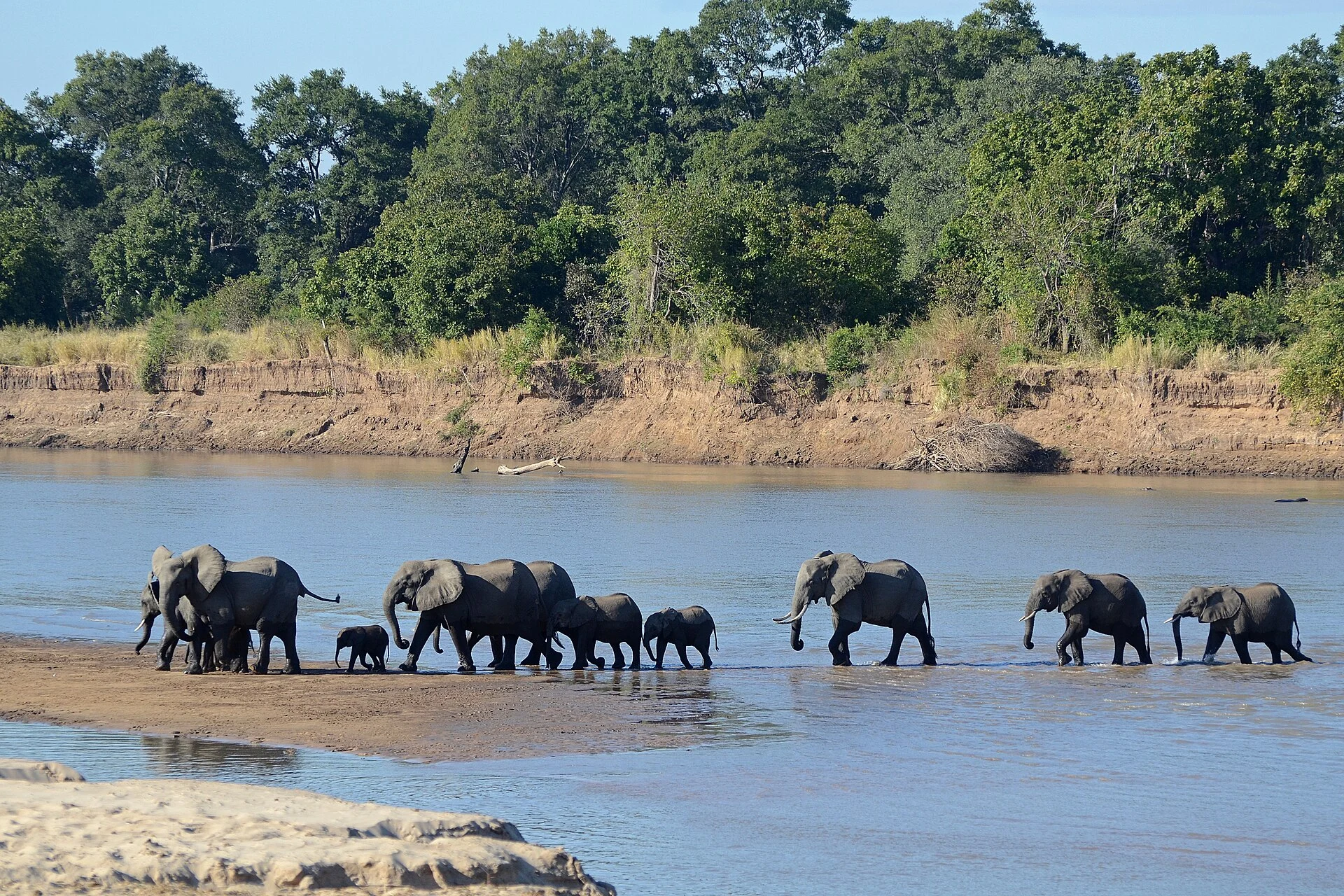
South Luangwa is not simply a checklist of animals: the Luangwa River, riverine woodland and plains influence where wildlife gathers and how visitors move through the park. Its most distinctive feature is the guided walking safari, a slow-paced way of observing that requires accepting the rhythm of the group and the terrain rather than pursuing encounters. Choosing the right season and base determines both the type of landscape and the practical logistics of the trip.
A vast park shaped by the river
At around 9,050 km², South Luangwa is a large-scale park, not a reserve to be rushed through. The Luangwa structures the experience: its banks, lagoons and associated vegetation provide useful clues for understanding wildlife movements, especially when water becomes concentrated during the dry months.
Do not plan every outing around a particular species. The park’s value lies in learning to read tracks, sounds, birds and changes in habitat, alongside the large mammals that may appear. Thornicroft’s giraffe and Cookson’s wildebeest are associated with the Luangwa Valley, but sightings are never guaranteed and depend on the route, time of day and conditions at the time.
Vehicle or walking safari: two ways of seeing
A vehicle safari allows you to cover distances and adapt the day to different habitats. A walking safari, by contrast, focuses on small signs: tracks, plants, droppings, insects, bird behaviour and the guide’s interpretation of the surroundings. It is not an independent walk or an activity in which to impose your own route.
Before booking, ask for specific information about the expected duration, terrain, group size, applicable minimum age and who will lead the activity. Be honest about any mobility limitations, medical conditions or concerns about walking near wildlife. A good option may be to combine a walking outing with vehicle drives rather than turning the entire trip into a physical test.
The season changes more than the landscape
If wildlife viewing is the priority, the dry season from July to October generally brings less dense vegetation and greater activity around water. In return, there may be more demand in riverside areas, dust and high temperatures, especially towards October.
Between November and April, the landscape becomes greener and birdwatching becomes more rewarding, but some lodges close for the season and certain roads can become difficult. Do not book on the assumption that every camp, transfer and activity operates year-round: confirm the opening dates of each lodge and ask what alternative is available if access conditions change.
Choosing a base without confusing the park with its surroundings
The most common gateway is associated with Mfuwe. You can reach it by air from Lusaka or by road from Chipata, but the difference matters: flying simplifies arrival, while travelling overland offers more independence, although it requires checking road conditions and final transfers.
It is also worth asking exactly where the accommodation is located. South Luangwa borders the Lupande and Sandwe game management areas; a stay outside the park may offer a different experience, with operating rules, transfers and fee structures that should not be assumed to be equivalent. Confirm in writing what the booking includes: park access, transport, activities, meals and any possible supplements.
A visit that leaves room for wildlife
Responsible safari travel is not about getting closer, but about accepting the distance set by the animal and the guide’s judgement. Do not ask to leave the tracks, block wildlife’s path, feed animals or extend a sighting if it alters their behaviour. Carry a reusable water bottle, reduce the waste you bring into the park and remain quiet when the observation calls for it.
There is a practical reason for this approach: South Luangwa is a living ecosystem, not a stage. Choosing operators that explain their protocols, following park staff instructions and not buying wildlife products helps ensure that the experience does not shift its costs onto the animals or the land.
References to check before booking
Zambia Department of National Parks and Wildlife: South Luangwa information and guidance on walking safaris.
Zambia Tourism Agency: information on access via Mfuwe and Chipata, as well as registered operators and accommodation.
Zambia Tourism: indicative seasonal calendar and entrance-fee table; the published rates themselves warn that they may change.
Zambia Ministry of Tourism: recent notices about access to the main entrance and any infrastructure issues.
Check flights, road transfers, bridge conditions, seasonal openings, fees, activity requirements and cancellation terms with these bodies and your accommodation provider immediately before paying.
References consulted during editorial review. Times, requirements and advisories may change: always confirm with the official source.
- https://www.parliament.gov.zm/sites/default/files/documents/acts/National%20Parks%20and%20Wildlife%20Act.pdf www.parliament.gov.zm
- https://www.mot.gov.zm/dnpw/?page_id=1726 www.mot.gov.zm
- https://www.southluangwa.com/best-time-to-visit-south-luangwa.html www.southluangwa.com
- https://www.mot.gov.zm/dnpw/?page_id=1423 www.mot.gov.zm
- https://www.parliament.gov.zm/node/968 www.parliament.gov.zm
- https://www.zambiatourism.com/park-entry-fees/ www.zambiatourism.com
- https://www.mot.gov.zm/dnpw/?page_id=94 www.mot.gov.zm
- https://www.zambia.travel/southluangwanp.html www.zambia.travel
- Zambia WikidataCC0 1.0 Wikidata · Q953
- Zambia WikidataCC0 1.0 Wikidata · Q114513696
- Zambia World Countries — mledozeODbL 1.0 World countries dataset by mledoze and contributors · ODbL 1.0
- Zambia World Bank Open DataCC BY 4.0 World Bank
- Zambia DBpediaCC BY-SA 3.0 DBpedia
- Mfuwe GeoNamesDatos geográficos bajo CC BY 4.0; requiere atribución a GeoNames. Fuente: GeoNames
- Chipata GeoNamesDatos geográficos bajo CC BY 4.0; requiere atribución a GeoNames. Fuente: GeoNames
- Chipata GeoNamesDatos geográficos bajo CC BY 4.0; requiere atribución a GeoNames. Fuente: GeoNames
- Chipata, Chipata District, Eastern Province, Zambia OpenStreetMapODbL 1.0; atribución y obligación de compartir bases derivadas. Fuente: OpenStreetMap
- Mfuwe Airport OpenFlightsODbL 1.0 (base de datos) / DbCL 1.0 (contenidos) Mfuwe Airport · OpenFlights · ODbL 1.0