Bolivia · La Paz
Tiwanaku: Exploring Temples and Museums at the Altiplano’s Pace
A day trip from La Paz to understand Tiwanaku through its museums, ceremonial areas and the realities of visiting at high altitude.
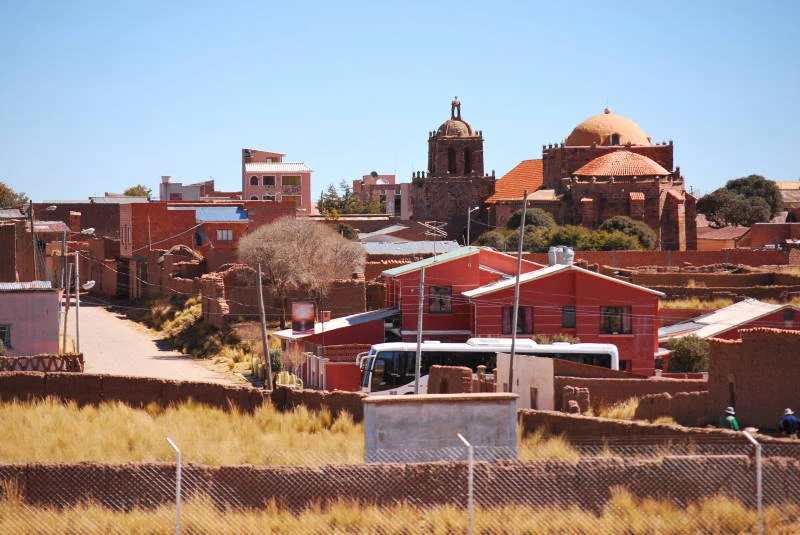
Tiwanaku calls for time to take in stone, scale and landscape—not a rushed stop to photograph the Gate of the Sun. Around 70 kilometres from La Paz and at an altitude of 3,850 metres, this archaeological complex traces the history of a city that was an Andean political and ceremonial centre between the fifth and tenth centuries. The most practical choice is to set aside a full day and structure your visit around museums, architecture and rest.
Start with the artefacts, not the best-known monument
The two museums within the site provide the sequence that the monumental landscape cannot explain on its own. The Ceramic Museum places Tiwanaku alongside earlier and later traditions; the Lithic Museum offers a close look at monumental sculptures and materials that later reappear in the open-air areas.
This order changes the experience: before reaching Kalasasaya, the Gate of the Sun or the semi-subterranean temple, you will already have points of reference for distinguishing a stela, an animal motif and a ritual object from a merely photogenic silhouette. Allow time to read the displays, and do not assume that the meaning of every image is settled: archaeological research continues, and some interpretations have changed over time.
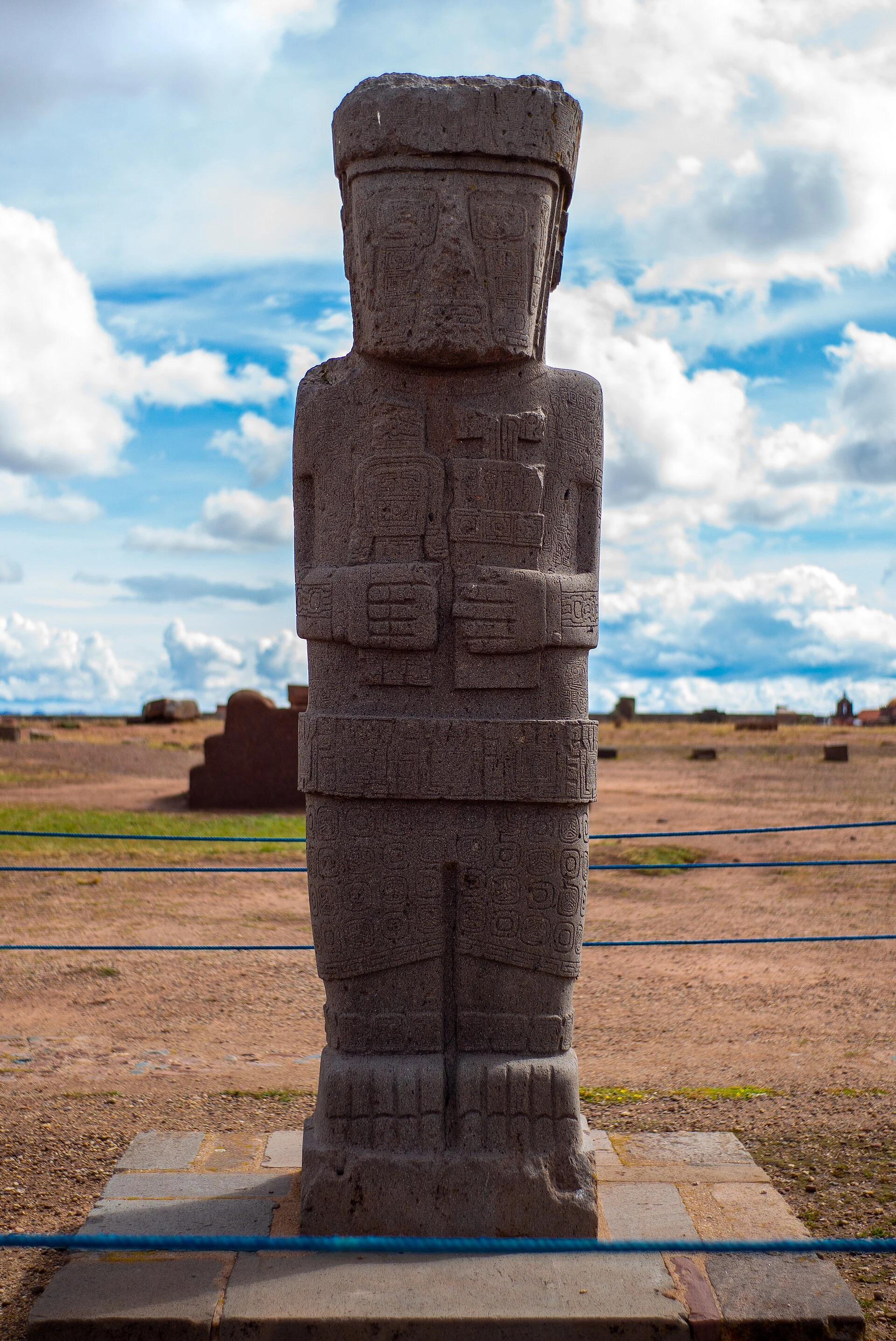
A walk through two areas, at different paces
The ceremonial core includes the semi-subterranean temple, Kalasasaya, Akapana and other remains of the ancient city. Here, it is worth walking slowly and paying attention to the orientation of the spaces, the worked stone blocks and the drainage systems: Tiwanaku was a planned city, not a collection of isolated objects.
Set aside a separate stretch of time for Pumapunku. Its fragmentary architecture calls for a different kind of observation: less focus on finding one all-encompassing view and more attention to joints, platforms and carving techniques. Do not climb on structures, cross conservation boundaries or move stones, even when the site seems open and uncrowded. Much of the historic city lies beneath the present-day settlement; what you can see is a protected part of a much larger complex.
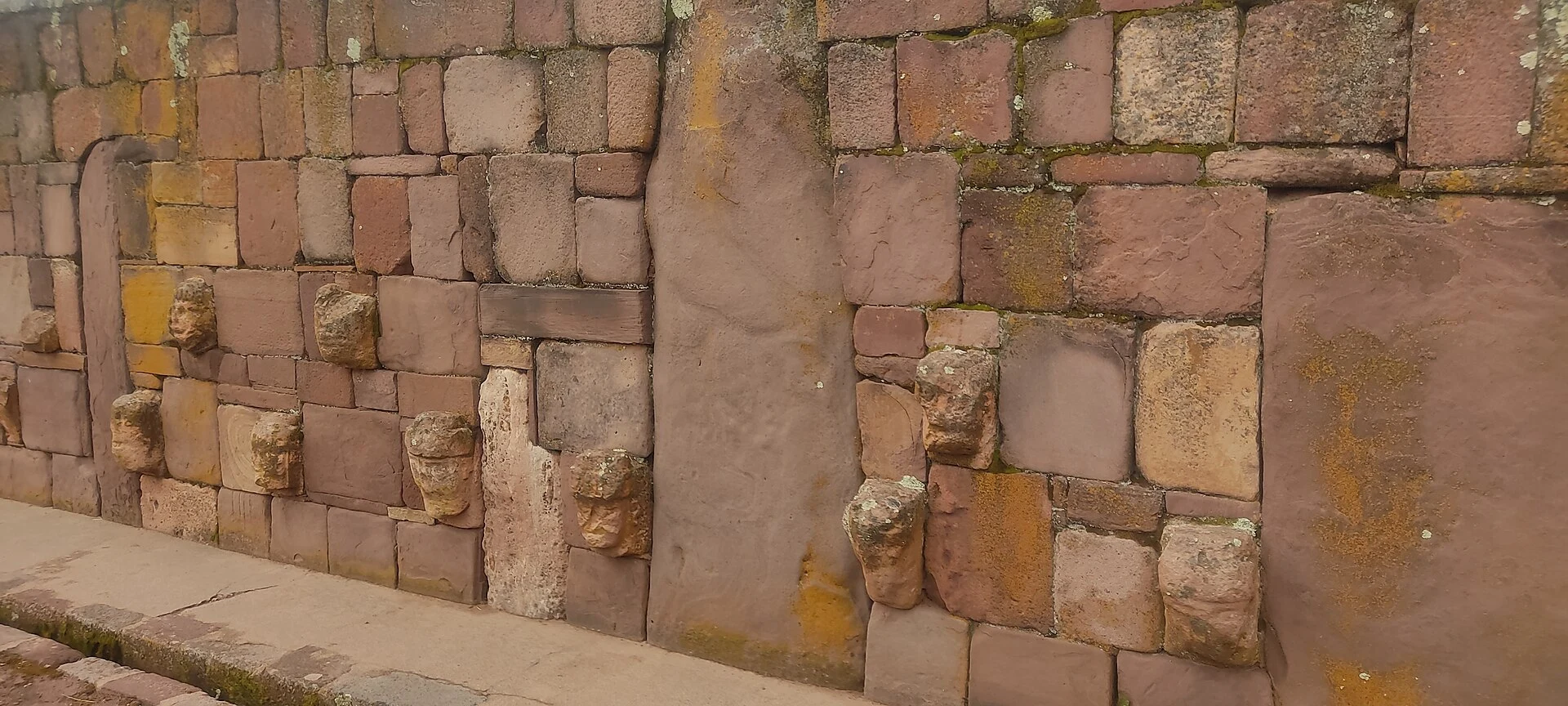
Altitude shapes the day’s schedule
The site is at a high elevation, and the visit takes place outdoors, involving walking, stairs and archaeological surfaces. If you have just arrived from low altitude, do not make Tiwanaku the first demanding activity of your trip: give yourself time to acclimatise, keep a gentle pace, and bring water, sun protection and an extra layer for temperature changes.
Headache, nausea, dizziness or fatigue after arriving at altitude deserve attention, particularly if they worsen. Physical fitness does not remove the risk of altitude sickness. If you have a history of altitude-related problems, are pregnant, or have heart, lung or neurological conditions, consult a healthcare professional before travelling. Do not push yourself to complete every area in a single morning.
A well-paced day from La Paz
Tiwanaku works better as a full-day excursion than as an add-on to a route towards Lake Titicaca. Leave early, confirm in advance the return transport you plan to use, and allow time for the museums, the outdoor visit and a break in the town. If you are relying on a hired transfer, agree clearly on the return point and time.
For a visit involving reduced mobility, a stroller or the need for frequent breaks, contact the site administration directly before setting out. The publicly available information does not detail a complete step-free route or the conditions of every section. Planning that contact is more useful than relying on a generic accessibility description.
What to check before you leave
The managing institution publishes opening hours and admission fees, which may change because of maintenance, celebrations, operational decisions or local conditions. Check the opening hours, the price applicable to your nationality, the accepted payment methods and whether the museums will be open on the day of your visit. It is also worth confirming whether any sector is subject to temporary restrictions.
Sources to check before travelling
- Spiritual and Political Centre of the Tiwanaku Culture: access, opening hours, fees, contact details and the site’s museums.
- UNESCO World Heritage Centre: location, chronology, main structures and conservation context.
- CDC Yellow Book: up-to-date health advice for travel at high altitude.
References consulted during editorial review. Times, requirements and advisories may change: always confirm with the official source.
- https://whc.unesco.org/en/list/567 whc.unesco.org
- https://tiwanaku.gob.bo/ tiwanaku.gob.bo
- https://www.unesco.org/en/articles/culture-and-education-heart-director-generals-visit-bolivia www.unesco.org
- https://www.unesco.org/en/countries/bo/lists-and-nominations www.unesco.org
- https://www.unesco.org/en/cultnatlaws/supreme-decree-22338-recognition-tiwanaku-millennial-imperial-city www.unesco.org
- https://www.unesco.org/es/articles/tiwanaku-vuelo-de-dron www.unesco.org
- https://courier.unesco.org/en/articles/secrets-tiwanaku-revealed-drone courier.unesco.org
- https://whc.unesco.org/fr/list/567 whc.unesco.org
- Bolivia WikidataCC0 1.0 Wikidata · Q750
- Bolivia WikidataCC0 1.0 Wikidata · Q891370
- Bolivia WikidataCC0 1.0 Wikidata · Q27925302
- Bolivia WikidataCC0 1.0 Wikidata · Q526001
- Bolivia WikidataCC0 1.0 Wikidata · Q4939506
- Bolivia WikidataCC0 1.0 Wikidata · Q4939509
- Bolivia World Countries — mledozeODbL 1.0 World countries dataset by mledoze and contributors · ODbL 1.0
- Bolivia World Bank Open DataCC BY 4.0 World Bank
- Bolivia DBpediaCC BY-SA 3.0 DBpedia
- La Ruta andina : turismo y desarrollo sostenible en Perú y Bolivia OpenAlexCC0 1.0 OpenAlex
- El Agua y la Revolución en Bolivia: Una vista sobre la Cultura Hidráulica Demócrata CrossrefMetadatos públicos; derechos específicos por campo cuando correspondan Crossref
- Conferencias emitidas durante Seminario Patrimonio Cultural Cruceño Open LibraryCC0 1.0 (registros de catálogo) Open Library
- Rosca Navideña Open Food FactsODbL 1.0 Open Food Facts
- Gustito Open Food FactsODbL 1.0 Open Food Facts