Paraguay · Itapúa · Cultural heritage
Trinidad, Jesús and San Cosme reveal Itapúa’s mission heritage
Three former missions reveal distinct architectural approaches, a city still growing along its mission-era layout, and the complex relationship between Jesuit history and Guaraní presence.
Conditions described in the guide: confirm current requirements and access with the official source before travelling.
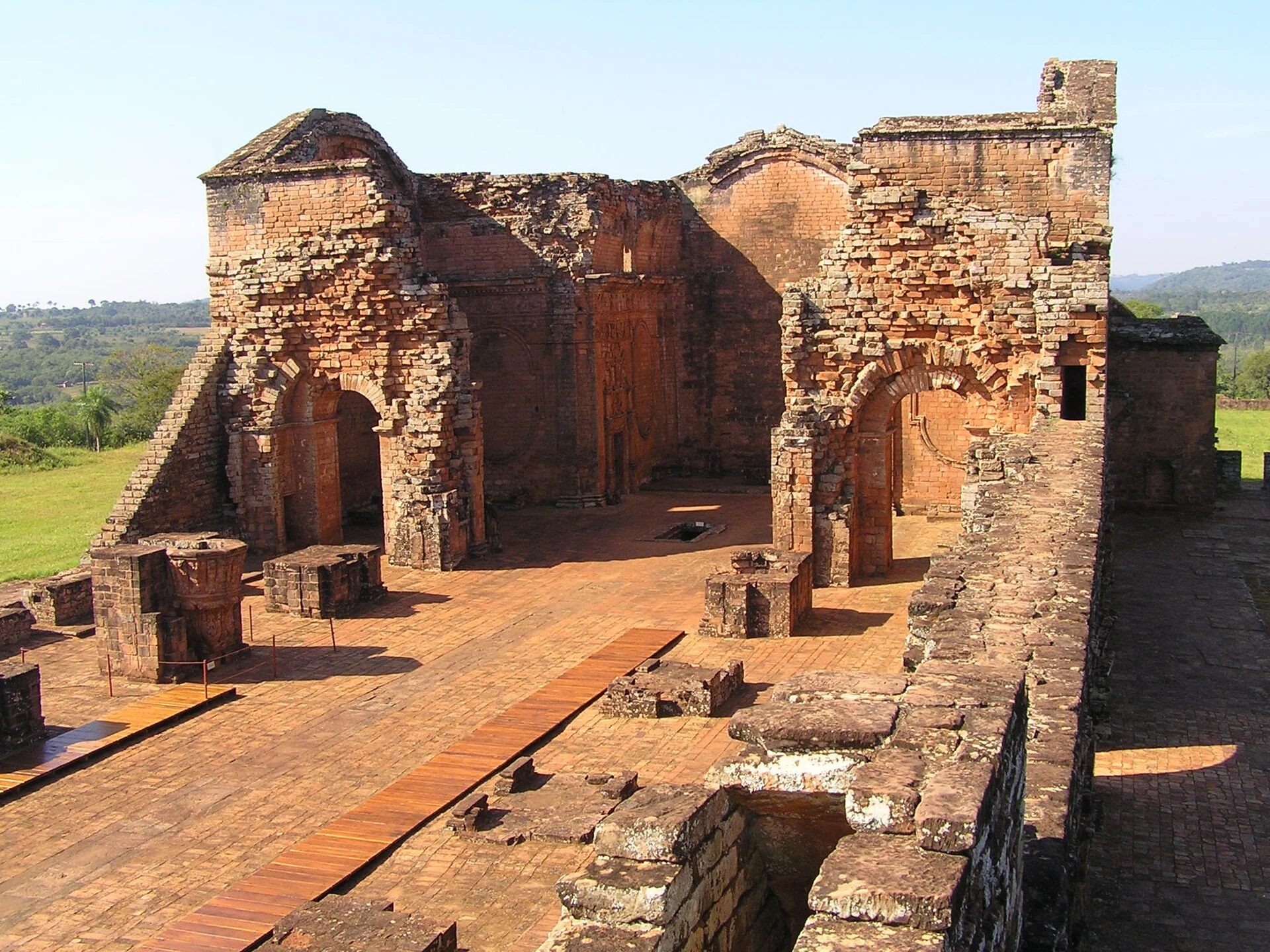
The circuit of Trinidad, Jesús de Tavarangue and San Cosme y San Damián offers a way to examine the Jesuit-Guaraní experience without reducing it to a succession of photogenic ruins. The first two are World Heritage sites; the third preserves a church still in use and an urban centre whose origins are linked to the mission. Explore them with time to compare and with an approach that recognises both Guaraní artistic creation and the evangelisation and power relationships that shaped those reductions.
Three stops, three ways to approach the missions
Start with La Santísima Trinidad del Paraná if you want to understand urban scale. The plaza, church, cloister, work areas and domestic spaces reveal how a reduction was organised beyond its religious façade. Pause at the reliefs, pulpit and former sacristy: they offer useful points from which to observe how local artistic production contributed to a Christian programme promoted by the Society of Jesus.
Then continue to Jesús de Tavarangue. Its unfinished church changes the experience: here, the point is less to imagine a completed complex than to read its walls, arcades and proportions. The trilobed arches, linked to Mudéjar traditions, distinguish the building from other missions in the region. The visit becomes more meaningful when you compare its architectural ambition with Trinidad’s denser material presence.
Save San Cosme y San Damián for the end of the route. It is not part of the current World Heritage inscription, although Paraguay has included it on its tentative list as a possible extension. Its practical value lies elsewhere: the former mission space remains connected to a living town, a functioning church and the memory of Buenaventura Suárez, the Jesuit associated with astronomical observation. Do not treat it as an equivalent third ruin, but as an opportunity to see urban continuity, worship and the communication of scientific knowledge.
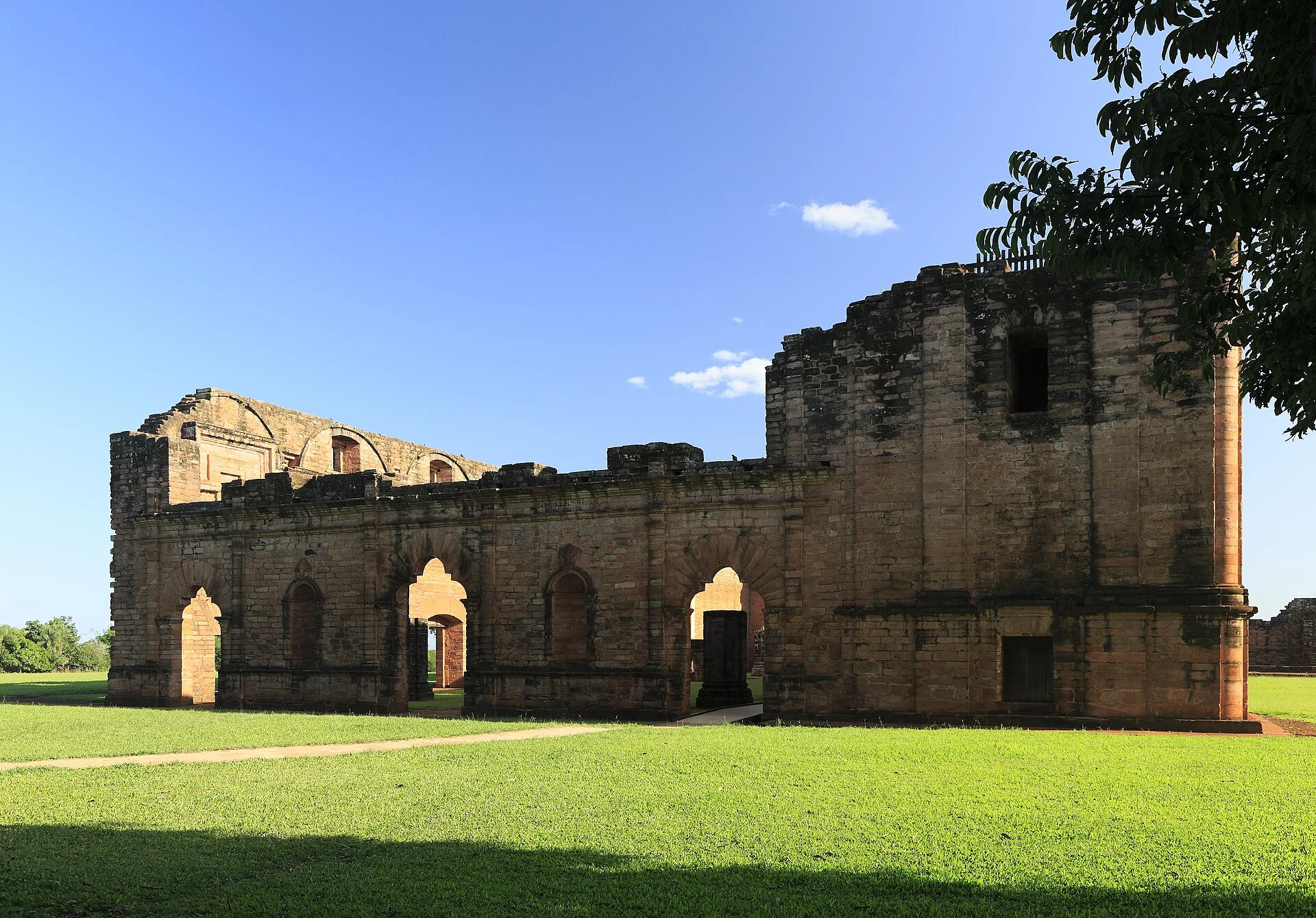
An itinerary that keeps the sites distinct
Devote a full first day to Trinidad. The complex can be visited quickly, but you will need more time to relate the church, plaza, homes, workshops, garden and museum. If a guided visit is available, it can help place objects and functions in context; even so, bring your own questions about who built, inhabited and maintained the complex.
On a second day, combine Jesús with San Cosme y San Damián only if your transport is already arranged. Distances and timetables matter more than the number of monuments: do not turn the circuit into three rushed stops. If architecture is your main interest, allow more time for Trinidad and Jesús; if you are drawn to the history of science, community life and the urban landscape, give San Cosme its own time slot.
SENATUR publishes a pass valid for 72 hours for the three missions in Itapúa. This validity lets you spread out the visits and leaves room for evening programmes instead of forcing everything into a single day. Check before setting out the current price, what the pass includes and the conditions of use.
Night visits are a supplement, not the whole explanation
Trinidad offers a light-and-sound show, while Jesús has a videomapping projection onto its structure. These experiences can help you perceive volumes after dark and orient yourself during a first visit, especially if you arrive with little background. Yet their narratives condense a long history and do not replace careful observation of the spaces or critical discussion of colonisation.
Arrive during the day if you can: natural light makes the layouts, relationships between buildings and stonework easier to read. Leave the night activity until the end of your visit, with the right expectations: it is a contemporary interpretive tool, not a literal reconstruction of everyday life in the eighteenth century.
Opening and show times vary by season and may change because of operations, weather or programming. Confirm them directly with SENATUR before arranging transport, accommodation or a late arrival.
The historical context worth carrying with you
The missions formed part of a regional network of settlements established during the seventeenth and eighteenth centuries in territories now divided among Paraguay, Argentina and Brazil. They were places of catechesis, production, education and administration, established on Guaraní lands and within Guaraní societies. The preservation of languages, crops, knowledge and artistic forms does not erase the inequality of that process or the missionary objective of the Jesuit institution.
It is therefore more accurate to speak of exchange under unequal conditions than of a conflict-free cultural fusion. Look in the site explanations for references to artisans, musicians, Indigenous authorities, families and collective labour; avoid attributing every material achievement solely to the Jesuits. Guaraní documentation from after the expulsion of the order also shows that communities used writing and political organisation beyond the mission period.
Keep your impact low: do not climb walls, enter restricted areas or turn religious spaces into photo-shoot settings. In San Cosme, the church and town also require the care appropriate to a place that continues to be used by its residents.
Practical decisions before confirming the trip
The circuit works best with transport arranged in advance. If you are not travelling in your own vehicle, ask SENATUR information centres beforehand which connections, local transfers or authorised services are actually available on your dates; do not base your plan on frequencies you have not confirmed.
Also ask about step-free access, uneven surfaces, toilets, loan equipment and assistance. Trinidad has received accessible-infrastructure improvements, but the precise conditions of use should be confirmed with the site administration. Bring water, sun protection and stable footwear: these are large, exposed sites with historic paving.
If you only have one afternoon, choose a single complex and explore it properly. If you have two or three days and reliable transport, the trio offers a much fuller reading of architecture, living city life and scientific memory.
References to check before you leave
- UNESCO World Heritage Centre: profile of the Jesuit Missions of La Santísima Trinidad de Paraná and Jesús de Tavarangue; historical context, scope of the inscription and conservation.
- Paraguay’s National Tourism Secretariat (SENATUR), Tourist Information: current opening times, contact details and evening programming for Trinidad and Jesús de Tavarangue.
- SENATUR, update on admission fees for the Jesuit Missions: validity and scope of the pass for Trinidad, Jesús and San Cosme y San Damián; confirm the current price and exemptions.
- Paraguay’s Secretariat of Culture, Agendarte: heritage information on Trinidad, the museum and general visiting conditions.
- UNESCO World Heritage Centre, tentative list entry for San Cosme y San Damián: San Cosme’s heritage status and its difference from the two sites already inscribed.
References consulted during editorial review. Times, requirements and advisories may change: always confirm with the official source.
- https://senatur.gov.py/informaciones-turisticas/ senatur.gov.py
- https://whc.unesco.org/en/list/648 whc.unesco.org
- https://senatur.gov.py/noticias/embajadora-del-peru-visita-misiones-jesuiticas-y-fortalece-relaciones-culturales-y-turisticas/ senatur.gov.py
- https://www.ip.gov.py/ip/wp-content/uploads/2024/03/Guia-Senatur.pdf www.ip.gov.py
- https://senatur.gov.py/noticias/el-principe-alberto-ii-de-monaco-descubre-el-legado-cultural-del-paraguay/ senatur.gov.py
- https://senatur.gov.py/recursos/plan-gestion-misiones-jesuiticas.pdf senatur.gov.py
- https://whc.unesco.org/document/153950 whc.unesco.org
- https://senatur.gov.py/noticias/senatur-da-a-conocer-actualizacion-de-tasas-de-ingreso-a-las-misiones-jesuiticas/ senatur.gov.py
- Paraguay WikidataCC0 1.0 Wikidata · Q733
- Paraguay WikidataCC0 1.0 Wikidata · Q179396
- Paraguay WikidataCC0 1.0 Wikidata · Q106292441
- Paraguay World Countries — mledozeODbL 1.0 World countries dataset by mledoze and contributors · ODbL 1.0
- Paraguay World Bank Open DataCC BY 4.0 World Bank
- Paraguay DBpediaCC BY-SA 3.0 DBpedia
- Literatura oral y popular del Paraguay Open LibraryCC0 1.0 (registros de catálogo) Open Library