Nepal · Kathmandu Valley
Bhaktapur’s Three Squares on a Living Newar Walking Route
Three squares make it possible to experience Bhaktapur as a living Newar city: architecture, crafts and practical choices for taking your time.
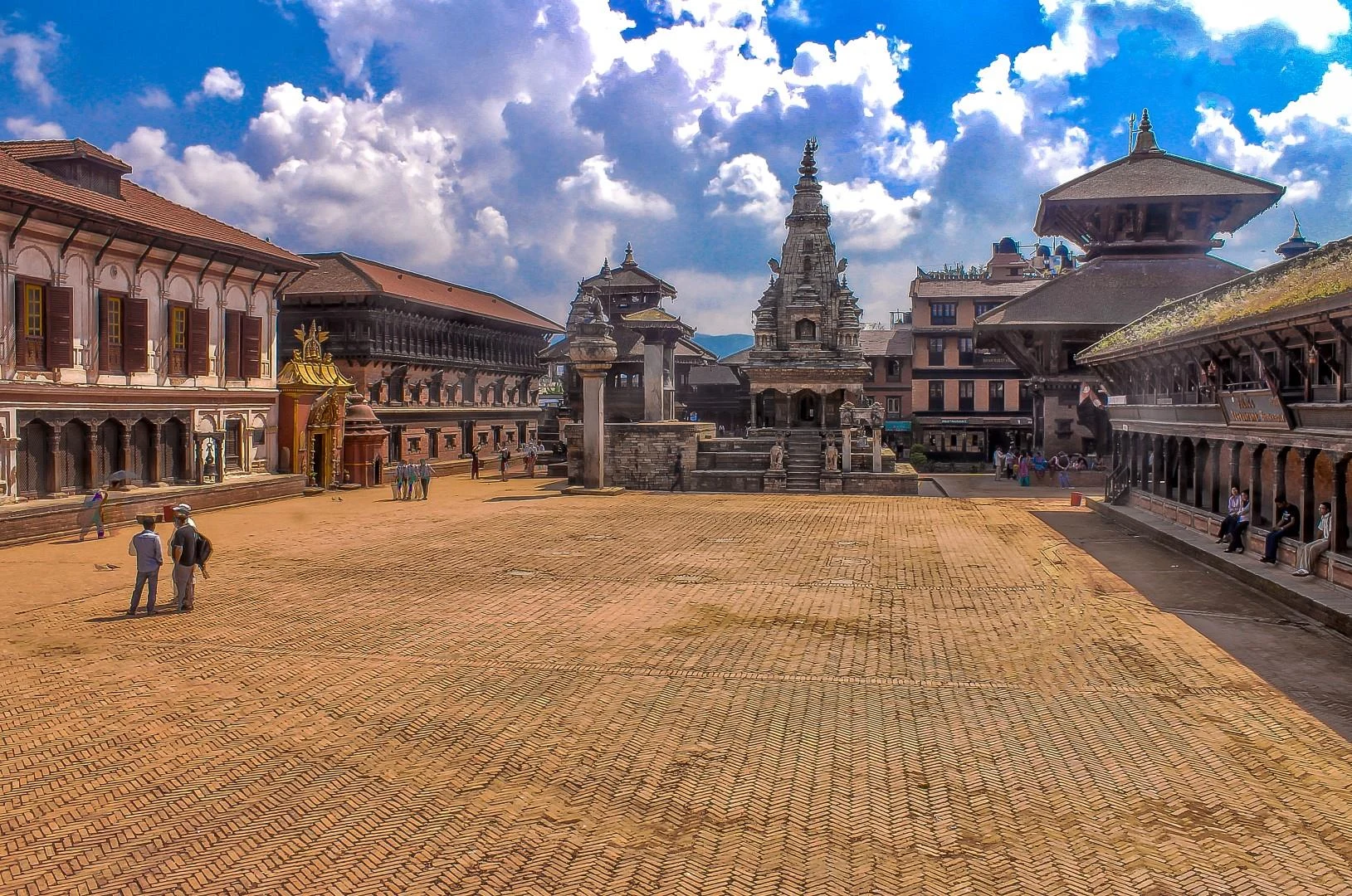
Bhaktapur works well as a day trip from Kathmandu, but it becomes more meaningful when explored as a living Newar city, rather than as a succession of façades. Its three main squares—Durbar, Taumadhi and Dattatreya—bring together palaces, pagodas, courtyards, crafts and places of worship; the interest lies in observing how brick, wood and metal architecture still organizes urban life.
A compact city, but not an automatic itinerary
The useful decision is not how many monuments to tick off, but what kind of day you want. Durbar Square, Taumadhi and Dattatreya form a coherent walking route; adding museums, workshops or longer breaks changes the pace and may make staying overnight in the city worthwhile.
Start with a simple idea: Bhaktapur is not an archaeological enclosure separate from its residents. The squares connect homes, shops, shrines, courtyards and workplaces. Walk calmly, keep access points clear and treat moments of worship as everyday activity, not as a spectacle.
From the palace to the pagoda and Dattatreya’s courtyards
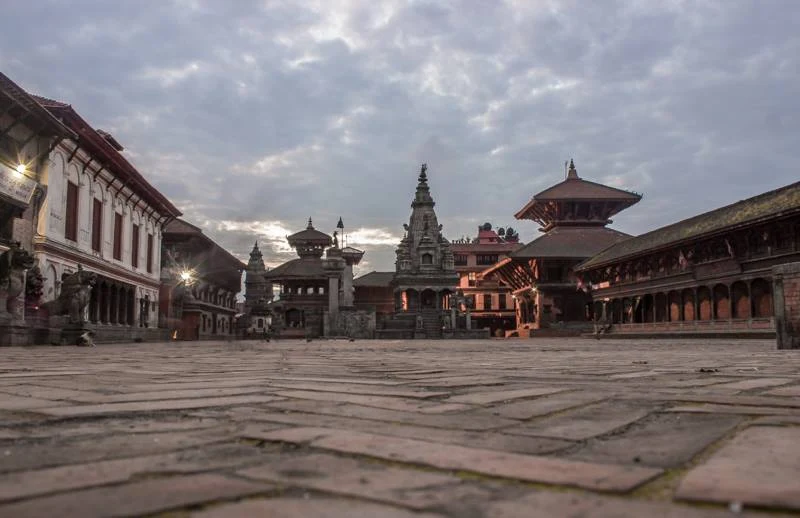
In Durbar Square, look for the relationship between the former royal residence, the Palace of 55 Windows and the Golden Gate. Rather than trying to take in every carving, choose one detail—a window, a roof support or a metal sculpture—and compare it with the buildings still in use around the square.
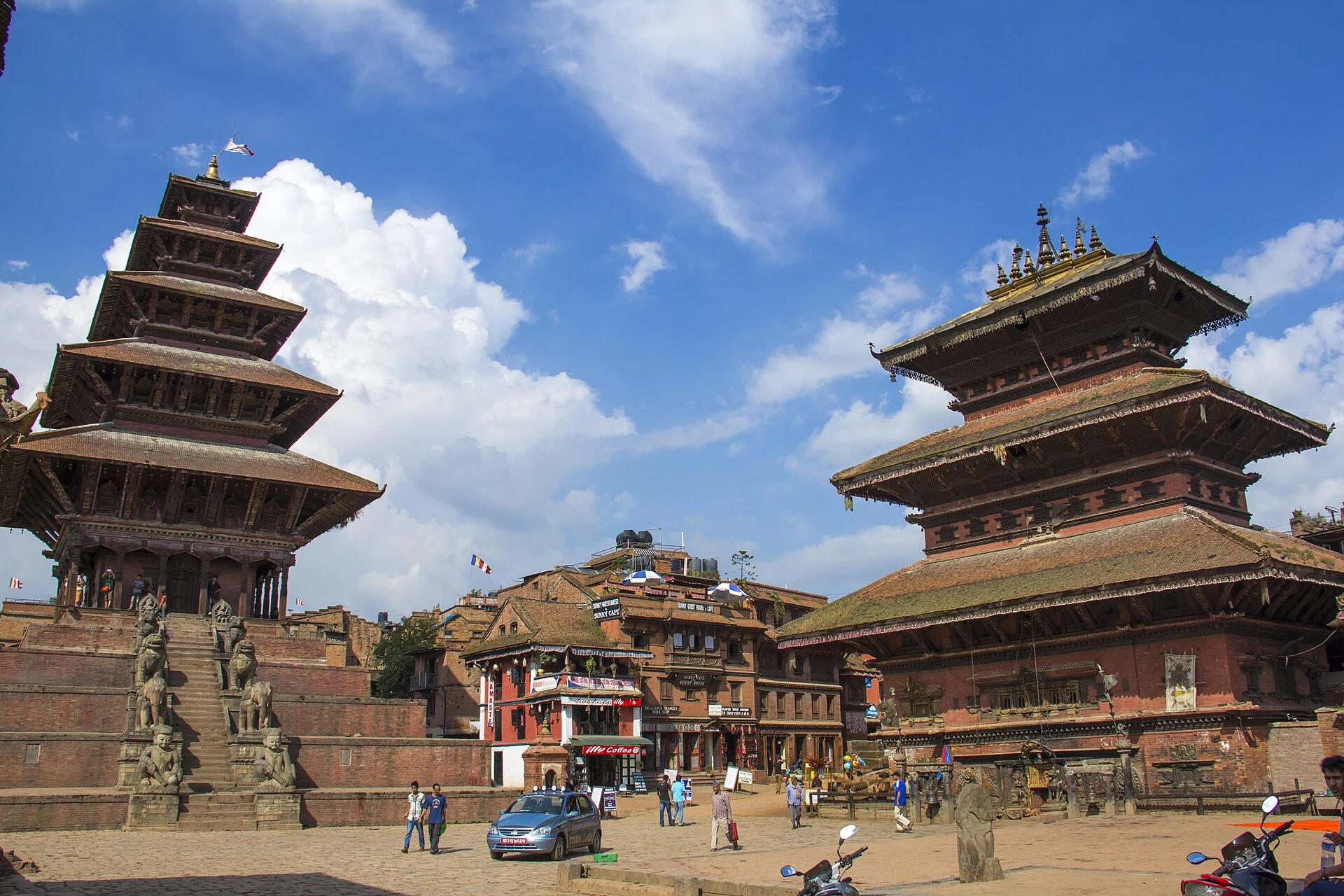
Continue to Taumadhi Square, dominated by Nyatapola, a five-tiered pagoda. The temple’s vertical scale helps you read the square as a gathering place, not merely a photo stop. From there, brick-paved streets lead towards the pottery districts; if you see work in progress, observe without entering the production area or touching pieces that are drying.
Finish at Dattatreya Square, where woodcarving and the former maths—religious residences and complexes—offer a different scale: less ceremonial than the great palace square and more attentive to courtyards, windows and thresholds. If the museums are open, this is the logical place to complement what you have seen in the streets with objects made of wood, brass and bronze.
What connects the three squares
Bhaktapur is part of the Kathmandu Valley World Heritage site. Its value does not rest solely on individual buildings: it lies in the urban fabric, in construction techniques and in Newar traditions that bring Hindu and Buddhist spaces together.
This changes the way you look. Instead of seeking an exhaustive chronology, follow the materials: fired brick in the walls, overlapping tiles on the roofs, carved wood in windows and struts, stone in fountains and sculptures, and metal in doors and ritual objects. This approach reveals continuities between a monumental square, a domestic courtyard and a workshop.
The city has also gone through repair processes following the 2015 earthquake. Restoration is part of the current landscape: visible work, occasional detours or access arrangements different from the usual may be encountered.
Planning a day that respects the place
The route works best if you leave room to find your way and take breaks. Brick-paved streets, changes in level and steps can make a rushed itinerary uncomfortable; anyone travelling with reduced mobility, a stroller or difficulty walking should confirm access conditions before choosing a specific route.
Do not assume the entrance fee, which spaces the ticket covers, museum opening hours or the current state of restoration. These details can change and should be checked on the day, or shortly before setting out. Carry a reusable water bottle, avoid leaving rubbish in squares and ponds, and favour direct, considered purchases when you come across local crafts.
For a first visit, there is no need to add Changu Narayan or other places in the valley: keeping Bhaktapur as the sole focus gives you time to distinguish its three squares and understand why its crafts and rituals matter as much as its temples.
Official references to check before setting out
- UNESCO World Heritage Centre, Kathmandu Valley entry and documentation on Bhaktapur conservation: heritage context, boundaries of the site and restoration.
- Bhaktapur Municipality, city presentation: Taumadhi, Dattatreya, pottery districts and living heritage.
- Nepal Tourism Board, Bhaktapur entry and heritage-fee page: general orientation, included museums and conditions to verify before visiting.
References consulted during editorial review. Times, requirements and advisories may change: always confirm with the official source.
- https://ntb.gov.np/bhaktapur ntb.gov.np
- https://ntb.gov.np/plan-your-trip/before-you-come/heritage-site-entry-fees ntb.gov.np
- https://ntb.gov.np/ ntb.gov.np
- https://ntb.gov.np/ger/bhaktapur ntb.gov.np
- https://whc.unesco.org/document/6493 whc.unesco.org
- https://ntb.gov.np/kathmandu-valley ntb.gov.np
- https://ntb.gov.np/?l=en ntb.gov.np
- https://whc.unesco.org/en/list/121 whc.unesco.org
- Nepal WikidataCC0 1.0 Wikidata · Q837
- Nepal WikidataCC0 1.0 Wikidata · Q2843253
- Nepal WikidataCC0 1.0 Wikidata · Q36944486
- Nepal World Countries — mledozeODbL 1.0 World countries dataset by mledoze and contributors · ODbL 1.0
- Nepal World Bank Open DataCC BY 4.0 World Bank
- Nepal DBpediaCC BY-SA 3.0 DBpedia
- Bhaktapur GeoNamesDatos geográficos bajo CC BY 4.0; requiere atribución a GeoNames. Fuente: GeoNames
- Bhaktapur GeoNamesDatos geográficos bajo CC BY 4.0; requiere atribución a GeoNames. Fuente: GeoNames
- Bhaktapur, Bhaktapur Municipality, Bhaktapur, Bagamati Province, 89130, Nepal OpenStreetMapODbL 1.0; atribución y obligación de compartir bases derivadas. Fuente: OpenStreetMap
- Bhaktapur, Bagamati Province, Nepal OpenStreetMapODbL 1.0; atribución y obligación de compartir bases derivadas. Fuente: OpenStreetMap
- Bhaktapur Durbar Square, Itachhen, Bhaktapur-02, Bhaktapur, Bhaktapur Municipality, Bhaktapur, Bagamati Province, Nepal OpenStreetMapODbL 1.0; atribución y obligación de compartir bases derivadas. Fuente: OpenStreetMap