China · Guangdong
Kaiping and the Diaolou That Transformed Guangdong’s Rural Landscape
Kaiping’s towers connect defensive architecture, migration and rural villages—without confusing the inscribed heritage with the tourist sites around them.
In western Guangdong, Kaiping brings together villages and residential towers known as diaolou: tall buildings that served as homes, refuges and lookout posts. Their interest lies not in seeking an isolated image, but in understanding how migration transformed an agricultural landscape and why the architecture combines local resources with influences from overseas. For a rewarding visit, it is worth distinguishing the rural heritage clusters from Chikan, a historic town now undergoing intensive tourism redevelopment.
Four clusters for seeing the towers in their landscape
The heritage property is organized into four rural groups: Zili, Majianglong, Jinjiangli and Sanmenli. The towers are not castles detached from their surroundings: they stand among low-rise homes, ponds, paths and fields. This relationship explains much of their value, so do not plan your day as a race to climb as many buildings as possible.
For a first visit, Zili is the most straightforward choice for recognizing the variety of forms and ornament within a single village. Majianglong offers a more dispersed, leafy setting, useful for observing how the tower fits into the village fabric. Jinjiangli and Sanmenli work better when you have a second day or a specific interest in comparing typologies, builder families and local contexts.
Look for three functions rather than a single style: communal refuge towers, fortified residences belonging to individual families, and watchtowers. Domes, loggias, cornices and mouldings with a European appearance do not turn these places into copies of another architecture: they are part of a local adaptation to Kaiping’s social, economic and defensive conditions.
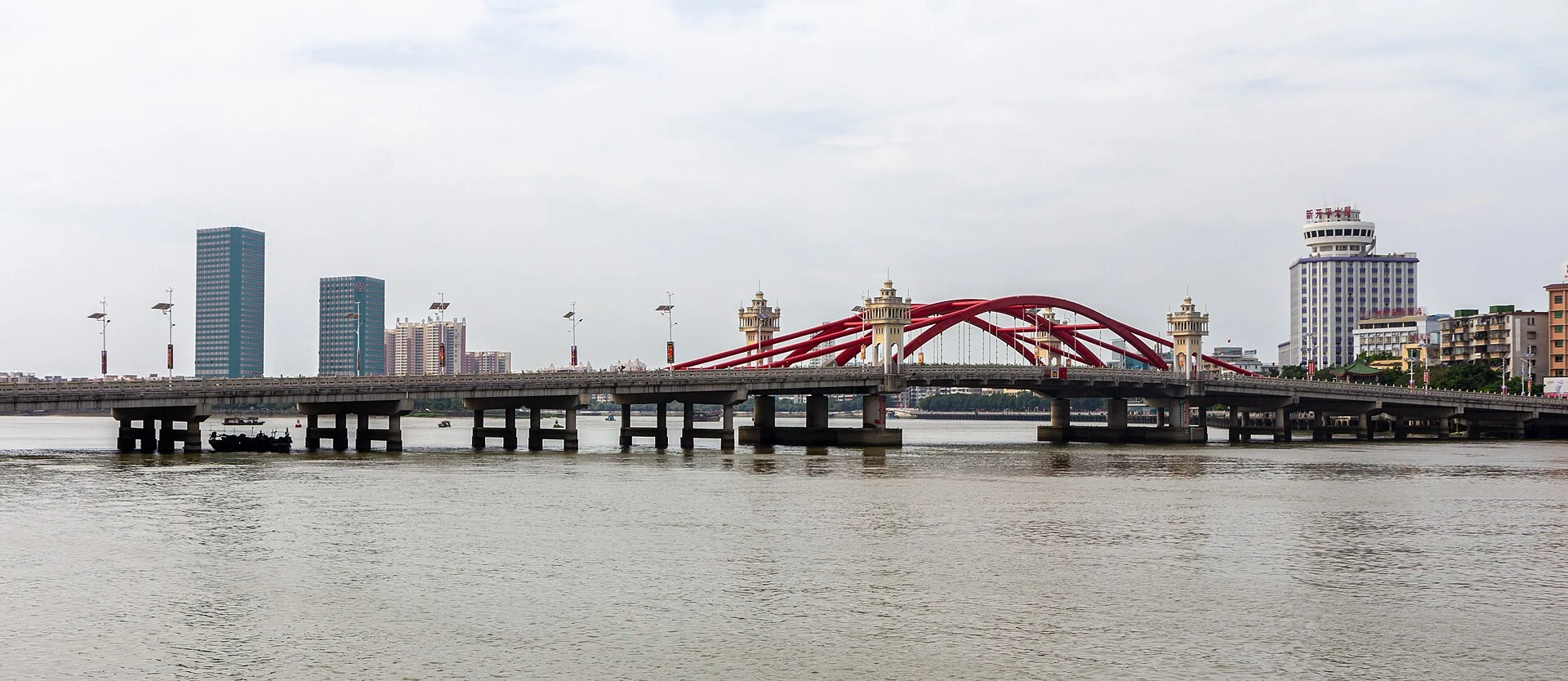
From Zili to Majianglong, with an itinerary that keeps the places distinct
If you have two days, spend the first at Zili and set aside time for Liyuan, a historic garden associated with the world of Kaiping’s emigrants. Although it is commonly visited alongside the towers, it should not be confused with the four inscribed groups. The comparison is precisely what makes it useful: it takes you from defensive housing to a more ornamental domestic and landscape expression.
On the second day, combine Majianglong with Sanmenli or Jinjiangli, depending on the logistics available. Keep the plan flexible: the villages are separated, and travel time affects the experience more than distances on a map. A car with driver, an arranged taxi or an organized transfer can be practical solutions; do not base your itinerary on the expectation of connecting all the sites on foot.
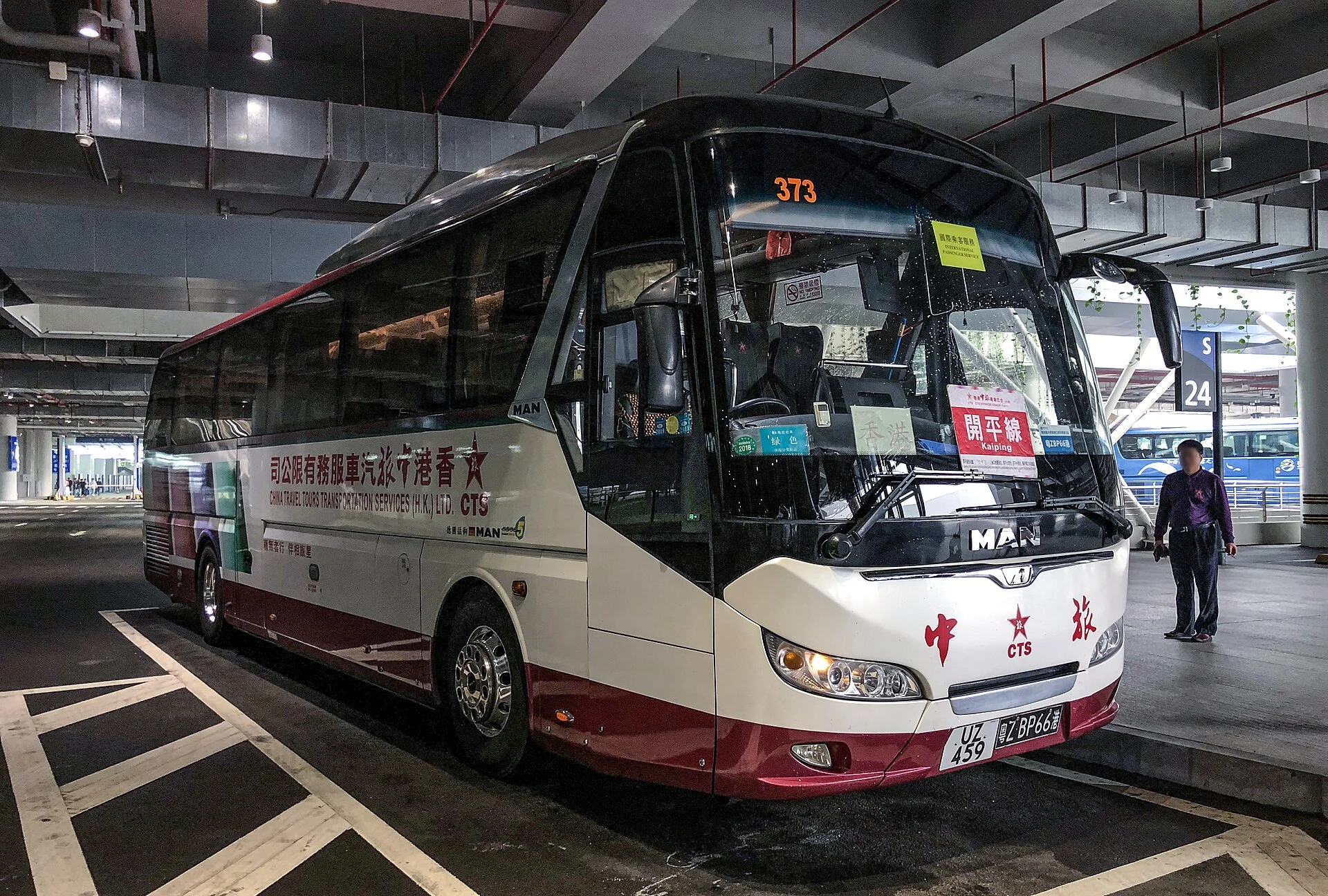
Kaiping South station makes regional rail access easier, but it does not by itself solve rural transport. Before setting out, check the train timetable, transfers from the station, the opening of each site and which interiors can be visited. These details may change, so confirm them for your exact travel date.
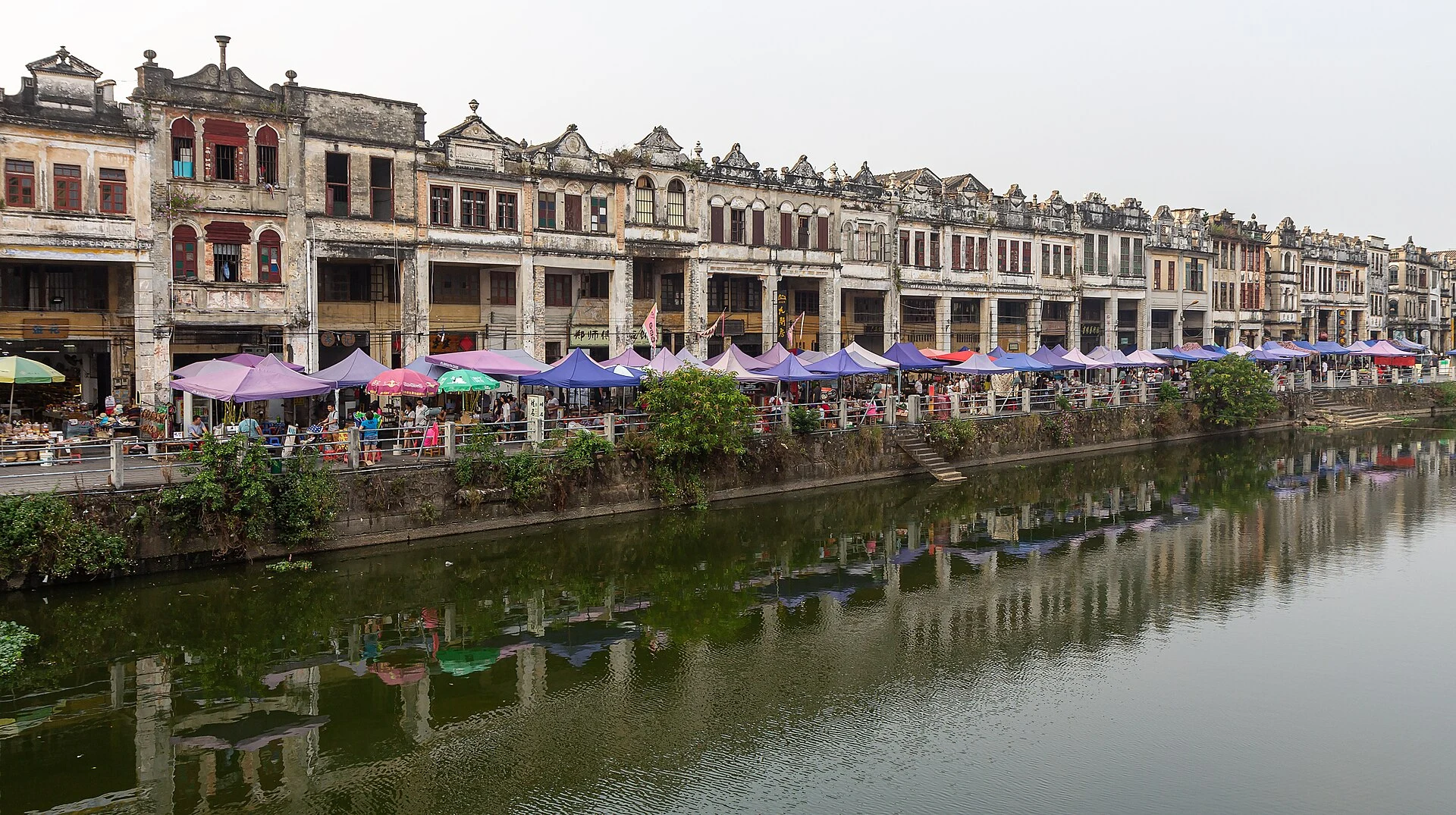
Chikan offers another perspective, but does not replace the villages
On the banks of the Tanjiang River, Chikan provides an urban counterpoint: commercial streets and qilou, arcaded buildings that speak of trade, emigrant capital and town life. It is an interesting stop for broadening the story of Kaiping, especially if you want to see how overseas connections shaped a main street as well as a tower surrounded by farmland.
The important decision is not to treat Chikan and the diaolou as equivalents. The inscribed rural clusters preserve the relationship between towers, homes and the agricultural landscape; Chikan offers a historic-centre experience with restorations, cultural programming, commerce and visitor facilities. Both approaches can complement each other, but they answer different expectations.
For a more attentive journey, treat the villages first and foremost as places of everyday life: respect residential areas, avoid entering where access is not permitted, and do not use courtyards, fields or private doors as photographic sets. The heritage here also depends on the landscape remaining an inhabited environment, not a backdrop.
Official references to check before setting out
- UNESCO World Heritage Centre: boundaries of the property, the four inscribed groups and an explanation of their architectural and historical values.
- Kaiping People’s Government: official information on the diaolou cultural and tourism area, Zili, Majianglong, Liyuan and the local context.
- Guangdong Foreign Affairs Office: official update on Zili as a central part of the Kaiping group.
- China Railway 12306: current timetables, stations and conditions for trains to Kaiping South.
Use these official sources to check opening hours, admission, internal transfers and rail services before finalizing your itinerary.
Official references to check before setting out
- UNESCO World Heritage Centre: boundaries of the property, the four inscribed groups and an explanation of their architectural and historical values.
- Kaiping People’s Government: official information on the diaolou cultural and tourism area, Zili, Majianglong, Liyuan and the local context.
- Guangdong Foreign Affairs Office: official update on Zili as a central part of the Kaiping group.
- China Railway 12306: current timetables, stations and conditions for trains to Kaiping South.
Use these official sources to check opening hours, admission, internal transfers and rail services before finalizing your itinerary.
References consulted during editorial review. Times, requirements and advisories may change: always confirm with the official source.
- https://whc.unesco.org/en/list/1112 whc.unesco.org
- https://whc.unesco.org/document/104657 whc.unesco.org
- https://whc.unesco.org/en/documents/104657 whc.unesco.org
- https://www.youtube.com/watch?v=w-iMDji_wQA www.youtube.com
- https://whc.unesco.org/fr/list/1112 whc.unesco.org
- https://whc.unesco.org/archive/advisory_body_evaluation/1112.pdf whc.unesco.org
- https://www.kaiping.gov.cn/kaipingchina/cityinformation/cityinformation/content/post_2451869.html www.kaiping.gov.cn
- https://myunesco.net/location/194/kaiping-diaolou-i-okoliczne-wioski myunesco.net
- China WikidataCC0 1.0 Wikidata · Q29520
- China WikidataCC0 1.0 Wikidata · Q20898938
- China World Countries — mledozeODbL 1.0 World countries dataset by mledoze and contributors · ODbL 1.0
- China World Bank Open DataCC BY 4.0 World Bank
- China DBpediaCC BY-SA 3.0 DBpedia
- CHINA: CrossrefMetadatos públicos; derechos específicos por campo cuando correspondan Crossref
- CHINA: CrossrefMetadatos públicos; derechos específicos por campo cuando correspondan Crossref
- Kaiping, Jiangmen, Guangdong, 529300, China OpenStreetMapODbL 1.0; atribución y obligación de compartir bases derivadas. Fuente: OpenStreetMap
- Kaiping, Jiangmen, Guangdong, 529300, China OpenStreetMapODbL 1.0; atribución y obligación de compartir bases derivadas. Fuente: OpenStreetMap