Hunedoara, Romania
Sarmizegetusa Regia and Ulpia Traiana: Two Eras of Dacia
Two sites with similar names, two capitals from different eras and one practical decision: visit them without confusing a Roman city with the mountain stronghold of the Dacian kingdom.
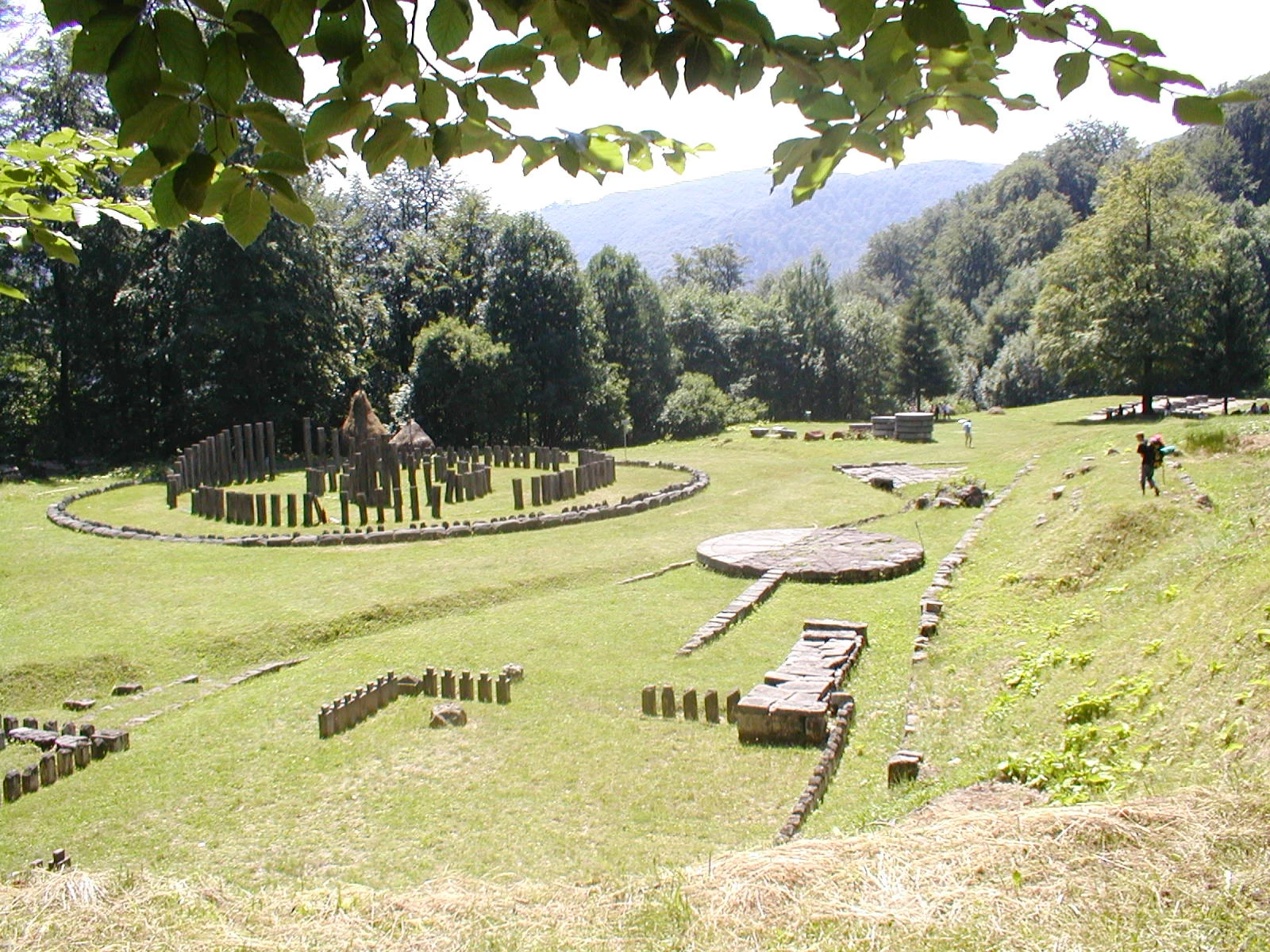
In southwestern Transylvania, Sarmizegetusa Regia and Ulpia Traiana Sarmizegetusa embody the shift in power that followed the Roman conquest of Dacia. They share part of their name, but not their location, chronology or visitor experience: one calls for reading terraces, forests and sanctuaries; the other reveals a city laid out as a provincial capital. Allowing two distinct rhythms prevents the visits from becoming a confusing succession of ruins.
Similar names, two places that are not interchangeable
The first rule is simple: Sarmizegetusa Regia was the principal political, military and religious centre of the Dacian kingdom before the Roman conquest. It lies in the mountainous area around Grădiștea de Munte and forms part of the group of six Dacian fortresses inscribed as World Heritage.
Ulpia Traiana Sarmizegetusa, by contrast, was a Roman city founded after the conquest and became the administrative centre of the new province. Its name revived the prestige of the former Dacian capital, but it was built elsewhere, according to a different urban logic. Do not plan one as though it were the walkable continuation of the other: they are separate stops and deserve separate explanations.
What to look for at Sarmizegetusa Regia
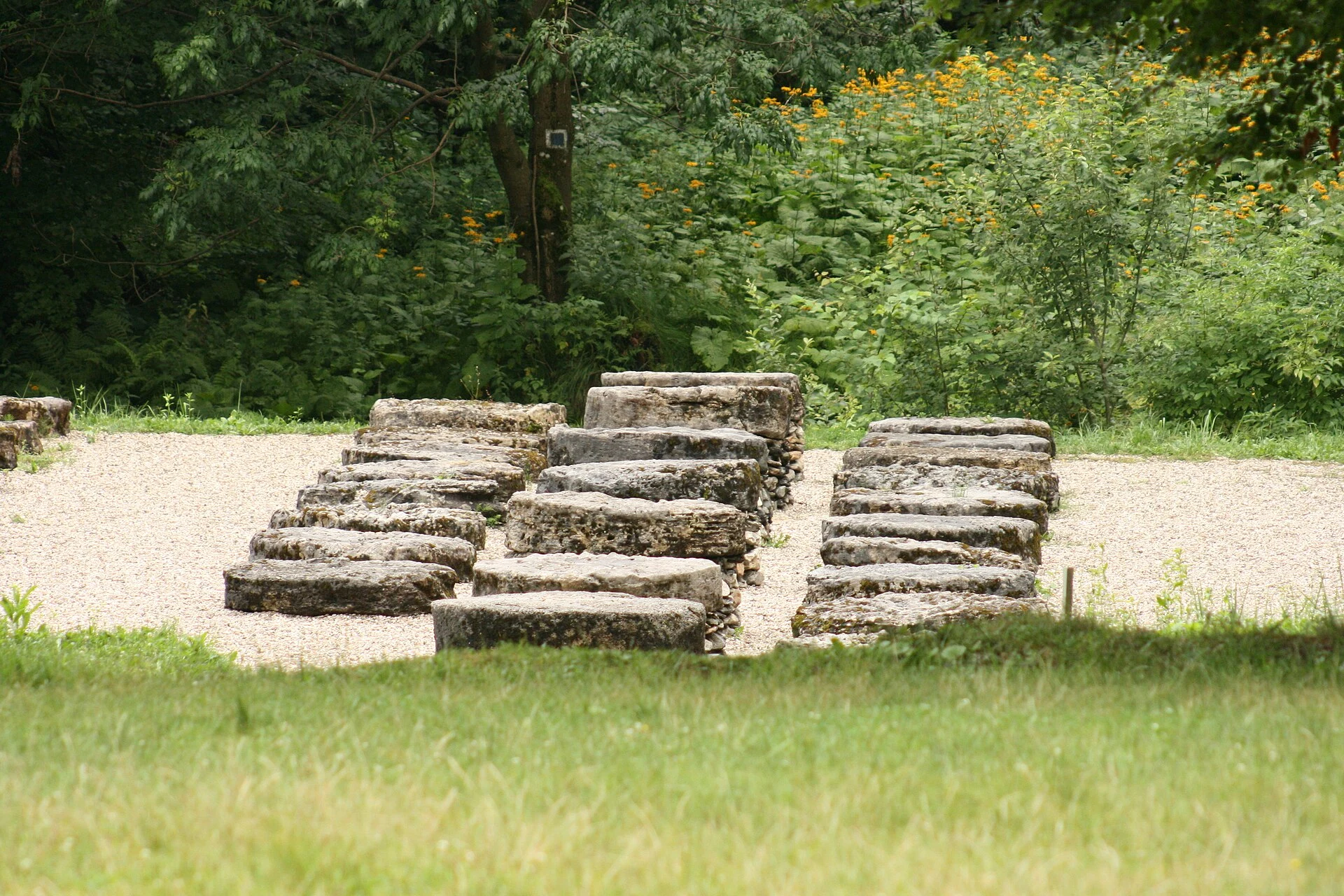
A visit to Sarmizegetusa Regia is not about complete buildings, but about the relationship between architecture, slope and forest. The walls, artificial terraces and sacred spaces reveal a fortified capital whose layout brought together defensive, ceremonial and political functions.
It is worth arriving with a specific question: what made this mountain a capital? Look for the way the layout adapts to the terrain, the construction technique known as murus Dacicus, and the separation between the fortified areas and the sanctuaries. The site’s value lies in this territorial system, not in seeking an isolated image of the circular sanctuary.
This is an archaeological site undergoing restoration and conservation. Stay on the designated routes, do not climb on structures or treat the stones as a photographic backdrop: what may seem fragmentary is precisely part of the evidence being protected.
What the Roman city of Ulpia Traiana adds
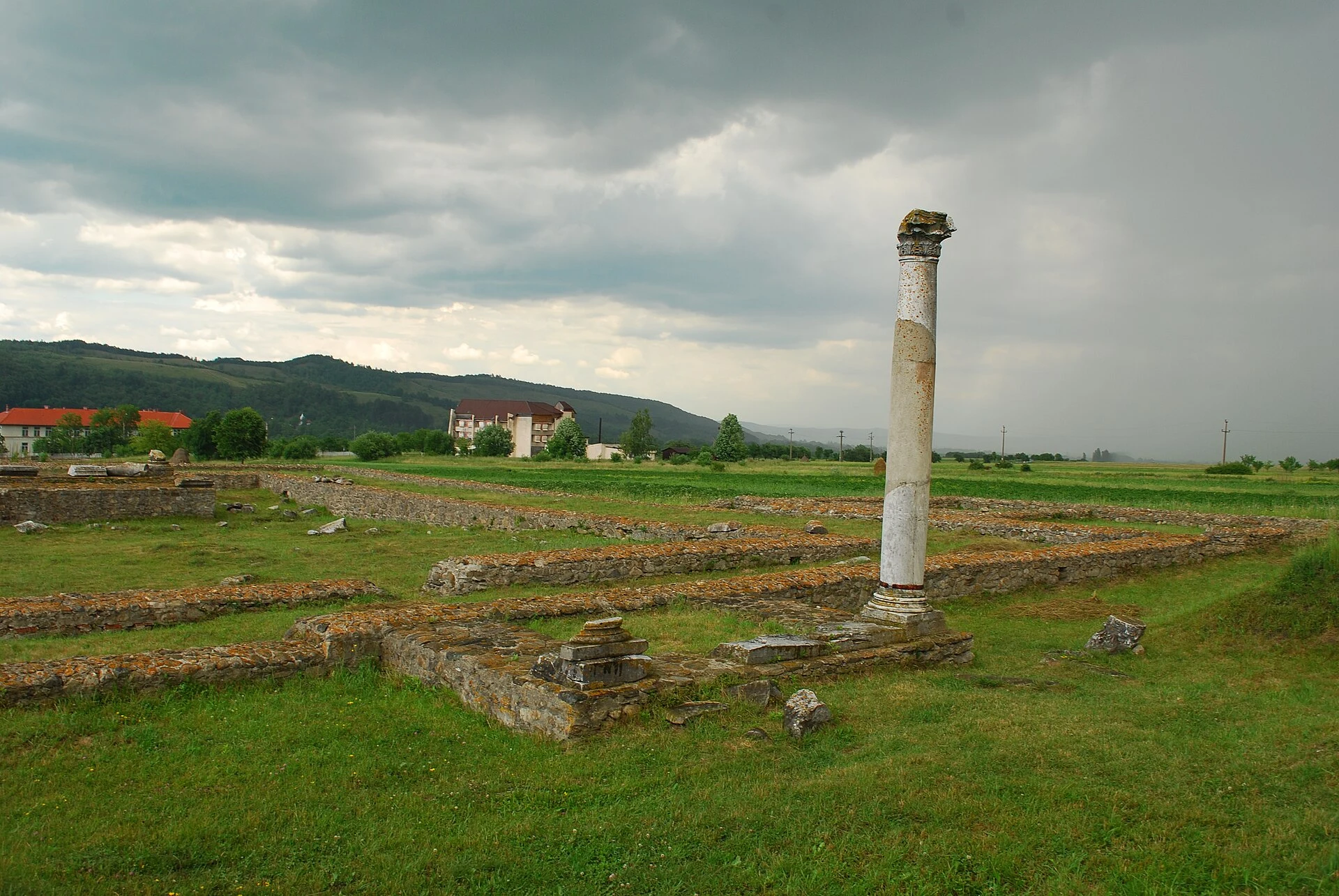
At Ulpia Traiana Sarmizegetusa, the change of scale is perceived differently: organised streets, a forum, public buildings, temples, an amphitheatre and a city designed to administer the Roman province of Dacia. If Regia helps you read a landscape of power from before Rome, Ulpia Traiana allows you to recognise a planned colonial city.
Spend time at the forum and amphitheatre before spreading out across the site. They are useful starting points for understanding how political representation, worship, spectacles and urban life fitted together. The museum associated with the site can be useful at the beginning or end of the visit, providing material context for ruins that might otherwise seem too open or incomplete.
Do not frame the pair as a competition between “Dacian ruins” and “Roman ruins”. The most productive reading is the continuity of the name set against the political, territorial and urban rupture expressed by the two sites.
A weekend with two bases and realistic logistics
The most sensible option is to allow a full day for each site. Start with Ulpia Traiana if you want a more accessible introduction to the territory and Roman Dacia; leave Sarmizegetusa Regia for the day with the most time to spare, since reaching and exploring it require more planning.
A small car, hired driver or private excursion provides considerably more independence than trying to fit both sites around uncertain rural connections. If you are travelling without your own vehicle, arrange the return journey in advance and do not assume that a useful connection will be available at the end of your visit. Groups should check vehicle restrictions for access to Regia specifically.
The trade-off of staying nearby is clear: there are fewer services than in a large city, but you gain flexibility if access arrangements change. Bring water, protection from rain or sun and sturdy footwear—not because this is a mountain trek, but because the archaeological terrain and internal distances are not enjoyable when rushed.
Works, opening hours and decisions to check
As of 22 September 2026, Sarmizegetusa Regia is still undergoing restoration and conservation work, resulting in temporary and changing opening arrangements during 2026. The administrator has also announced a reduced schedule from 25 September and throughout October 2026. Do not treat dates, opening days, fees, access rules or vehicle restrictions quoted in old guides as definitive information.
Before booking accommodation or transport, confirm directly the current Sarmizegetusa Regia schedule, the state of the road and the limits applying to coaches or groups. Check access to Ulpia Traiana separately: improvement works to the entrance infrastructure may also alter the visitor route.
The responsible choice here is to accept that conservation may limit access. If Regia is closed on the planned day, do not force the itinerary: use the extra time for Ulpia Traiana, the associated museum or an additional night in the area.
References to check before travelling
- UNESCO World Heritage Centre, entry for the Dacian Fortresses of the Orăștie Mountains: context for the group of six fortresses, chronology and heritage values.
- National Museum of Romanian History, dossier on Colonia Ulpia Traiana Augusta Dacica Sarmizegetusa: Roman foundation, provincial role and separation from Regia.
- Romania’s National Archaeological Record, entry for Colonia Ulpia Traiana Augusta Dacica Sarmizegetusa: site identification and classification.
- Hunedoara County Council: operational notices on restoration, road-access restrictions and vehicle conditions. Check here before setting out.
- Institutional project The Capital of Dacia: monument administration and restoration work at Sarmizegetusa Regia.
References consulted during editorial review. Times, requirements and advisories may change: always confirm with the official source.
- https://whc.unesco.org/en/list/906 whc.unesco.org
- https://whc.unesco.org/document/263 whc.unesco.org
- https://whc.unesco.org/en/list/1718 whc.unesco.org
- https://www.unesco.org/en/world-heritage/list?f%5B0%5D=countries%3A2f403792-ca49-5989-88d8-76a777c41ae9 www.unesco.org
- https://whc.unesco.org/uploads/nominations/906.pdf whc.unesco.org
- https://dacit.utcluj.ro/ dacit.utcluj.ro
- https://dacians.romaniadevis.ro/see-do/cetatile-dacice-din-muntii-orastiei dacians.romaniadevis.ro
- https://www.cnr-unesco.ro/uploads/media/f780__2023-patrimoniu-material-engl.pdf www.cnr-unesco.ro
- Rumania WikidataCC0 1.0 Wikidata · Q218
- Rumania WikidataCC0 1.0 Wikidata · Q7362480
- Romania World Countries — mledozeODbL 1.0 World countries dataset by mledoze and contributors · ODbL 1.0
- Romania World Bank Open DataCC BY 4.0 World Bank
- Romania DBpediaCC BY-SA 3.0 DBpedia
- Sarmizegetusa Regia, DJ705A, Orăștioara de Sus, Hunedoara, Romania OpenStreetMapODbL 1.0; atribución y obligación de compartir bases derivadas. Fuente: OpenStreetMap
- Sarmizegetusa Regia, DJ705A, Orăștioara de Sus, Hunedoara, Romania OpenStreetMapODbL 1.0; atribución y obligación de compartir bases derivadas. Fuente: OpenStreetMap