Côte d’Ivoire · urban getaway
Yamoussoukro, a capital shaped by a basilica, lakes and memory
One night in Yamoussoukro lets you look beyond the basilica: this is a capital designed around Félix Houphouët-Boigny, its institutions and its lakes.
Yamoussoukro rewards travelers who arrive with a question rather than a checklist of monuments. Côte d’Ivoire’s administrative capital brings together a basilica of exceptional scale, broad avenues, public buildings and lakes associated with the presidential residence. Its appeal lies in the urban whole, built to project an idea of the state, peace and political centrality. It works well as a one-night stop from Abidjan: that leaves enough time to explore without rushing between sites and to understand that the memory of Félix Houphouët-Boigny is one of the city’s key interpretive threads.
A capital that preserves the traces of N’Gokro
Before it became the capital, Yamoussoukro was known as N’Gokro; the change of name refers to Queen Yamousso and the town’s Akoué history. In 1983, Félix Houphouët-Boigny officially moved the country’s capital to his hometown. That decision explains the concentration of monumental buildings and ceremonial spaces.
There is no need to approach the city as though it were a compact historic center. The distances and broad avenues are part of the experience: here, the urban layout expresses a political ambition from the post-independence period. Reserve longer journeys for a car with driver, an agreed taxi or urban transport; walking makes more sense within each site or along specific stretches, rather than as the only way to connect every point.
The basilica: a religious visit and an architectural work
The Basilica of Our Lady of Peace dominates the urban outskirts with its dome, colonnades and forecourt, whose scale is best understood from a distance. Above all, it is a place of worship: a respectful visit begins with suitable clothing, silence during services and a willingness to change your plans if religious events are taking place.
Allow time for both the exterior and the interior, without reducing it to a quick comparison with St Peter’s in Rome. The useful question is what it means to build a sanctuary of this scale in Yamoussoukro, not simply how large it is. Tourist-access hours, visiting arrangements, possible guided accompaniment and any fees may change: confirm them directly with the basilica before planning your day.
The foundation, residence and lakes: reading the city project
The Fondation Félix Houphouët-Boigny pour la Recherche de la Paix provides the institutional counterpoint to the basilica. Its headquarters was conceived as a space for research, dialogue and the promotion of peace; it therefore helps place the city within Houphouët-Boigny’s thinking and political career. Check in advance whether it receives visitors and in what format, since its main activity does not necessarily amount to a freely accessible museum visit.
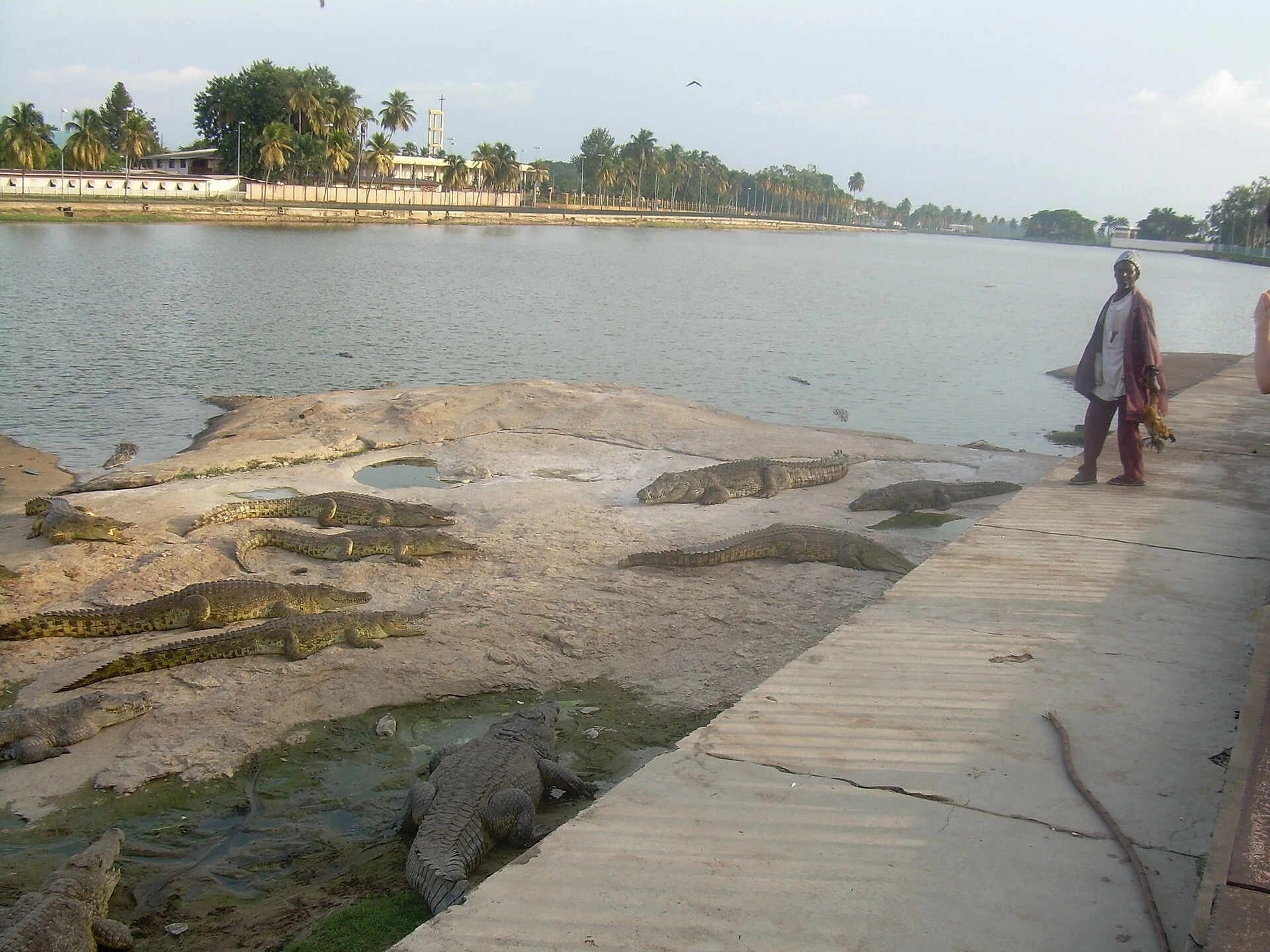
The surroundings of the presidential residence and the lakes complete this perspective, but call for caution. Caimans are part of local imagery and the history of the place; they are not there to be approached, fed or photographed at close range. Observe from permitted areas, follow safety instructions and accept that some institutional or residential spaces can only be viewed from outside.
Getting there from Abidjan and getting around without turning it into a race
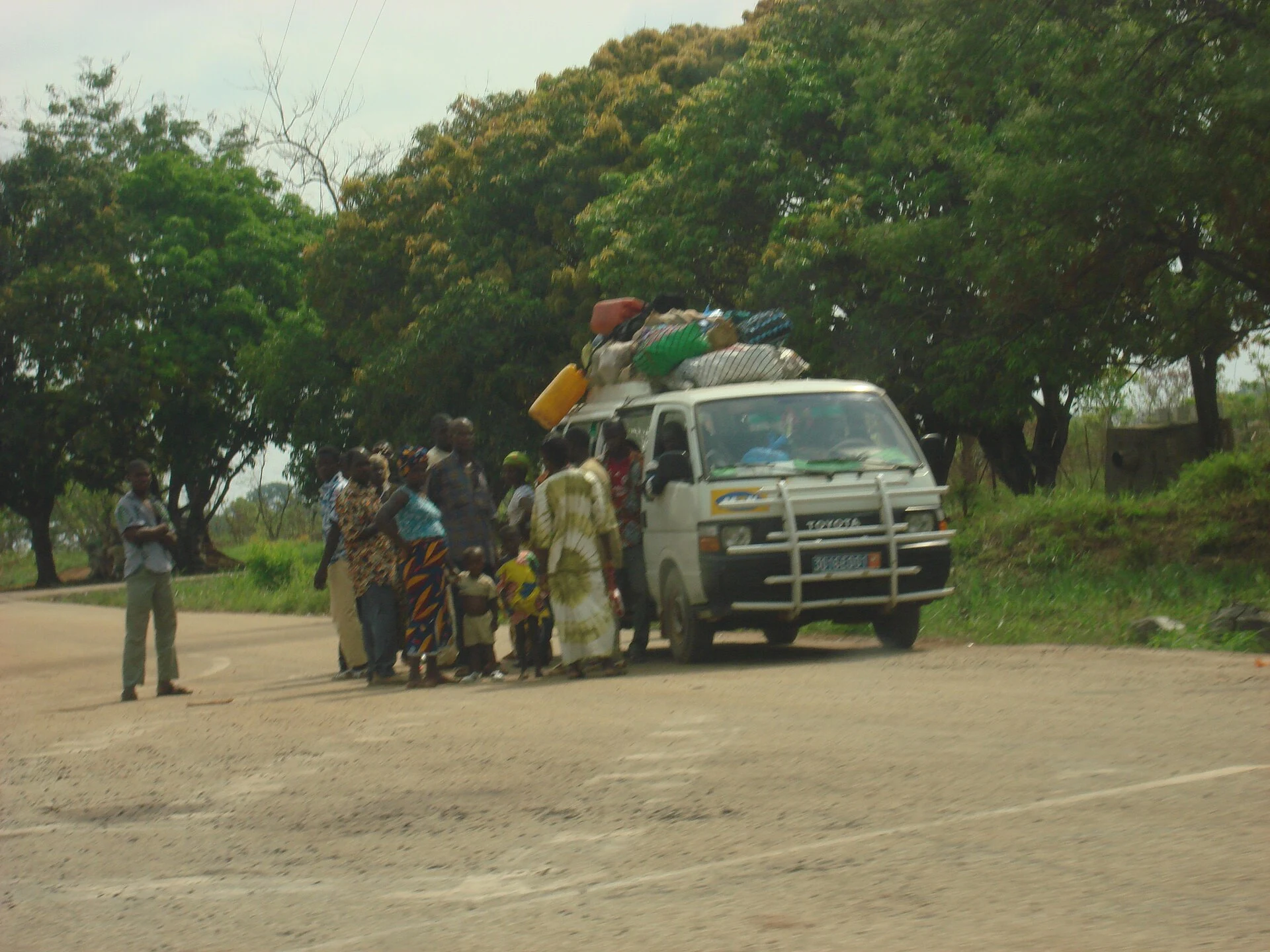
For a first visit, the most balanced plan is to travel from Abidjan by intercity transport or hired vehicle, spend the night and organize the second day around two or three places that are relatively close to one another. Commercial intercity connections to Yamoussoukro are available, and the city has an urban bus network, but schedules, stops and frequencies should be checked during the same trip.
Public transport may work for part of the route, although the monumental sites are spread out and agreeing on a taxi for several journeys can save time. Avoid relying on late-night arrivals, carry cash for small payments and ask your accommodation to confirm current transfer options. If you are traveling from the United States or another country, also review the current official advice for Côte d’Ivoire, along with entry, health and security requirements, before booking.
What kind of traveler will get the most from Yamoussoukro
Yamoussoukro is especially suited to travelers who want to understand contemporary Côte d’Ivoire through architecture, urban planning and political memory. It is not a city for piling up walking activities, nor an extension of Abidjan: it works better as a reflective pause within a route through the country’s central region.
It also requires realistic expectations. Some buildings can only be viewed from outside; access may depend on official, religious or institutional events; and the basilica’s scale does not replace the need to understand the local context. Traveling slowly, using formal services when necessary and respecting religious and residential customs gives the visit more meaning than chasing a quick photograph.
Official references to check before departure
- Basilica of Our Lady of Peace in Yamoussoukro: visitor access, services, dress rules and contact details.
- Fondation Félix Houphouët-Boigny pour la Recherche de la Paix: activities, contact details and visitor arrangements.
- Autonomous District of Yamoussoukro: local information on the lakes, urban heritage and city services.
- Presidency of the Republic of Côte d’Ivoire: historical context for Yamoussoukro and the Giscardium.
- Côte d’Ivoire Ministry of Transport and intercity operators: current routes, schedules and departure points.
- The consular authority of your nationality: current entry requirements, health guidance and security advisories for Côte d’Ivoire.
References consulted during editorial review. Times, requirements and advisories may change: always confirm with the official source.
- https://travel.state.gov/en/international-travel/travel-advisories/cote-d-ivoire.html travel.state.gov
- https://www.diplomatie.gouv.fr/fr/information-par-pays/cote-d-ivoire/conseils-aux-voyageurs-securite www.diplomatie.gouv.fr
- https://www.gov.uk/foreign-travel-advice/cote-d-ivoire/warnings-and-insurance www.gov.uk
- https://travel.state.gov/en/international-travel/travel-advisories.html travel.state.gov
- https://api.ireland.ie/en/dfa/overseas-travel/advice/cote-divoire/ api.ireland.ie
- https://travel.gc.ca/destinations/cote-d-ivoire-ivory-coast travel.gc.ca
- https://diplomatie.gouv.ci/informations-utiles/conseils-aux-voyageurs diplomatie.gouv.ci
- https://www.gov.uk/foreign-travel-advice/cote-d-ivoire/safety-and-security www.gov.uk
- Costa de Marfil WikidataCC0 1.0 Wikidata · Q1008
- costa de Marfil WikidataCC0 1.0 Wikidata · Q37790802
- Ivory Coast World Countries — mledozeODbL 1.0 World countries dataset by mledoze and contributors · ODbL 1.0
- Cote d'Ivoire World Bank Open DataCC BY 4.0 World Bank
- Costa de marfil DBpediaCC BY-SA 3.0 DBpedia
- EL DIÁLOGO ENTRE AUTÓCTONOS E INMIGRANTES A PRUEBA EN TIEMPO DE CRISIS: EL CASO DE LOS SENEGALESES EN COSTA DE MARFIL CrossrefMetadatos públicos; derechos específicos por campo cuando correspondan Crossref
- Building Educational Bridges: The IUTEA Project in Costa de Marfil CrossrefMetadatos públicos; derechos específicos por campo cuando correspondan Crossref
- Yamoussoukro GeoNamesDatos geográficos bajo CC BY 4.0; requiere atribución a GeoNames. Fuente: GeoNames
- Yamoussoukro GeoNamesDatos geográficos bajo CC BY 4.0; requiere atribución a GeoNames. Fuente: GeoNames
- Yamoussoukro, Ivory Coast OpenStreetMapODbL 1.0; atribución y obligación de compartir bases derivadas. Fuente: OpenStreetMap
- Yamoussoukro, Ivory Coast OpenStreetMapODbL 1.0; atribución y obligación de compartir bases derivadas. Fuente: OpenStreetMap
- Basilica of Our Lady of Peace of Yamoussoukro, Route de Saint-France, Riviera, Petit Bouaké, Yamoussoukro, Ivory Coast OpenStreetMapODbL 1.0; atribución y obligación de compartir bases derivadas. Fuente: OpenStreetMap
- Fondation Félix Houphouët-Boigny, Rue de Sopim, Dioulabougou, Yamoussoukro, Ivory Coast OpenStreetMapODbL 1.0; atribución y obligación de compartir bases derivadas. Fuente: OpenStreetMap
- Yamoussoukro Airport OpenFlightsODbL 1.0 (base de datos) / DbCL 1.0 (contenidos) Yamoussoukro Airport · OpenFlights · ODbL 1.0