Franche-Comté · industrial heritage
Arc-et-Senans and Salins-les-Bains: following the salt route
Two saltworks linked by a former brine pipeline help you decide what to visit, how to get there and when an underground gallery can completely change your plans.
Conditions described in the guide: confirm current requirements and access with the official source before travelling.
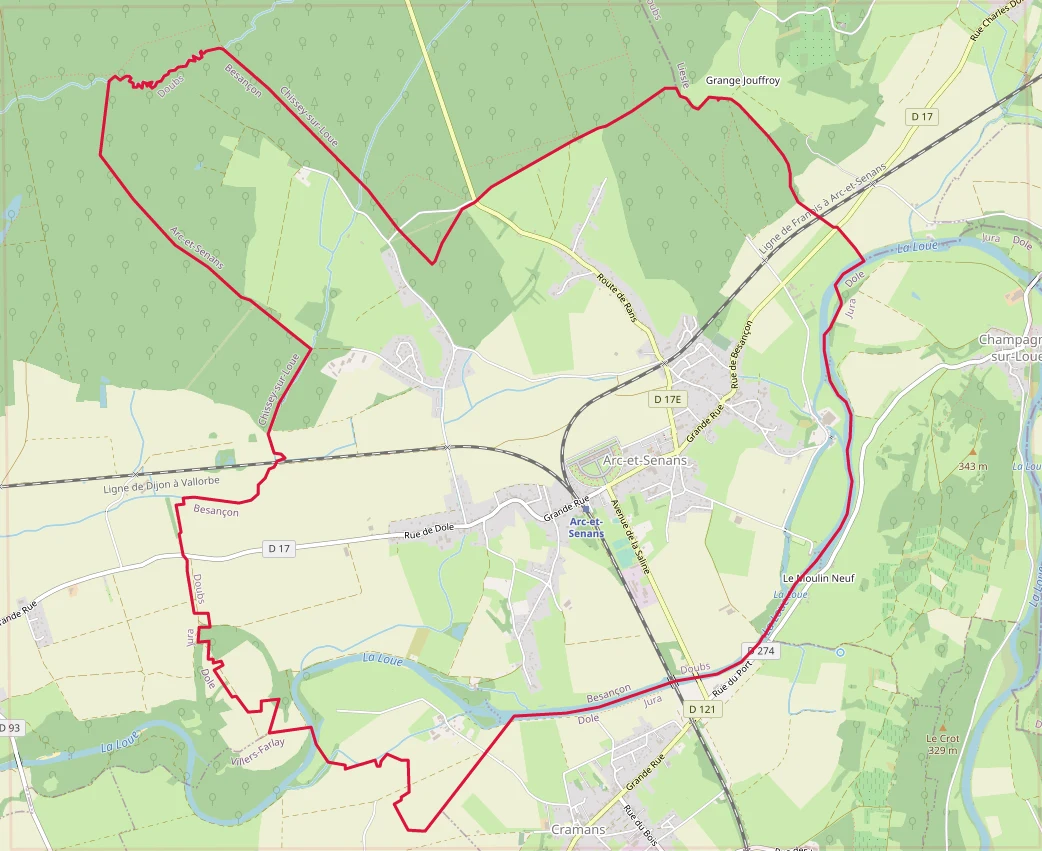
This journey through Franche-Comté is not about ticking off two similar monuments: Arc-et-Senans and Salins-les-Bains explain two ends of the same infrastructure. At Salins, brine was extracted underground; at Arc-et-Senans, a monumental factory was built and supplied between 1780 and 1895 by a 21-kilometre wooden pipeline. Visiting both helps you understand the architecture of work and the energy required to produce salt, but it is worth choosing the order and transport according to the time available and each traveller’s mobility.
Two saltworks, two complementary experiences
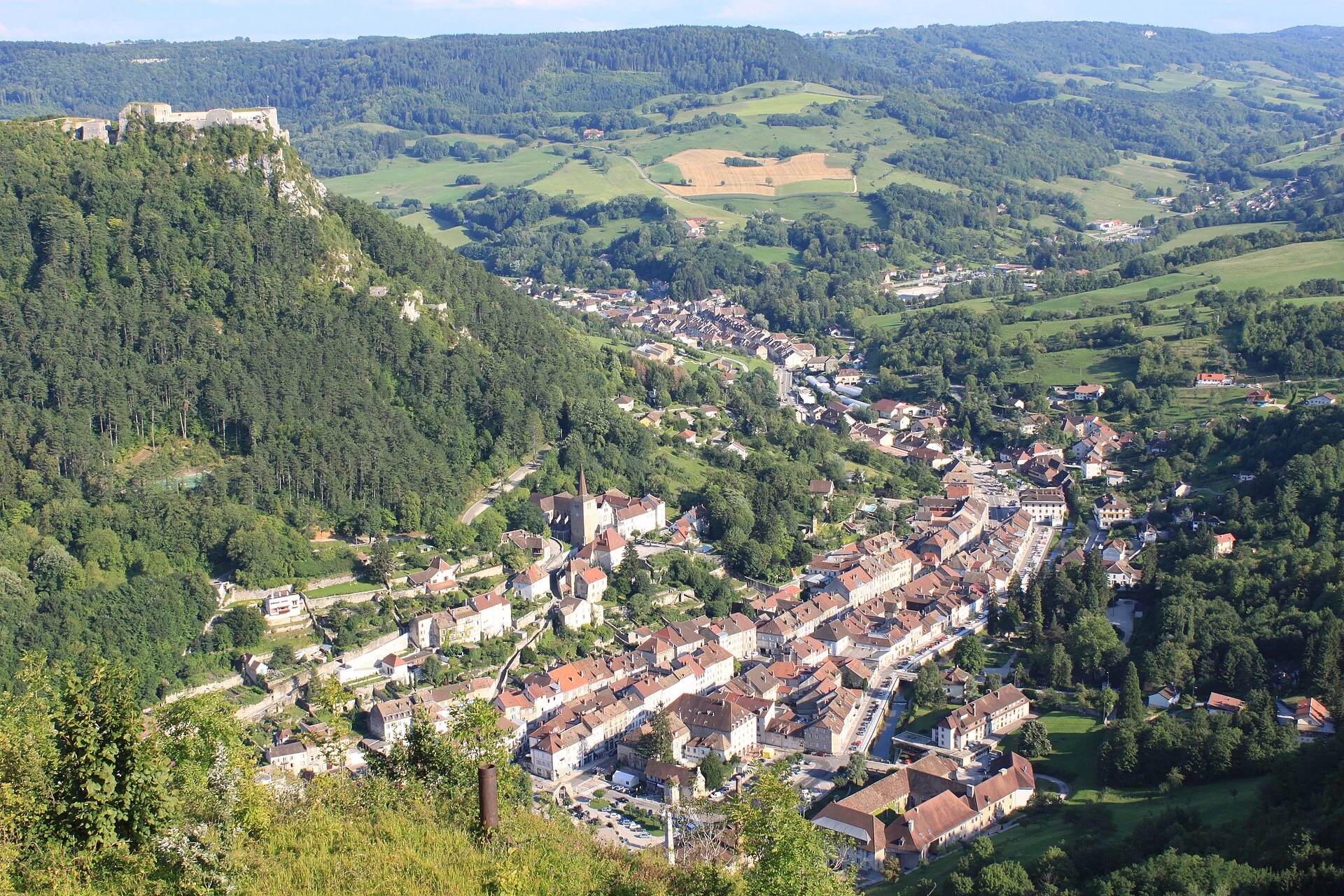
The Grande Saline at Salins-les-Bains preserves the technical side of the system: wells, galleries, pumping mechanisms and the evaporation building. Here, the visit focuses on brine, the underground world and the work required to obtain the so-called white gold. The Saline royale d’Arc-et-Senans, designed by Claude-Nicolas Ledoux at the end of the 18th century, reveals the other scale: a semicircular complex whose layout organised production, surveillance and hierarchy.
The connection is not merely thematic. The brine travelled from Salins to Arc-et-Senans, while the nearby Chaux Forest gave the factory access to the fuel needed for evaporation. The best way to understand the sites is therefore not to compare which is more photogenic, but to follow the process: extraction at Salins, then transformation and industrial planning at Arc-et-Senans.
What to prioritise if you can visit only one
Choose Salins-les-Bains if you are looking for technical installations, an underground gallery and a concrete explanation of how brine was pumped and evaporated. The descent underground is available only as part of a guided tour; the surface tour does not include this essential section. It is particularly suitable for anyone who wants to understand the material processes before the monumental architecture.
Choose Arc-et-Senans if you are interested in Ledoux’s architecture, Enlightenment urban planning and a spacious site best explored at a different pace. The complex was conceived as a model factory and as the centre of an ideal city that was never completed. Allow several hours if you want to explore the site, exhibitions and gardens at leisure.
To see both in one day, it is best to book Salins around a guided-tour time and leave Arc-et-Senans for the more flexible part of the day. Do not assume there is an immediate connection between the two: check current journey options in advance, especially if you are not travelling by car.
Getting there without oversimplifying the logistics
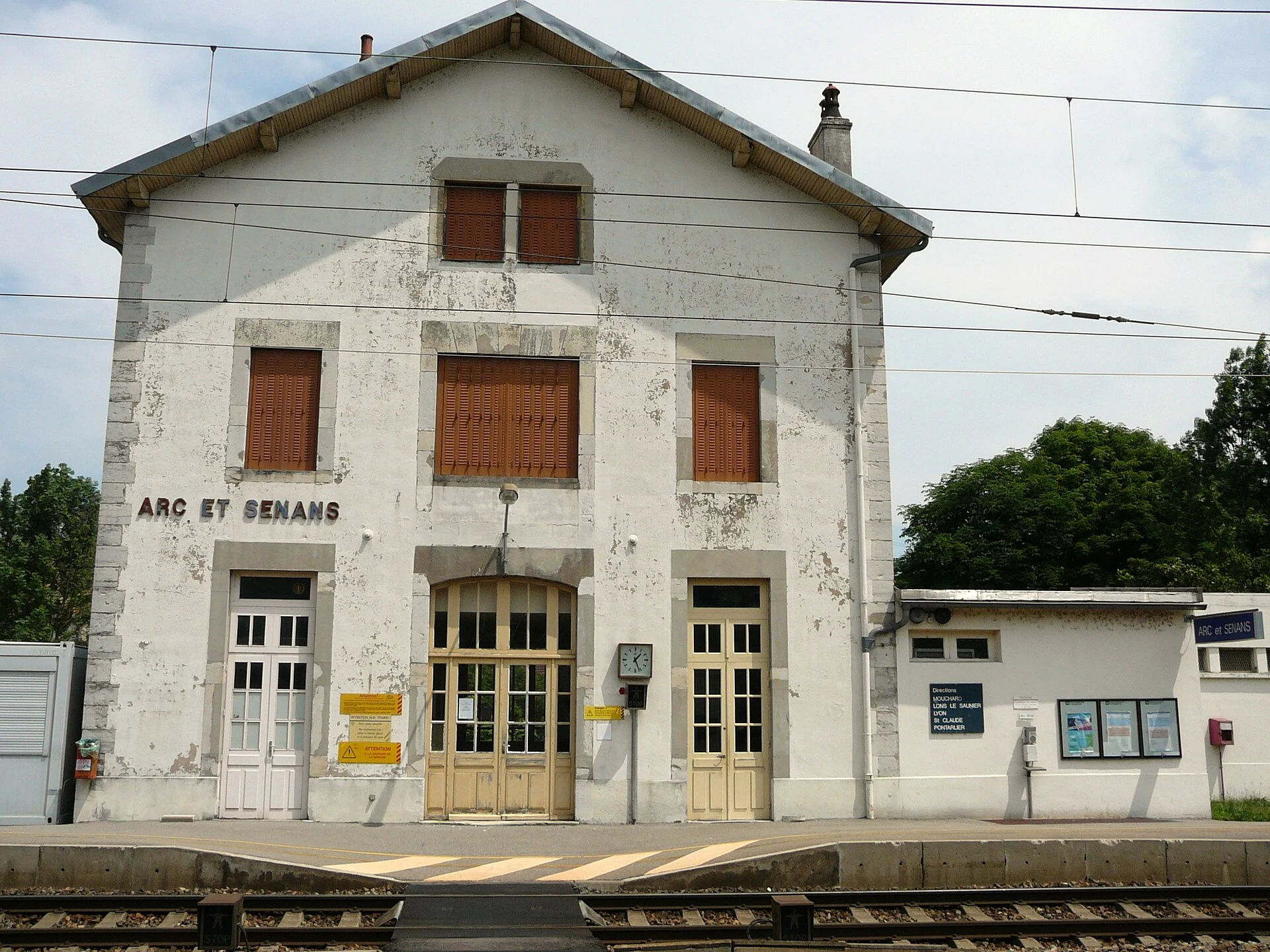
Arc-et-Senans is the easier option for a train visit: its TER station is about 100 metres from the entrance to the Saline royale. This makes it a good rail excursion from cities connected to the regional network, provided you check timetables and engineering works before setting out.
Salins-les-Bains requires slightly more careful planning. Mouchard is the nearest station listed by the Grande Saline, and from there you can continue by bus, taxi or bicycle along a greenway. Public transport is possible, but it should not be treated as an automatic detail: frequency and coordination with the start of the guided tour determine whether the day runs smoothly or whether it is better to visit the two saltworks on separate dates.
If you are travelling by car, the value of the itinerary does not lie in rushing between the sites. Leave time to park, arrive before the scheduled tour in Salins and accept that each place offers a different kind of visit.
Underground conditions, temperature and accessibility: the deciding factor
The Salins-les-Bains gallery involves conditions worth considering before buying a ticket: it is reached by stairs, remains at approximately 12°C, and the guided route covers around 700 metres and about 150 steps. Some sections have uneven ground, areas with little light and outdoor transfers between parts of the visit. Wear sturdy shoes and bring an extra layer, even in summer.
This does not mean giving up on the site if the underground section is unsuitable for your mobility. The Grande Saline offers a surface visit and interpretation resources, including content that provides an introduction to the underground area without descending into it. At Arc-et-Senans, aids such as wheelchair loans and Braille resources are advertised, but specific needs should be checked directly with each institution before travelling.
The responsible choice is to adapt the plan to the actual route, rather than forcing a descent that does not suit your group. The galleries, mechanisms and historic structures are better preserved when visits respect their limits.
References and details to check before you go
- UNESCO, World Heritage property entry “From the Great Saltworks of Salins-les-Bains to the Royal Saltworks of Arc-et-Senans”: historical context, the 21-kilometre pipeline and the industrial meaning of the complex.
- Saline royale d’Arc-et-Senans, official practical information: access from the TER station, accessibility support, opening calendar, tickets and programme. Check these details for the exact date of your visit.
- Grande Saline de Salins-les-Bains, official practical and accessibility information: guided-tour times, gallery access, steps, ground conditions, temperature and connections from Mouchard. Always check opening times, closures and transport on the day you travel.
References consulted during editorial review. Times, requirements and advisories may change: always confirm with the official source.
- https://whc.unesco.org/en/list/203 whc.unesco.org
- https://whc.unesco.org/en/list/0203/maps/ whc.unesco.org
- https://whc.unesco.org/archive/advisory_body_evaluation/203bis.pdf whc.unesco.org
- https://whc.unesco.org/en/tentativelists/6882/ whc.unesco.org
- https://whc.unesco.org/fr/documents/9416 whc.unesco.org
- https://whc.unesco.org/fr/list/203 whc.unesco.org
- https://whc.unesco.org/en/documents/101403/ whc.unesco.org
- https://whc.unesco.org/en/news/533/ whc.unesco.org
- France World Countries — mledozeODbL 1.0 World countries dataset by mledoze and contributors · ODbL 1.0
- France World Bank Open DataCC BY 4.0 World Bank
- Sayulita ¿magia o truco? alojamiento colaborativo o de plataformas, transformación socio espacial, gentrificación e insostenibilidad CrossrefMetadatos públicos; derechos específicos por campo cuando correspondan Crossref
- Ciencia amanuense: cultura manuscrita e historia natural en la Francia moderna (c. 1660-1830) CrossrefMetadatos públicos; derechos específicos por campo cuando correspondan Crossref
- Arc-et-Senans GeoNamesDatos geográficos bajo CC BY 4.0; requiere atribución a GeoNames. Fuente: GeoNames
- Arc-et-Senans GeoNamesDatos geográficos bajo CC BY 4.0; requiere atribución a GeoNames. Fuente: GeoNames
- Arc-et-Senans, Besançon, Doubs, Bourgogne – Franche-Comté, Metropolitan France, 25610, France OpenStreetMapODbL 1.0; atribución y obligación de compartir bases derivadas. Fuente: OpenStreetMap
- Salins-les-Bains GeoNamesDatos geográficos bajo CC BY 4.0; requiere atribución a GeoNames. Fuente: GeoNames
- Salins-les-Bains GeoNamesDatos geográficos bajo CC BY 4.0; requiere atribución a GeoNames. Fuente: GeoNames
- Salins-les-Bains, Dole, Jura, Bourgogne – Franche-Comté, Metropolitan France, 39110, France OpenStreetMapODbL 1.0; atribución y obligación de compartir bases derivadas. Fuente: OpenStreetMap
- Saline royale d'Arc-et-Senans, Arc, Arc-et-Senans, Besançon, Doubs, Bourgogne – Franche-Comté, Metropolitan France, 25610, France OpenStreetMapODbL 1.0; atribución y obligación de compartir bases derivadas. Fuente: OpenStreetMap