San Cristóbal, Dominican Republic
Cuevas del Pomier rock art needs official reopening confirmation
Cuevas del Pomier contains an extraordinary collection of pre-Hispanic rock art, but the key decision now is to confirm whether the monument has reopened before arranging the journey.
A few kilometres from Santo Domingo, Cuevas del Pomier preserves an exceptional part of the Caribbean’s pre-Hispanic memory: paintings, engravings and reliefs within a karst system in San Cristóbal. But today, the decisive consideration for travellers is not only archaeological. The reserve is undergoing a process of environmental restoration and visitor-management restructuring, so it is best treated as a conditional plan rather than a guaranteed excursion.
The reward of a possible visit is an understanding that Dominican rock art is not an isolated backdrop: it forms part of a long Antillean history of mobility, ritual practices and relationships with caves. The traveller’s responsibility begins by accepting that protecting the site may require postponing entry.
An underground archive of Antillean history
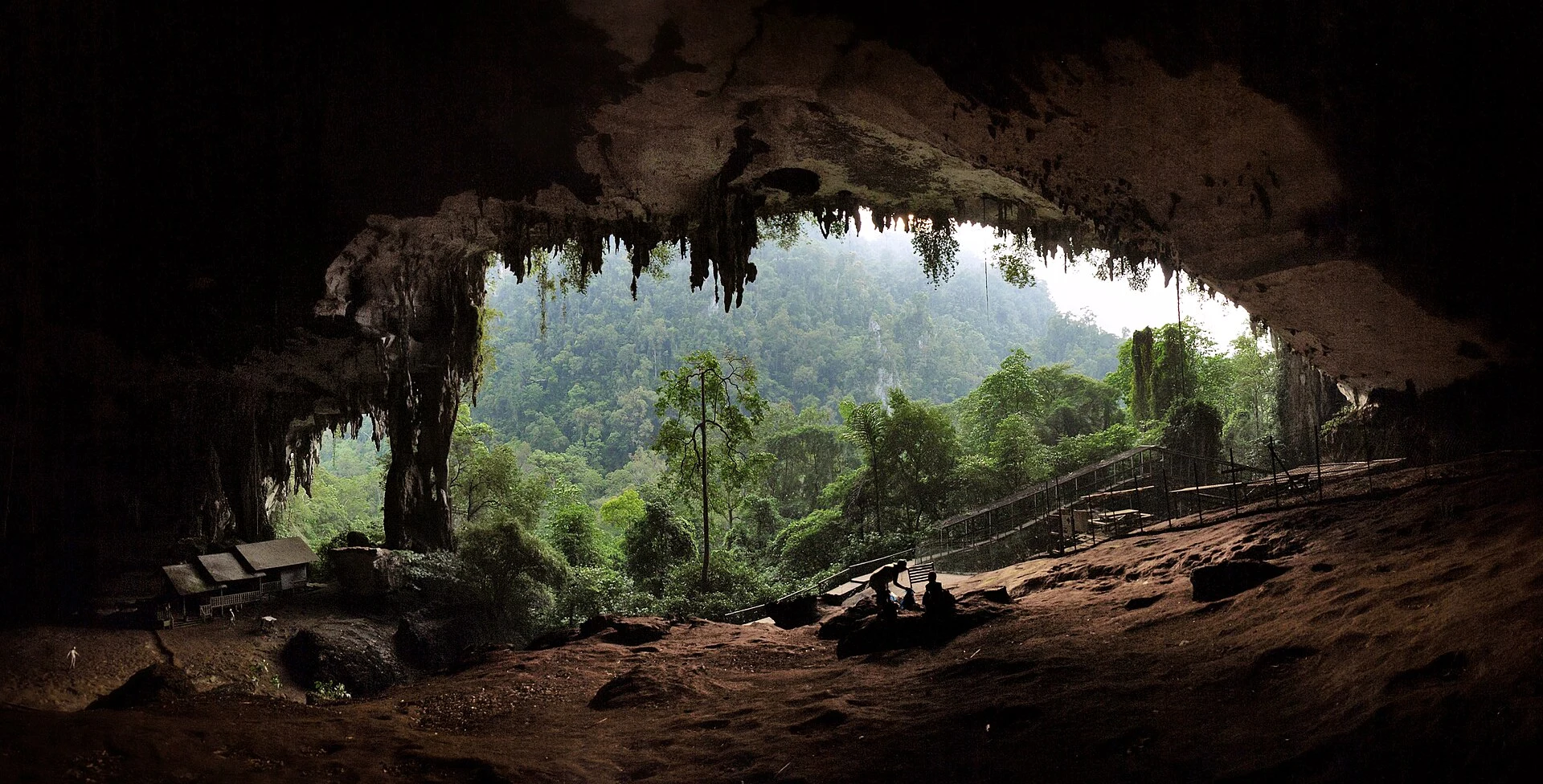
Pomier does not refer to a single cavity, but to a group of limestone caves in the Borbón area, north of San Cristóbal. They preserve examples of rock art associated with the island’s pre-Hispanic populations: pictographs, petroglyphs and reliefs that require time, controlled lighting and careful interpretation.
The site’s importance does not justify calling it a UNESCO World Heritage Site. Borbón Cave No. 2 is included in the Dominican proposal for pre-Hispanic rock art on UNESCO’s Tentative List; this record expresses an intention to submit a future nomination, not a definitive inscription. It is an important distinction for understanding the site accurately and avoiding recognition that it does not yet hold.
Rather than looking for a single memorable image, it is worth arriving with questions: how the figures are integrated into the rock, what role the cave’s darkness played and why these records are connected to other groups of sites across the Caribbean. This approach can ensure that a guided visit, if it becomes available again, does not turn into nothing more than photographing fragile walls.
Reopening is the fact that should determine the itinerary
The Cuevas de Borbón or del Pomier Natural Monument Anthropological Reserve was closed on 1 December 2025 for an announced period of six months, for restoration and comprehensive protection. During May and June 2026, the authorities were still reporting on environmental remediation, management of the surrounding area and technical supervision of the interventions.
The government also announced its objective of completing the site’s enhancement by August 2026. However, as of 20 September 2026, the official sources reviewed for this article do not show an unequivocal public notice confirming reopening, which caves are accessible or how entry is organised. For that reason, do not book dedicated transport, a guide or non-refundable accommodation based on information issued before the closure.
Before setting out from Santo Domingo or San Cristóbal, confirm directly with the Ministry of Environment whether public access is available, which areas are open, whether authorised accompaniment is required and what the visiting conditions are. A lack of confirmation should be understood as a reason to change your plans, not as an invitation to try to enter independently.

What to prepare if visits are authorised again
An archaeological cave requires a different attitude from a viewpoint or beach. Wear closed-toe shoes with a good sole and a light layer that can get dirty or brush against damp surfaces; avoid touching walls, figures, sediment and formations. Do not use flash or intense lighting unless the responsible staff expressly permit it.
Do not assume that fees, opening hours, public transport, tour duration or physical accessibility will remain unchanged: these details may shift under the new management model. If you have reduced mobility, sensitivity to dark spaces or difficulty walking on uneven ground, ask specifically which section will be offered and whether an interpretive alternative outside the cave is available.
The most useful practical contribution is not to pressure staff for access beyond authorised areas. The restoration responds, among other factors, to the historic impacts of extractive activity in the surrounding area. Respecting a closure or a limited quota is part of visiting vulnerable heritage with conservation awareness, not missing an opportunity.
How to fit it into a trip without relying on a single excursion
San Cristóbal is a reasonable distance from Santo Domingo, but Pomier should not be the sole reason for a fixed day until official confirmation is available. Plan with genuine flexibility: leave the morning or afternoon open for changes and avoid booking non-changeable round-trip transport solely for the reserve.
If your route continues towards the east of the country, Cueva de las Maravillas offers another setting with rock art and underground formations; it is not a cultural substitute for Pomier and is not in the same area, but it may be an alternative for travellers already heading in that direction. Check its current conditions as well before including it.
The sensible decision is simple: Pomier deserves priority once access is confirmed, but it does not justify turning a recovery process into an expectation of entry at any cost.
Final check and references
Check the opening status and access rules with these sources before finalising your itinerary:
- Ministry of Environment and Natural Resources: notice of the temporary closure for restoration and comprehensive protection, published in December 2025.
- Ministry of Environment and Natural Resources: updates on management, recovery and remediation in the Pomier area, published in May and June 2026.
- Presidency of the Dominican Republic: creation of the Presidential Commission for Cuevas del Pomier, July 2025, and announcement of an enhancement target for August 2026.
- UNESCO: profile of the Dominican proposal for pre-Hispanic rock art on the Tentative List, with Borbón Cave No. 2 among the initial components.
- Ministry of Tourism of the Dominican Republic: location profile and general background on Cuevas del Pomier.
- Ministry of Environment and Natural Resources: educational material dedicated to Cuevas del Pomier.
References consulted during editorial review. Times, requirements and advisories may change: always confirm with the official source.
- https://whc.unesco.org/en/tentativelists/6294 whc.unesco.org
- https://www.visitdominicanrepublic.org/cuevas-del-pomier-caves-san-cristobal www.visitdominicanrepublic.org
- https://whc.unesco.org/en/statesparties/do whc.unesco.org
- https://visitrepublicadominicana.com/ecoturismo/cuevas-del-pomier visitrepublicadominicana.com
- https://visitdominicanrepublic.com/destinations/pomier-caves-lost-world/ visitdominicanrepublic.com
- https://whc.unesco.org/document/6049/ whc.unesco.org
- https://ambiente.gob.do/wpfd_file/cuevas-del-pomier/ ambiente.gob.do
- https://www.presidencia.gob.do/noticias/presidente-abinader-crea-comision-presidencial-para-desarrollo-sostenible-y-ecoturistico www.presidencia.gob.do
- República Dominicana WikidataCC0 1.0 Wikidata · Q786
- Republica Dominicana WikidataCC0 1.0 Wikidata · Q140020989
- Dominican Republic World Countries — mledozeODbL 1.0 World countries dataset by mledoze and contributors · ODbL 1.0
- Dominican Republic World Bank Open DataCC BY 4.0 World Bank
- Dominican Republic DBpediaCC BY-SA 3.0 DBpedia
- Potencialidades ecoturísticas de la República Dominicana OpenAlexCC0 1.0 OpenAlex
- Potencialidades del turismo ornitológico en El Caribe. Un análisis de República Dominicana OpenAlexCC0 1.0 OpenAlex
- Análisis del perfil, motivaciones, y valoraciones de los turistas gastronómicos. El caso de la República Dominicana OpenAlexCC0 1.0 OpenAlex
- “Tipologías turísticas en república dominicana: El caso del turismo del golf” CrossrefMetadatos públicos; derechos específicos por campo cuando correspondan Crossref
- Fiscalidad y turismo en la República Dominicana CrossrefMetadatos públicos; derechos específicos por campo cuando correspondan Crossref
- REPÚBLICA DOMINICANA CrossrefMetadatos públicos; derechos específicos por campo cuando correspondan Crossref
- La importancia de llamarse República Dominicana, o por qué nombrarse de otra forma que no sea Haití CrossrefMetadatos públicos; derechos específicos por campo cuando correspondan Crossref
- Factores potenciales para el desarrollo de turismo sustentable en la provincia de Santiago de los Caballeros, República Dominicana CrossrefMetadatos públicos; derechos específicos por campo cuando correspondan Crossref
- Cuenta satélite de turismo CrossrefMetadatos públicos; derechos específicos por campo cuando correspondan Crossref
- Cuevas del Pomier, Camino Pomier, Emmanuel, El Pomier, San Cristóbal, 92305, Dominican Republic OpenStreetMapODbL 1.0; atribución y obligación de compartir bases derivadas. Fuente: OpenStreetMap
- Cuevas del Pomier, Camino Pomier, Emmanuel, El Pomier, San Cristóbal, 92305, Dominican Republic OpenStreetMapODbL 1.0; atribución y obligación de compartir bases derivadas. Fuente: OpenStreetMap
- Santo Domingo GeoNamesDatos geográficos bajo CC BY 4.0; requiere atribución a GeoNames. Fuente: GeoNames
- Santo Domingo, Distrito Nacional, 03201, Dominican Republic OpenStreetMapODbL 1.0; atribución y obligación de compartir bases derivadas. Fuente: OpenStreetMap
- Santo Domingo, Dominican Republic OpenStreetMapODbL 1.0; atribución y obligación de compartir bases derivadas. Fuente: OpenStreetMap
- Las Américas International Airport OpenFlightsODbL 1.0 (base de datos) / DbCL 1.0 (contenidos) Las Américas International Airport · OpenFlights · ODbL 1.0