Netherlands · Water heritage
Kinderdijk from Rotterdam: windmills, water and route choices
A visit to Kinderdijk makes more sense when experienced as a system of dikes, canals, windmills and pumping stations, rather than as a quick photo stop.
Conditions described in the guide: confirm current requirements and access with the official source before travelling.
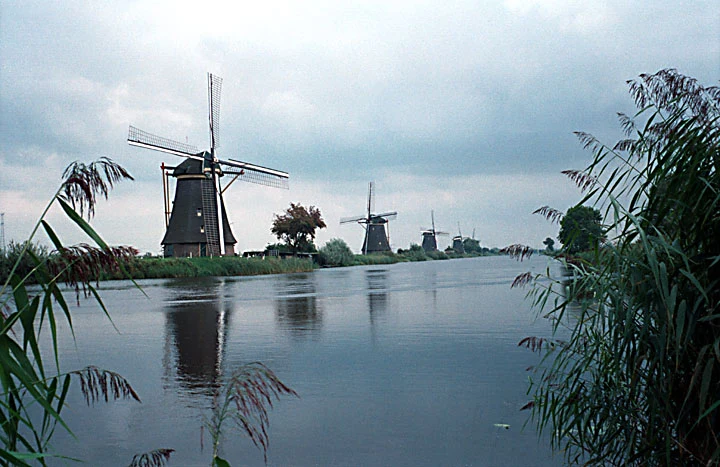
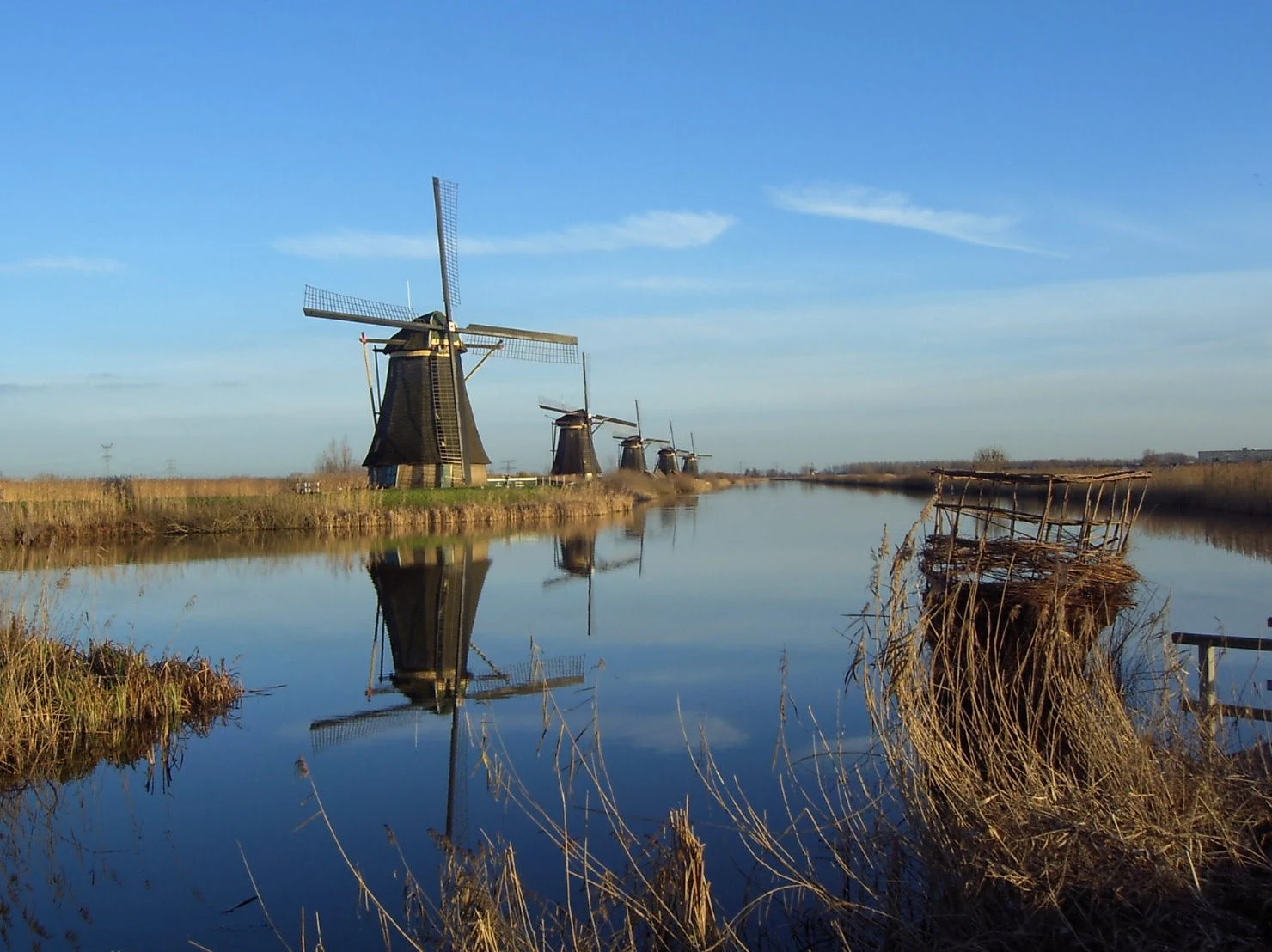
Kinderdijk, southeast of Rotterdam, brings together 19 windmills in a landscape of polders, canals and dikes whose logic can still be read on the ground. The practical question is not only how to get there, but how much time to set aside to understand the complete water-management system and which areas require admission to access the visitor facilities. With workable public transport and flat routes, it is a reasonable car-free excursion, although you should adapt your plan to seasonal timetables for boats, museums and connections.
Start with the water, not the windmills
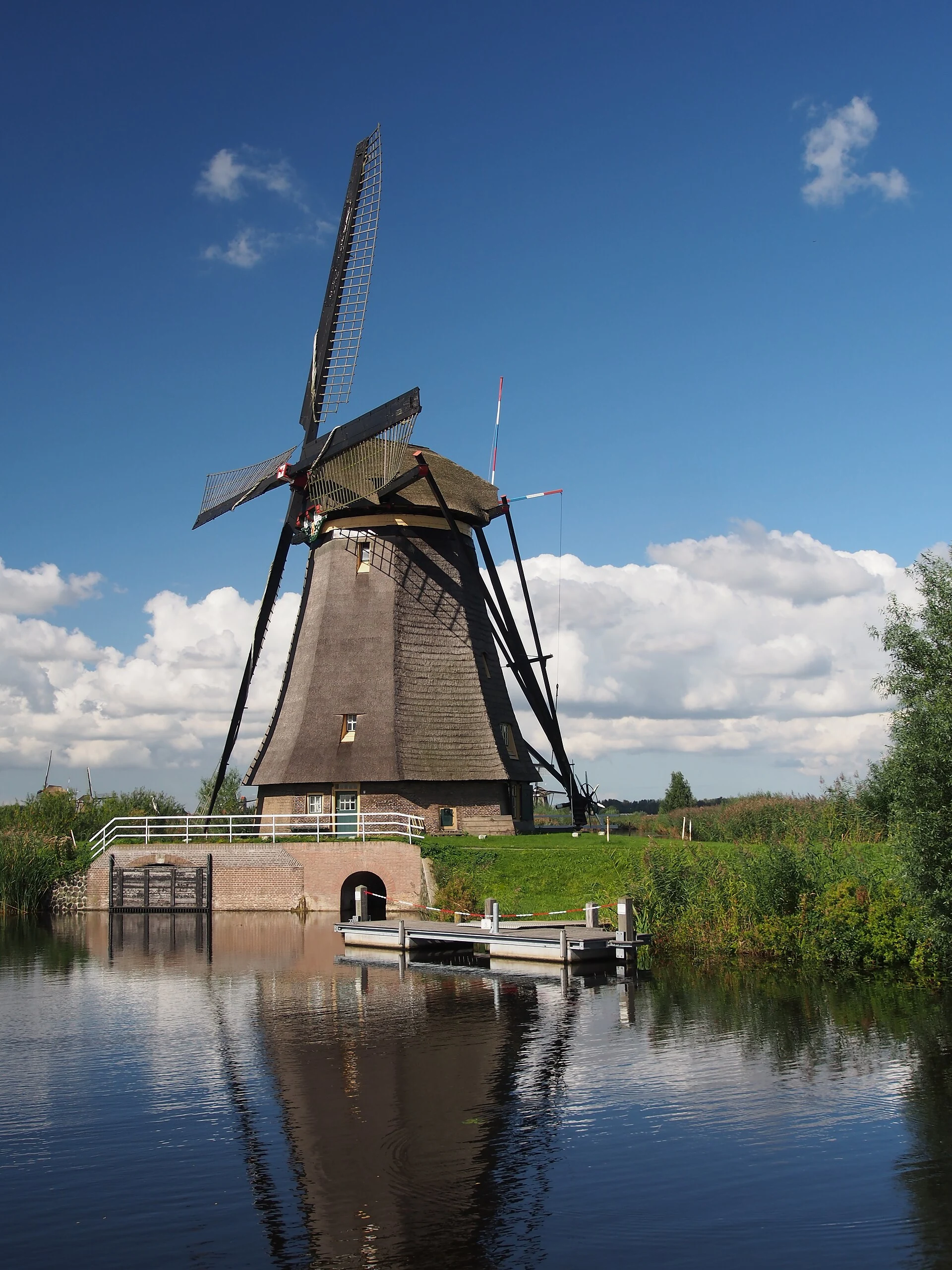
The windmills at Kinderdijk were not isolated objects: they lifted water from the low-lying polders into reservoirs and canals from which it could be discharged. The site preserves windmills, dikes, locks and pumping stations; this sequence makes it possible to understand why the landscape has two water levels and why the sails form part of a larger infrastructure.
For a first visit, prioritise the introductory film and the Wisboom pumping station before entering a museum windmill. Then follow the canal axis on foot. This helps distinguish the historical roles of wind power and later machinery, rather than viewing the site as a picturesque line of windmills. The two museum windmills add a domestic dimension: families lived and worked in these structures.
The route involves considerable walking, although the terrain is predominantly flat. Allow a short visit if you mainly want to take in the landscape, and a longer period if you also want to enter the museums, see the stations and use the internal boat.
Getting there from Rotterdam: the direct boat is an option, not a given
The simplest land connection is bus 489 from the Kralingse Zoom transport hub to Kinderdijk Molenkade; it is the option that best supports a car-free plan every day. From central Rotterdam, you must add the preceding metro or tram journey, so calculate the excursion door to door rather than focusing only on the final leg.
The WaterShuttle connects Rotterdam with the site entrance during certain seasons and uses a ticket separate from regular public transport. Its timetable may vary. As a water-based alternative, Waterbus line 20 reaches Ridderkerk and requires a change to the small Driehoeksveer ferry, also with a separate ticket. If you bring your own bicycle, you can also get off in Alblasserdam and cycle to the entrance.
The choice involves a clear trade-off: the direct boat avoids changes and offers a river-based arrival, but the bus is usually the more reliable option when water services are not operating. Check the return timetable before entering: the last departures affect the day more than the amount of time spent inside the site.
What admission includes and what can be adapted
Kinderdijk admission provides access to the museum windmills, the pumping stations open to visitors, the film and the internal sightseeing boat when it is operating. Buying in advance may help avoid queues, but do not turn a recommended reservation into an obligation: check the current conditions for your chosen date.
The visit is quite adaptable. The outdoor routes, windmill yards and much of the site’s facilities are prepared for wheelchair users; accessible toilets are available, and the visitor centre lends a limited number of wheelchairs on the same day. The main limitation is inside the museum windmills: their narrow entrances and steep staircases are not wheelchair accessible.
Travelling with mobility needs does not mean giving up the landscape or the explanation of the water system, but it does mean choosing a realistic pace and not basing the whole experience on the interiors. This is also a lived-in place: some windmills are homes. Stay on the marked paths, avoid entering private yards and do not fly drones without the relevant permission.
A half-day visit that does not cut out the context
With a few hours, follow a simple sequence: arrival, an introduction at De Fabriek, a walk along the canal towards a museum windmill, and a return along the same network of dikes or by internal boat if it is operating that day. This approach prioritises reading the landscape over accumulating stops.
A full day makes sense if you are interested in both museum windmills, Wisboom, the internal boat trips and a long break. There is no need to add another city in the afternoon for the excursion to feel complete: Kinderdijk rewards repeated changes of perspective, from the water’s edge, the dike and the inside of the machinery.
Outside the main season, reduced opening hours may make a concentrated visit more convenient. On busier days, by contrast, allow extra time for transport and admission. Check opening hours, internal boat services, weather conditions and return connections in the official sources before leaving Rotterdam.
Official references to check before travelling
Transport details, timetables, prices, boat operations and accessibility can change. Check them for your specific date in these sources, consulted on 16 September 2026:
- UNESCO World Heritage Centre: the entry for the Kinderdijk-Elshout mill network, its 1997 inscription and the description of the system of polders, canals, windmills, pumping stations and locks.
- Stichting Werelderfgoed Kinderdijk: information on admission, visit content, accessibility, drone rules, parking and frequently asked questions.
- Stichting Werelderfgoed Kinderdijk: public transport routes from Rotterdam and Dordrecht, including bus 489, WaterShuttle, Waterbus and Driehoeksveer.
- Waterbus: regular network, timetables and the notice that the historic direct connection with Kinderdijk changed to WaterShuttle from 6 October 2025.
- WaterShuttle: the seasonal timetable published for 2026; always confirm the schedule after 5 October 2026 before relying on this connection.
References consulted during editorial review. Times, requirements and advisories may change: always confirm with the official source.
- https://whc.unesco.org/en/list/818 whc.unesco.org
- https://whc.unesco.org/document/154356 whc.unesco.org
- https://whc.unesco.org/document/193466 whc.unesco.org
- https://tickets.kinderdijk.com/en/kinderdijk-tour/tickets tickets.kinderdijk.com
- https://whc.unesco.org/document/200804 whc.unesco.org
- https://whc.unesco.org/en/news/2028 whc.unesco.org
- https://whc.unesco.org/document/217318 whc.unesco.org
- https://whc.unesco.org/en/renewable-energy/case-study-netherlands whc.unesco.org
- Países Bajos WikidataCC0 1.0 Wikidata · Q55
- Países Bajos WikidataCC0 1.0 Wikidata · Q476033
- Países Bajos WikidataCC0 1.0 Wikidata · Q16250490
- Netherlands World Countries — mledozeODbL 1.0 World countries dataset by mledoze and contributors · ODbL 1.0
- Netherlands World Bank Open DataCC BY 4.0 World Bank
- Publicidad institucional y cultura de paz en los Países Bajos CrossrefMetadatos públicos; derechos específicos por campo cuando correspondan Crossref
- Historia jurídica en los Países Bajos y Bélgica en torno a 1924 CrossrefMetadatos públicos; derechos específicos por campo cuando correspondan Crossref
- University History in the Low Countries = Historia de la Universidad en los Países Bajos CrossrefMetadatos públicos; derechos específicos por campo cuando correspondan Crossref
- Publicidad institucional y cultura de paz en los Países Bajos CrossrefMetadatos públicos; derechos específicos por campo cuando correspondan Crossref
- Tipografía y estilos tipográficos del siglo xv en los Países Bajos: CrossrefMetadatos públicos; derechos específicos por campo cuando correspondan Crossref
- El gobierno de los Países Bajos en el cursus honorum de la Monarquía hispana CrossrefMetadatos públicos; derechos específicos por campo cuando correspondan Crossref
- Países Bajos CrossrefMetadatos públicos; derechos específicos por campo cuando correspondan Crossref
- Los Países Bajos: ¿un país tolerante? CrossrefMetadatos públicos; derechos específicos por campo cuando correspondan Crossref