Polish Baltic coast · National park
Słowiński: two routes for understanding Poland’s shifting dunes
Between Łeba and Czołpino, Słowiński National Park offers two very different ways to reach its shifting dunes. Choosing well prevents a walk on sand from turning into a poorly planned day.
Conditions described in the guide: confirm current requirements and access with the official source before travelling.
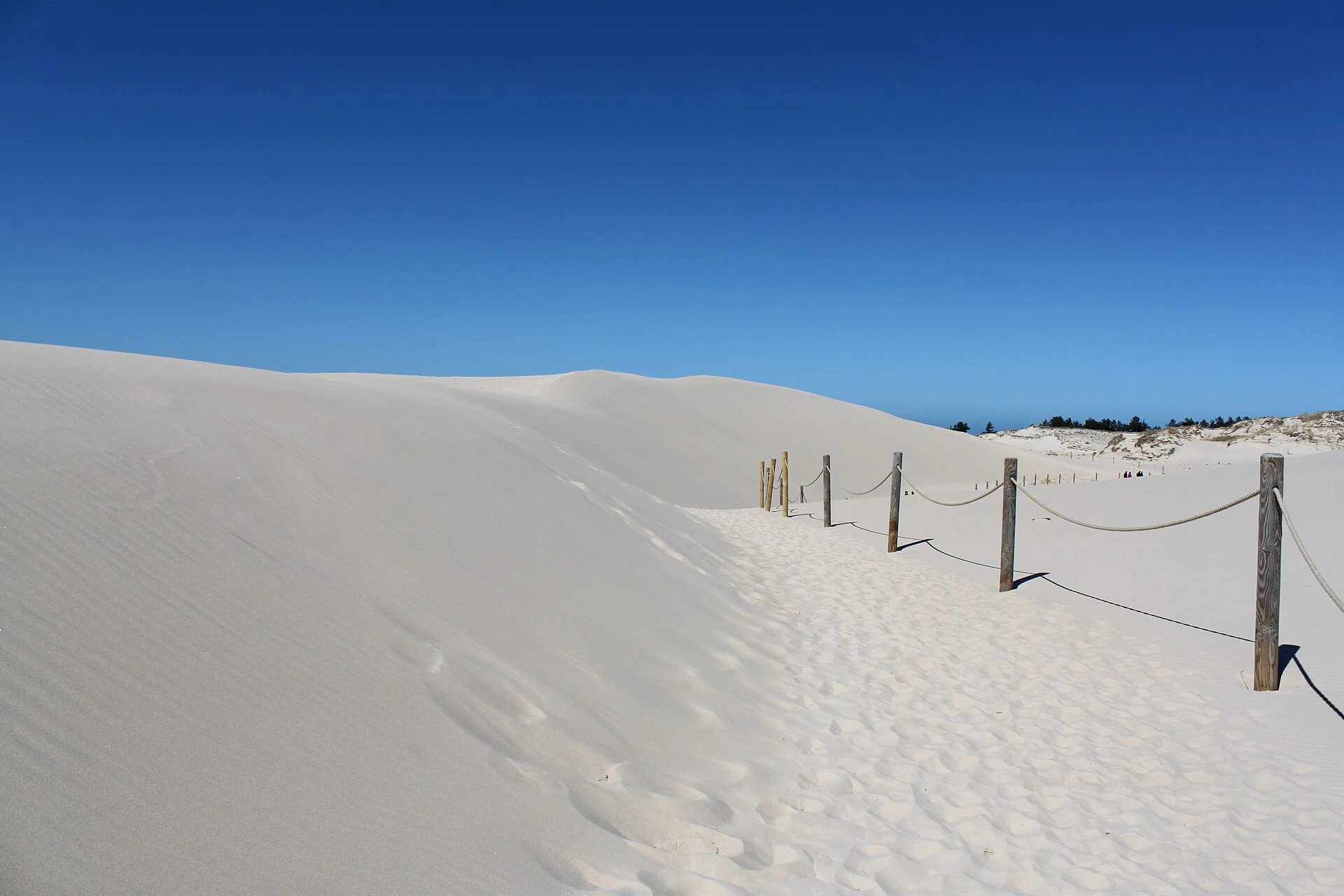
Słowiński’s landscape is not a vast beach with fixed sand: along the Łeba Peninsula, the wind moves dunes that can advance several metres a year, transforming the boundary between forest, lake and sea. The useful decision is not simply whether to visit the dunes, but whether to choose the entrance at Rąbka, beside Łeba, or the longer circuit from Czołpino. Both reveal the same natural process, but they require different amounts of time, effort and logistical planning.
Rąbka for a first day from Łeba
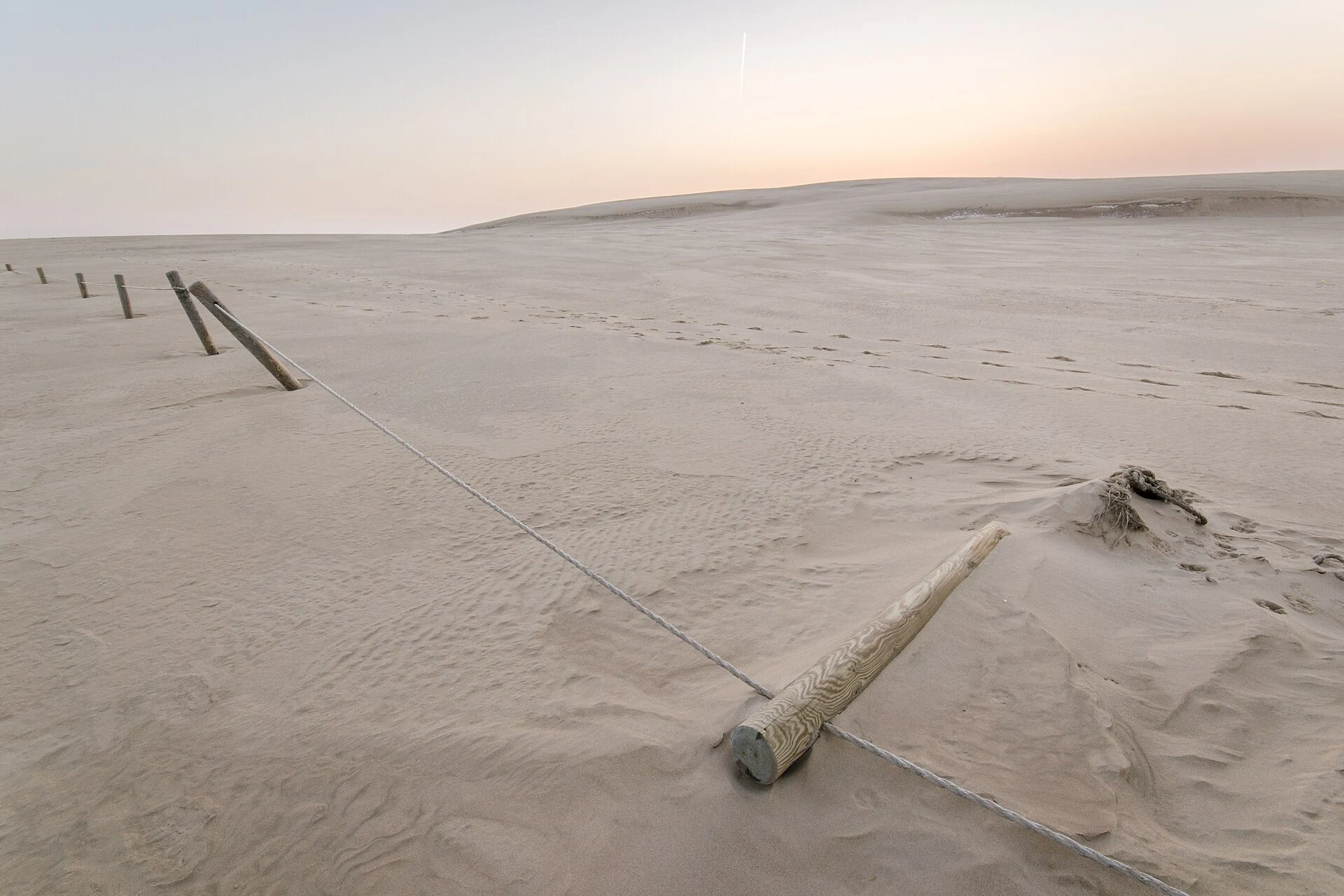
Rąbka is the most direct option for visitors staying in Łeba who want to focus on Wydma Łącka, one of the park’s great shifting dunes. The official circuit through Stara Łeba, the beach and Wydma Łącka totals 15.1 kilometres: this is not a quick scenic stop, even though part of the route may be covered by local electric transport services when they are operating.
Treat it as an exposed walk on sand, not an urban stroll. Bring water and protection from the sun and wind, and wear footwear that remains comfortable when sinking into sand. The park warns that dune trails require physical preparation and suitable equipment; shorten the plan if strong winds are forecast or if the group does not want to walk for several hours.
The value of walking there lies in reading the transition: coastal pine forest, the shore of Lake Łebsko, open sand and the Baltic Sea. Do not cross the vegetation or improvise shortcuts to get closer to a ridge: the marked routes help protect a system that changes easily.
Czołpino for combining forest, lighthouse and dune
Czołpino works best for travellers with more time, a vehicle or a transfer arranged in advance. Its circuit combines sections of the blue and red trails and covers about 8 kilometres. It starts beside the forest car park, passes the Park Museum in the former lighthouse keepers’ settlement and climbs to the brick lighthouse before reaching the beach and the Wydma Czołpińska dune complex.
The difference from Rąbka is substantial: here, the dune is not an isolated excursion. The route takes in coastal pine forest, the lighthouse tower and views towards Lakes Łebsko, Gardno and Dołgie Wielkie. The sandy section has no shade and includes steep climbs, so it is not a suitable route to improvise in hot weather, with limited mobility or accumulated fatigue.
If you choose Czołpino, allow time to stop at the museum and to return before nightfall. The visit gains meaning when you observe how pioneer plants stabilise some of the sand while other areas remain active; there is no need to chase the highest dune or cover every detour.
A practical choice according to your pace
Choose Rąbka if your base is in Łeba, you have a short day and want the simplest access to the dune experience. Choose Czołpino if you are looking for a more varied walk, the lighthouse and a slower reading of the coastal ecosystems. Doing both in one day only makes sense if you know the travel times and have enough time available: they are not two neighbouring viewpoints.
For a two-night stay, a balanced plan is to spend a morning or afternoon at Rąbka and leave Czołpino for another day, using the museum as your starting point. This avoids treating the park as a photographic backdrop and makes clear that the dunes coexist with lakes, peatlands, forests and bird-breeding areas.
The park may only be explored along marked trails, paths and educational routes. Dogs face significant restrictions in areas under strict and active protection; drones are not permitted without individual authorisation. These are rules to understand before choosing your route, not once you reach the access checkpoint.
What to check just before setting out
Opening hours for museums, the lighthouse, car parks and electric transport, as well as passenger boat services and possible weather alerts, may change. Check the day’s conditions in the information provided by Słowiński National Park and use its trail map to confirm the starting point, sections subject to a fee and the alternatives available.
An entrance fee is charged in certain sectors between 1 May and 30 September, while some beaches and specific sections have different conditions. Do not assume that a fee, shuttle vehicle or opening time listed for another season will still apply. If your visit depends on the lighthouse or museum, check their specific opening arrangements before travelling.
### References to check before setting out
- Słowiński National Park: visitor regulations, trail finder and map, weather alerts, conditions for dogs and park services.
- Polish Tourism Organisation: geographical and natural context for Słowiński National Park.
- Łeba Tourist Office: local guidance on the educational shifting-dune trail and the Łeba base.
- Słowiński National Park Museum: opening of the Czołpino museum and lighthouse when they form part of the itinerary.
The dune as a landscape in motion
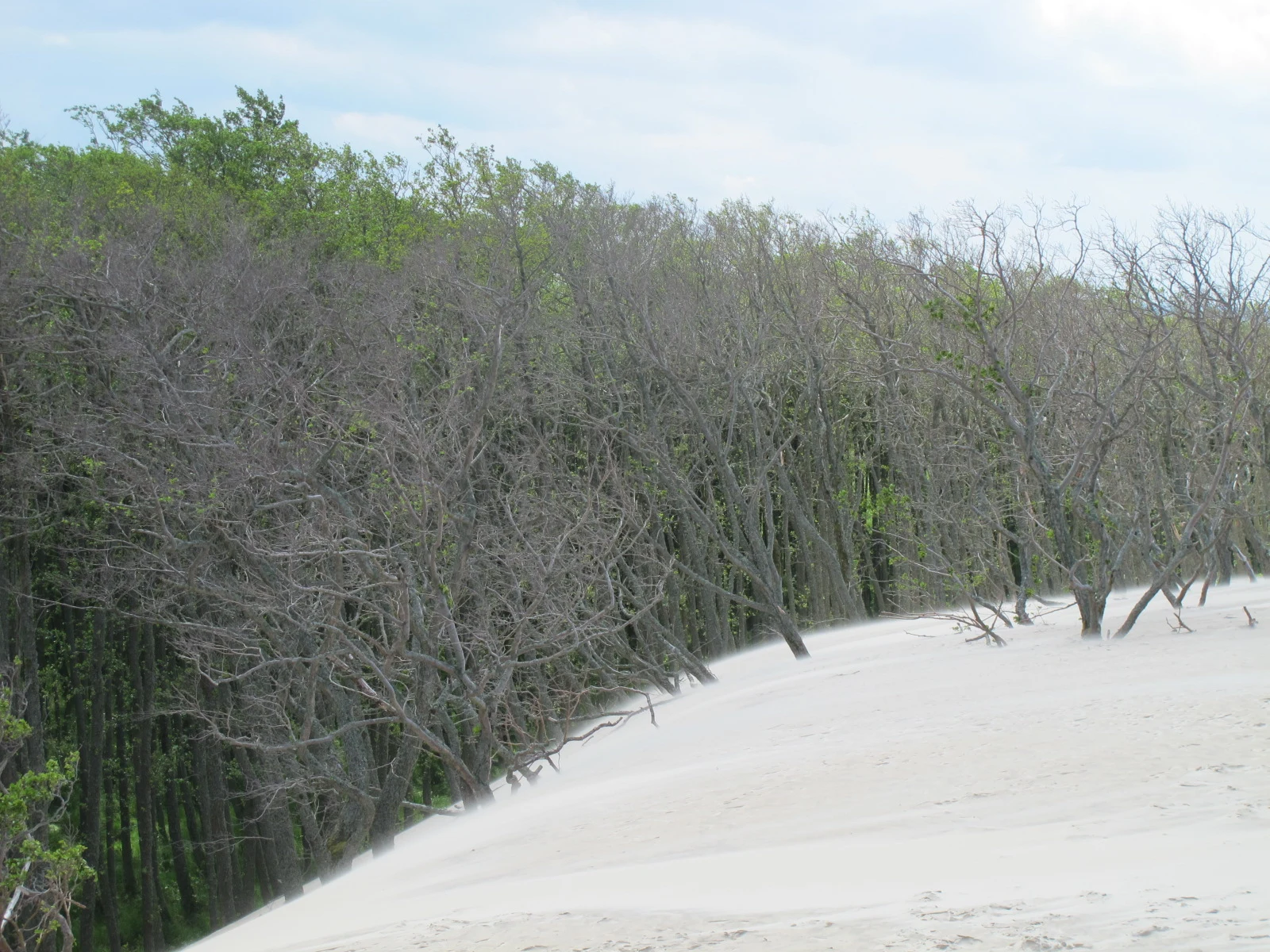
Słowiński’s dunes reach heights of up to about 40 metres and advance, depending on conditions, by between 3 and 10 metres a year. This movement can bury forest and, over time, expose ancient tree trunks. The sand is not an immobile backdrop: it is the process that explains why the park also protects low vegetation, wetlands and the edges of the lakes.
Looking at the traces of this change helps you travel differently. Instead of seeking a photograph from any slope, use the designated viewpoints and observe the contrasts between bare sand, pioneer grasses and coastal pines. It is a slower experience, but also a truer one for this place.
References consulted during editorial review. Times, requirements and advisories may change: always confirm with the official source.
- https://www.poland.travel/en/slowinski-national-park/ www.poland.travel
- https://www.gov.pl/web/infrastruktura/letni-rozklad-jazdy-pkp-intercity www.gov.pl
- https://slowinski.parknarodowy.com/informacje-praktyczne/ slowinski.parknarodowy.com
- https://spn.gov.pl/uploads/files/69e5cdf437f76977514459.pdf spn.gov.pl
- https://ppn.gov.pl/pliki-do-pobrania/otworz/af43a587-a171-4a93-9ce5-90512a731742.pdf ppn.gov.pl
- https://leba.pl/en/co-robic/spacer leba.pl
- https://rezerwacje.slowinskipn.pl/ZARZADZENIE_ws_zasad_oplat.pdf rezerwacje.slowinskipn.pl
- https://pomorskie.travel/en/punkty-poi/slowinski-park-narodowy/ pomorskie.travel
- Polonia WikidataCC0 1.0 Wikidata · Q36
- Polonia WikidataCC0 1.0 Wikidata · Q19731014
- Polonia WikidataCC0 1.0 Wikidata · Q50749595
- Polonia WikidataCC0 1.0 Wikidata · Q7225936
- Polònia WikidataCC0 1.0 Wikidata · Q2688944
- Polonia WikidataCC0 1.0 Wikidata · Q7208888
- Poland World Countries — mledozeODbL 1.0 World countries dataset by mledoze and contributors · ODbL 1.0
- Poland World Bank Open DataCC BY 4.0 World Bank
- Polonia de Ribas, mulata y dueña de esclavos: una historia alternativa. Xalapa, siglo XVII CrossrefMetadatos públicos; derechos específicos por campo cuando correspondan Crossref