Vatican City
Vatican Gardens offer a slower view of Vatican City
The Vatican Gardens reveal the State as a landscape of work, prayer and architecture. The key is to treat them as a reserved visit, not as a park you can simply enter in passing.
Conditions described in the guide: confirm current requirements and access with the official source before travelling.
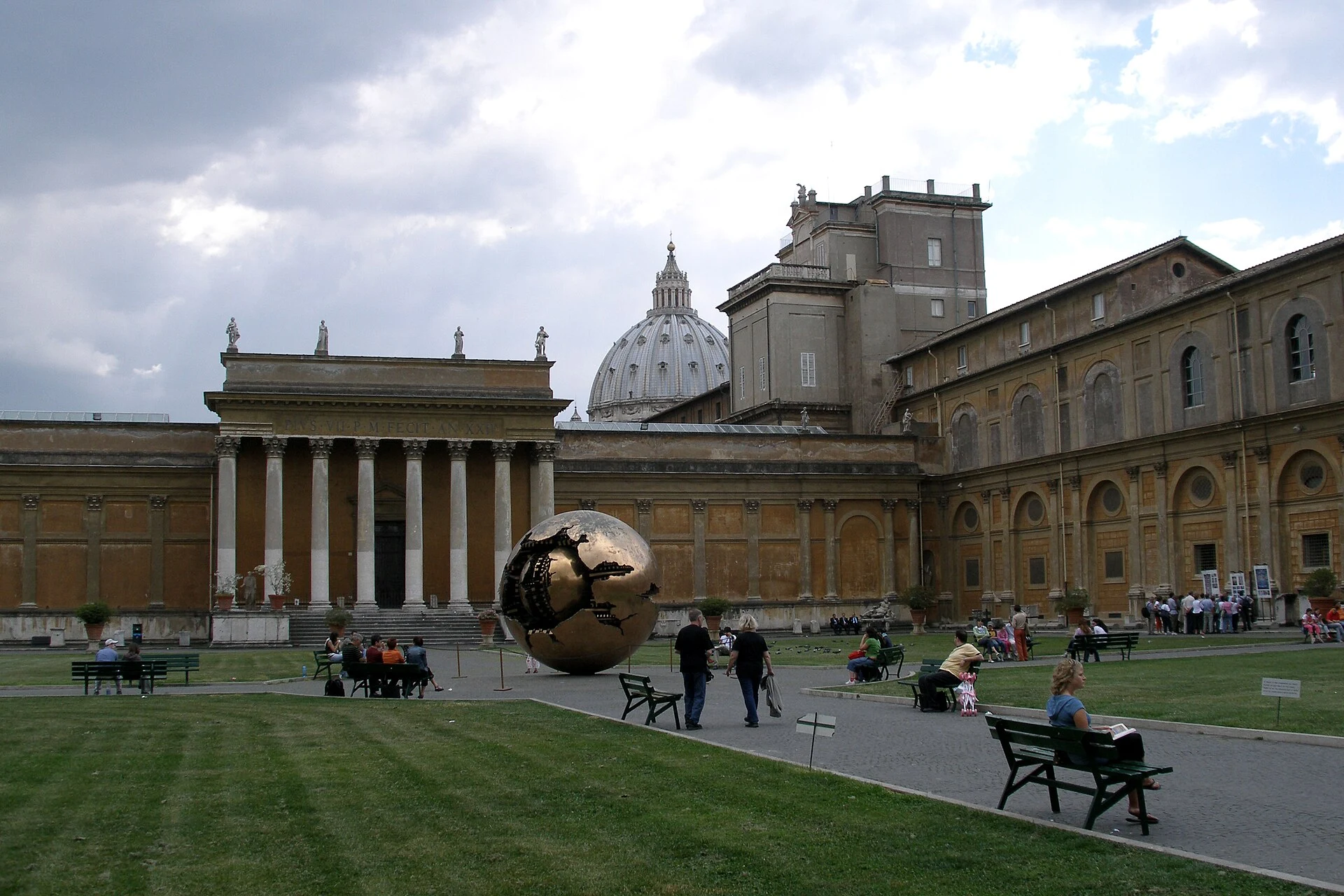
The Vatican is usually planned around two interiors—the basilica and the Museums—but the Vatican Gardens offer a different scale: a living institutional territory where fountains, walls, towers, orchards and formal gardens tell a spatial story. They are neither a shortcut nor a space for unrestricted strolling; they are a visit worth choosing for their interpretation of the whole and preparing with a specific reservation.
A garden that helps place the State
The gardens occupy approximately half of the 44 hectares of Vatican City State. That proportion changes the way you look at the site: behind the ceremonial façade of the square lies a network of slopes, fortifications, pavilions, cultivated areas and formal gardens. This use dates back to the papal residence being moved to the Vatican at the end of the 13th century, when an orchard, meadows and a viridarium were laid out within the walls.
For anyone who already knows Rome, this visit is especially useful if they are interested in architecture as a system: the basilica, palaces, Belvedere and gardens are not isolated pieces, but parts of a city-state whose form has gradually accumulated religious, administrative and residential functions. The inscription of the entire Vatican territory as a World Heritage site acknowledges precisely this continuity between architecture, institutions and religious life.
Choose the visit for its pace, not to collect landmarks
The practical decision is simple: reserve the Vatican Gardens if you want a guided, unhurried experience focused on the built landscape, and not if you are looking to replace a visit to the papal collections. The official portal lists options combining the gardens with the Vatican Museums and Sistine Chapel, as well as formats devoted to the gardens themselves; each has its own itinerary and calendar.
Do not expect to enter independently or improvise the route on arrival. Garden visits are managed through reservations, and routes may change because of activities of the Holy See or the State. Before fixing the date, check the exact format, language, duration, age requirements and any applicable mobility restrictions at the official ticket office. Do not use the visit as a logistical connection between the Museums, basilica and square: plan each access point as a separate part of the day.
Build a day around one clear priority
If your priority is the art in the collections, start with the Vatican Museums and accept that the Sistine Chapel comes at the end of a long itinerary. The Museums ticket covers the Museums and Sistine Chapel only on its date of issue; for that reason, it is unwise to buy one for a time slot that leaves little real opportunity to tour the galleries.
If the gardens are your priority, give them the day’s main energy and add the Museums only if the reserved format includes them and you feel like extending the indoor experience. This works well for travellers who have already seen Rome’s major museums or who prefer to connect the landscape, towers and fountains with the silhouette of the dome. Fewer objectives, better attention: the gardens are not enjoyed as a checklist of sculptures, but as a slow reading of boundaries, uses and perspectives.
Prepare for access with respect for specific needs
Appropriate clothing is required for the Museums, Sistine Chapel, basilica and Vatican Gardens. If you are combining spaces, bring a layer that covers your shoulders and knees so you do not have to rely on a last-minute purchase. Silence is required in the Sistine Chapel, where photography and filming are not permitted; elsewhere in the Museums, personal photography is allowed without flash, subject to restrictions on tripods, drones and professional equipment.
Do not assume that a specific format is accessible simply because the destination is compact. The Vatican Museums offer dedicated tours and resources for blind or partially sighted visitors, deaf visitors and those with hearing difficulties; some garden options are scheduled with dedicated reservations. Communicate your needs before buying and confirm in writing which itinerary is available on your chosen date.
Official references to check before you go
Opening hours, formats, reservations, itineraries, dress requirements and accessibility resources may change because of celebrations, institutional activity or the operating calendar. Check these points directly before setting out:
- Vatican Museums: official ticket office, visit types, access advice and accessibility services.
- Vatican City State: history and layout of the Vatican Gardens.
- World Heritage Centre: heritage context for the entire territory of Vatican City.
References consulted during editorial review. Times, requirements and advisories may change: always confirm with the official source.
- https://www.museivaticani.va/content/museivaticani/en/patrimonio-naturale-archeologico/giardini.html www.museivaticani.va
- https://www.vatican.va/content/leo-xiv/en/audiences/2026/documents/20260401-udienza-generale.html www.vatican.va
- https://www.vatican.va/content/leo-xiv/en/audiences/2025/documents/20250924-udienza-generale.html www.vatican.va
- https://www.museivaticani.va/content/museivaticani-mobile/en/organizza-visita/servizi-per-i-visitatori/accessibilita/visitatori-sordi-.html www.museivaticani.va
- https://www.museivaticani.va/content/museivaticani/en/organizza-visita/scegli-la-visita.html www.museivaticani.va
- https://www.museivaticani.va/content/dam/museivaticani/pdf/visita_musei/scegli_visita/giardini/Giardini_Vaticani_open_bus_info_en.pdf www.museivaticani.va
- https://www.vatican.va/content/leo-xiv/en/audiences/2025/documents/20250917-udienza-generale.html www.vatican.va
- https://www.museivaticani.va/content/museivaticani/en/organizza-visita/servizi-per-i-visitatori/audio-e-videoguide.html www.museivaticani.va
- Ciudad del Vaticano WikidataCC0 1.0 Wikidata · Q237
- Vatican City World Countries — mledozeODbL 1.0 World countries dataset by mledoze and contributors · ODbL 1.0
- Vatican City DBpediaCC BY-SA 3.0 DBpedia
- Luis FERROGGIARO - Víctor Manuel OCHOA CADAVID (eds.), Los últimos cien años de la evangelización en América Latina. Centenario del Concilio Plenario de América Latina. Simposio histórico. Actas. Ciudad del Vaticano, 21-25 de junio de 1999, Libreria Editr CrossrefMetadatos públicos; derechos específicos por campo cuando correspondan Crossref
- Cipriano CALDERÓN (dir.), Historia de la Evangelización de América. Actas del Simposio Internacional celebrado en la Ciudad del Vaticano, 11-14 de mayo de 1992, Libreria Editrice Vaticana, Ciudad del Vaticano 1992, 941 pp., 23 x 16. CrossrefMetadatos públicos; derechos específicos por campo cuando correspondan Crossref
- Walter Brandmüller, Eventi eloquenti. L’agire della Chiesa nella Storia Libreria Editrice Vaticana, Ciudad del Vaticano 2014, 150 pp. CrossrefMetadatos públicos; derechos específicos por campo cuando correspondan Crossref
- PONTIFICIA COMISIÓN PARA AMÉRICA LATINA, Documentos del Santo Padre Juan Pablo II (1988-1993), Tipografía Vaticana, Ciudad del Vaticano 1994, 184 pp. CrossrefMetadatos públicos; derechos específicos por campo cuando correspondan Crossref
- Los últimos cien años de la Evangelización en América Latina. Centenario del Concilio Plenario de América Latina (Ciudad del Vaticano, junio de 1999) CrossrefMetadatos públicos; derechos específicos por campo cuando correspondan Crossref