Tunisia · Archaeological heritage
Bulla Regia, the underground houses near Jendouba
Bulla Regia is best explored as a lived-in city: begin with its urban landscape, then descend into the underground domus that preserved mosaics and rooms below ground.
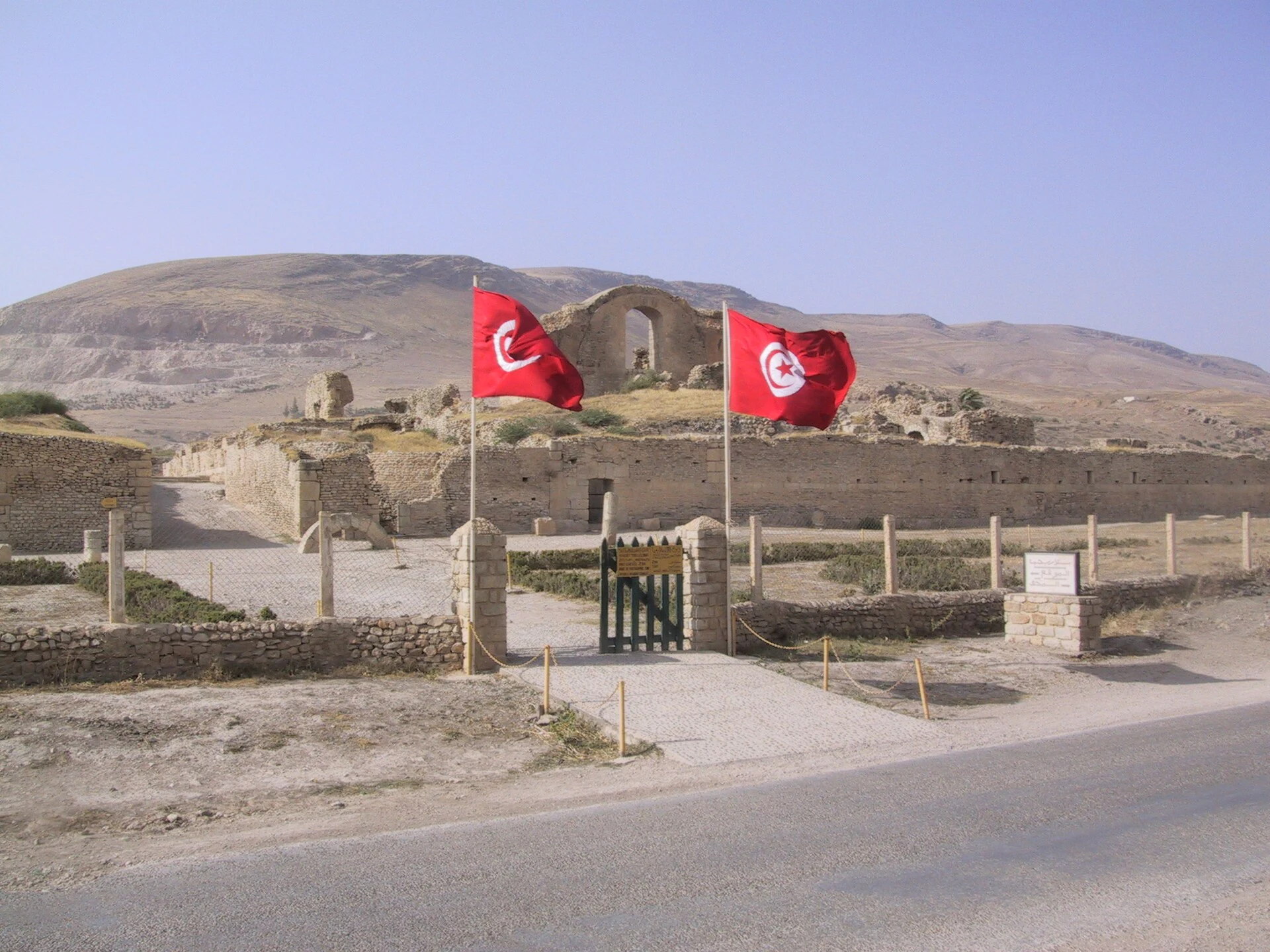
In north-western Tunisia, near Jendouba, Bulla Regia offers a different kind of visit from that of a single monumental site. Its appeal lies in understanding a complete ancient city—forum, baths, temples, theatre and homes—and, above all, in looking down into its underground domestic architecture. The houses preserve vaulted lower levels and mosaics in situ, a combination that calls for time, attention and realistic expectations about the services available.
A stop for anyone who wants to read a city, not just photograph ruins
Bulla Regia works especially well if your itinerary already takes you through Jendouba or along north-western Tunisia’s archaeological corridor. The site is located at Hammam Darradji, in the middle Medjerda basin, and heritage documentation links it with Jendouba and Chimtou.
The key practical decision is how to arrange transport there and back. Official information describes road access from Jendouba, but it does not mean you can assume frequent public transport to the entrance. If you are not driving, arrange a transfer with waiting time, or agree on a clear pickup time and place in advance. That way, you can explore the houses calmly instead of turning the return journey into a race.
Do not treat it as a brief stop between two destinations: the site brings together monumental and residential areas spread across a broad space. Set aside a generous part of the day and bring water, sun protection and sturdy footwear for uneven archaeological surfaces.

The sequence that helps make sense of the site
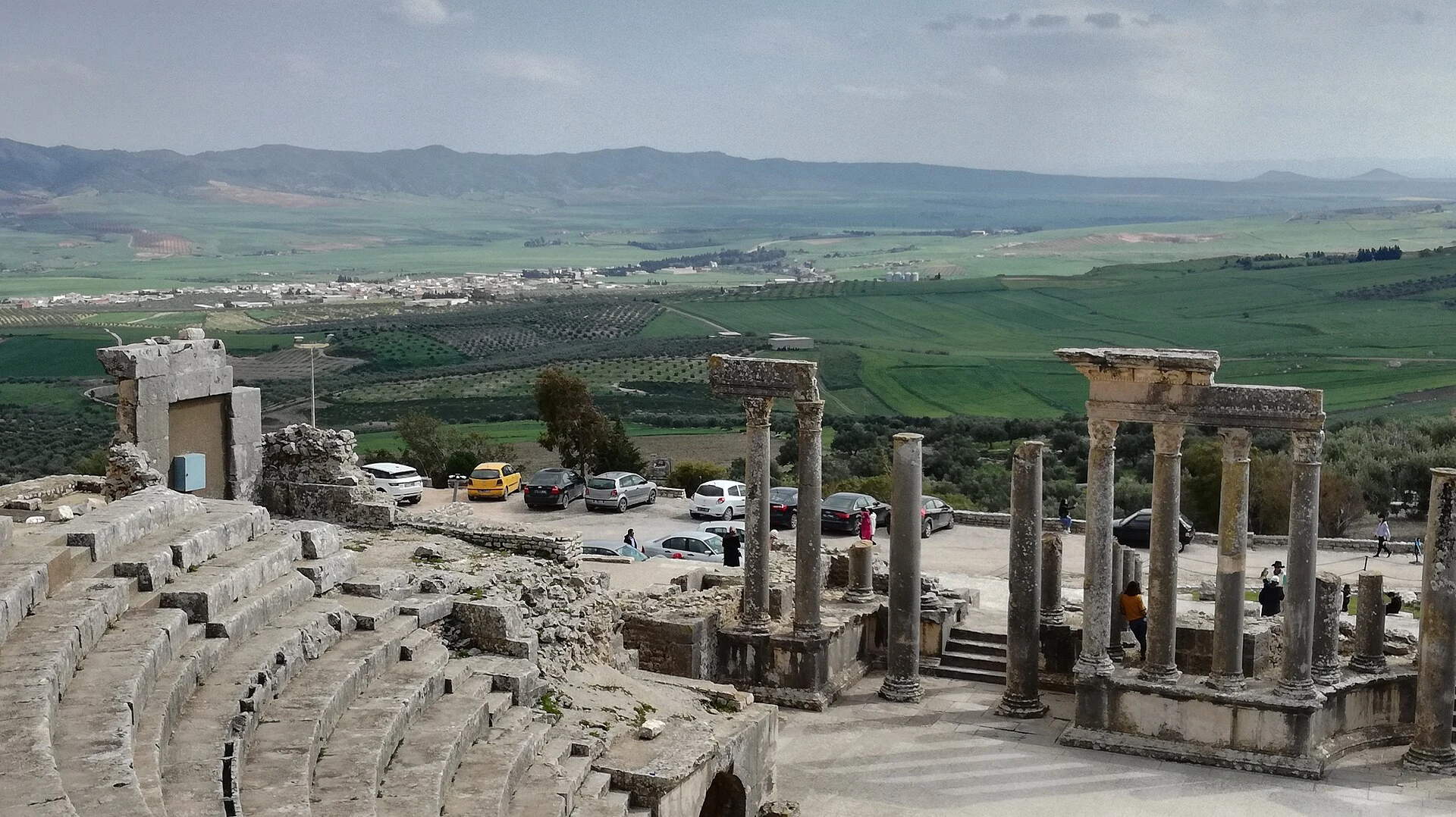
Begin with the features that convey its public scale: theatre, baths, forum and temples. You do not need to identify every wall to understand that Bulla Regia was a city with institutions, commerce, water supply and places of worship—not simply a succession of private villas.
Then move on to the residential area. This change of scale is the visit’s narrative key: from squares and civic buildings to domestic life. The houses have modern names associated with their finds or pavements, including the Houses of Venus, the Hunt, the New Hunt, Fishing, the Mosaics and the Treasure.
The city had a long history, with Numidian origins, Roman transformation and later occupations associated with the Vandal and Byzantine periods. Do not reduce it to “Roman ruins”: that label leaves out both its earlier phase and the Christian presence documented in the archaeological surroundings.
What makes the underground domus distinctive
Bulla Regia’s defining feature is its underground domestic levels. These are not simply service basements: they are spaces integrated into relatively complex houses, with rooms, circulation routes, roofs and mosaics. It is therefore worth first considering the relationship between the visible and lower levels, rather than immediately searching for the most striking pavement.
The underground rooms reveal how a home was designed for local conditions without giving up the spatial resources of a Roman house: courtyards, light, ventilation and decoration. The vaults and mosaics are not secondary decoration; they explain how the house was built and lived in.
Pause at thresholds, changes in level and courtyards. The architecture is the main argument; the mosaic scenes complete that reading. If you are travelling with someone with reduced mobility or who cannot manage steps, check in advance which areas are open and what alternative routes are available. Do not assume that all the underground areas are accessible.
Visible mosaics, conservation and a considerate visit
Part of the experience lies in seeing mosaics in their original context, where they interact with walls, courtyards and rooms. That advantage also means fragility. Stay on designated paths, avoid placing bags or tripods on structures, and do not cross barriers to get a better photograph.
Bulla Regia has been the subject of conservation projects for mosaics in situ and technical training. For visitors, the practical consequence is simple: the quality of the visit does not depend on getting closer, but on slowly observing the whole space and respecting whatever protective measures are in force that day.
The small site museum was conceived as a historical introduction through maps, texts and objects. However, the institutional inventory lists it as closed. Check its status before planning your day and consider the archaeological site itself the core of the visit, rather than treating the museum as a guaranteed addition.
Before setting out: what to confirm
The heritage agency publishes seasonal opening hours, days of operation, admission fees and services available at the site; these details can change. Also check whether there are temporary restrictions affecting houses, mosaics or excavation areas, especially if your trip coincides with religious holidays or a rainy day.
For a meaningful visit, arrive with one specific question: how do the public city and the private home relate to each other? This approach prevents you from experiencing Bulla Regia as a catalogue of remains and gives proper weight to its Numidian, Roman and later layers.
References to check before setting out
- Tunisia’s Agency for the Development of Heritage and Cultural Promotion: Bulla Regia archaeological site entry; check opening hours, admission, services and opening notices.
- Tunisia’s National Heritage Institute: historical and archaeological dossier on Bulla Regia, monument inventory and the status of the site museum.
- Getty Conservation Institute: Bulla Regia conservation project and documentation on the preservation of mosaics in situ.
- University College London: Tunisian-British archaeological research on the church and Christian cemetery at Bulla Regia.
References consulted during editorial review. Times, requirements and advisories may change: always confirm with the official source.
- https://www.inp2020.tn/inventaire/Touslessites.pdf www.inp2020.tn
- https://www.inp2020.tn/ar/_liste_monuments/ www.inp2020.tn
- https://www.inp2020.tn/en/2021/05/28/_bulla_regia/ www.inp2020.tn
- https://www.inp2020.tn/en/inp_tunisie/musees/_musees_tunisiens/ www.inp2020.tn
- https://www.inp2020.tn/documents/Liste_monuments_classes_fr.pdf www.inp2020.tn
- https://www.inp2020.tn/periodiques/atals/Souk_el_Arba.pdf www.inp2020.tn
- https://whc.unesco.org/en/tentativelists/action%3Dlisttentative%26state%3Dtn whc.unesco.org
- https://www.inp2020.tn/en/inp_tunisie/musees/ www.inp2020.tn